
How the West has been won: the 57-win threshold
If you win 57 games, you have essentially a 50 percent chance at winning the conference. What does that mean for a year like this, stacked with contenders?

By
Matt Moore
•
3 min read
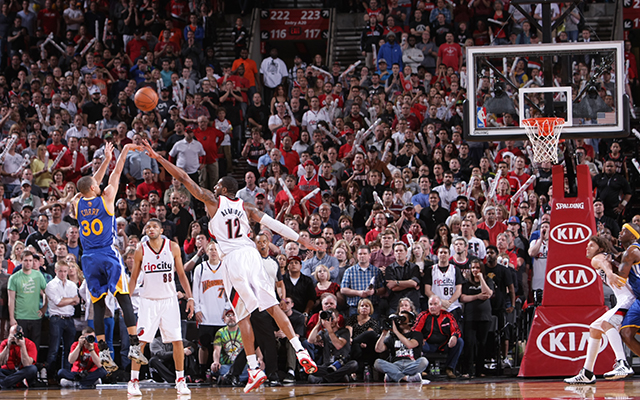
The Cauldron took a look at the history of Western Conference seedings over the past 10 years and discovered something really interesting. Essentially, once you hit 57 wins, your odds of winning the conference become 50 percent.
What may be a little bit surprising, though, is how little seeding has mattered once that 57-win bar is cleared. 22 teams have won 57 or more games in a season since 2205 (2012's lockout-shortened season notwithstanding); summarized here:
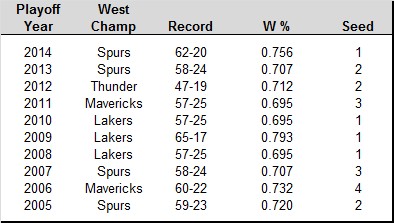
Basically, if you are good enough to get your win total into the high 50s in the lethal Western Conference, you have almost a 50-50 chance of making the Finals. And over the past decade, that has been (almost exactly) equally true no matter where you found yourself seeded. It has been the 1-seeds, in fact, that have turned great regular seasons into Finals appearances with the lowest regularity, though this is almost certainly a meaningless fluke in the data.
Via 'So What's in an NBA playoff seed anyway?' -- The Cauldron.
The entire piece is worth your time, but the point it suggests about the threshold is interesting. That's not to say that winning 57 games should be the goal, or the focus of a team. But that mark does give teams a realistic goal that they can control (vs. worrying about how many the teams above or below them win), and it presents an interesting question for this season. What if something like five teams win 57 games?
There are currently only four teams on pace for that, the Warriors, Blazers, Grizzlies and Rockets, but the Clippers and Mavericks are on pace for 54, the Spurs are the Spurs and you never know what OKC is capable of doing. Some of those teams improving means that some of the others will lose more games. But it's not a stretch, with how bad the bottom of the conference is, to believe that there could be six 57-win teams.
Matchups matter so much with the playoffs, but the superior team usually wins the series, even with matchup issues. There are fascinating combinations that cause a weird chain, however. The Clippers don't match up well with the Grizzlies who don't match up with the Spurs who don't match up with the Thunder (at full strength) who don't match up well with the Rockets who don't match up well with the Blazers.
So in a way, while matchups play a part in who finishes at the top, you can still count on the best team to actually win. That's the beauty of the NBA. It has designed a system where upsets can occur but you still walk away feeling like the entire process was valid, and that the superior squad came out ahead.
Of course, just as stronger teams will feast on the weaker clubs, they'll also tear each other up, particularly in the Southwest Division. The Rockets took out the Grizzlies on Friday night, and four of the five teams in that brutal division are in the hunt for 57 wins, and the other team, New Orleans, sits at No. 9. Oh, and by the way, the Pelicans have taken two of their four meetings vs. San Antonio. The Spurs, honestly, at 18-13, may be in the most trouble in the quest to reach 57 wins. Bear in mind San Antonio was 23-7 at this time last season.
But while the 57-win threshold seems like the baseline for contention, there are always outliers. The Spurs can win the West if they make the playoffs, and as Doc Rivers said last week when asked if Rajon Rondo makes the Mavericks a contender, "Everybody's a contender in the West."
But we can still use this information to try and sort out the madness and hope that even as intense as the contest is, at the end, some of this will make sense.
Unless the Eastern Conference wins the title. Then I don't know what happened.