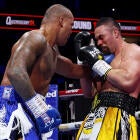
Deontay Wilder vs. Tyson Fury isn't just fun, it's a throwback to when heavyweight boxing mattered
Saturday's pay-per-view title bout may be more historically significant than it appears

•
5 min read
It may be on the short list of most overused cliches in the sport yet it's also likely the one most true: As the heavyweight division goes, so does boxing.
From the day former champion Lennox Lewis retired in 2004 through the end of Wladimir Klitschko's nearly decade-long run as division king in 2015, one can certainly argue that to be true as boxing's health suffered right along with the demise of its glamour division.
So consider it no surprise that boxing's recent surge, particularly financially thanks to a series of high-profile broadcasting deals, has coincided with the outright resuscitation of its most important group of competitors.
Headlined by a trio of marketable, exciting and occasionally vulnerable unbeaten names, heavyweight boxing is finally fun again. Even better, it matters as the build to Saturday's pay-per-view title bout from Los Angeles between a pair of unbeaten giants has done nothing but remind fans how things used to be.
When Deontay Wilder (40-0, 39 KOs) defends his WBC title against returning lineal king Tyson Fury (27-0, 19 KOs) at the Staples Center (Showtime PPV, 9 p.m. ET), it will mark the first time since Lennox Lewis-Mike Tyson in 2002 that a significant heavyweight fight took place in the United States on PPV. Yet taking a closer look at what makes the matchup so special reveals how rare a fight this good on paper actually has been in modern history.
To put it bluntly, the plodding and predictable era of the Klitschko brothers dominating a division void of viable challengers was the worst thing that could have happened to boxing from a casual American perspective. Despite the fact that both Wladimir and Vitali represented the sport well as sportsmen and ambassadors (and were paid handsomely in Europe for doing so), their monotonous success robbed the division of the kind of characters that help fuel it on a crossover level.
Enter the trash-talking Fury, a 6-foot-9 Englishman of Irish Traveller descent, who disarmed Klitschko three years ago this week in Germany to end the Ukrainian's reign by shocking upset before a whirlwind of personal issues (mental health, drug abuse) forced him to vacate his titles. Yet it was in Fury's absence that this current heavyweight renaissance became possible as both Wilder, a 6-foot-7 slugger, and British star Anthony Joshua replaced Klitschko as the new faces of the division.
Boxing's best-laid plans would've already seen Joshua (22-0, 21 KOs), holder of the remaining three recognized titles, face off against Wilder in a fight to crown an undisputed king. Despite more than a year of intense public negotiations, however, the fight still hasn't taken place.
Wilder-Fury certainly came to be at an opportune time and served to many as an exciting consolation prize. But there are more than a few reasons to like this fight even more than the Joshua one, regardless of whether the winner ever faces him thanks to boxing's ever-changing politics between promoters and network executives.
It's rare enough to see a unification bout between heavyweights like Joshua's dramatic knockout of Klitschko in 2017 that helped make him a worldwide star. It's even more rare when both champions are undefeated, like Joshua's win over then-WBO champion Joseph Parker in March. Not only does Wilder-Fury have elements of both, the fact that the self-proclaimed "Gypsy King" brings with him the lineal championship only makes the fight more unique.
With so many title belts floated around by the four major sanctioning bodies, in many ways the lineal championship of "the guy who beat the guy who beat the guy" is the only pure thing boxing has left. The winner of Wilder-Fury will find their name in the same title lineage that includes names like Jack Dempsey and Joe Louis. It also allows him the chance to make a claim as the best heavyweight in the world and "baddest man on the planet" by winning the one title that has been elusive to Joshua.
Because of the narrative that sees Fury returning to defend the lineal title he never lost inside the ring against a fellow unbeaten champion, Saturday's fight becomes a lot more comparable historically with Mike Tyson-Michael Spinks in 1988 and even Joe Frazier-Muhammad Ali I in 1971's "The Fight of the Century."
The fight also represents a perfectly contrasting style matchup between the violent slugger Wilder and the shifty and awkward Fury in a 2018 remake of the classic boxer versus puncher fight. If that, or the size of the two combatants, wasn't enough to seduce the money from your wallet, the promotion of the fight has perfectly showcased just how entertaining their personalities are on microphone and how inspiring their respective backstories are of getting to the top of the sport.
"You don't see it too often and it has been a long time since there was a fight of this kind of significance in the division from a worldwide standpoint," Wilder promoter Lou DiBella told CBS Sports. "In my mind, the winner of this fight can clearly say, 'I'm the man, I'm No. 1.' It changes the leverage.
"Deontay spent a lot of time chasing [Joshua] around, trying to make that fight. It was Tyson Fury who said to his promoter, 'I'm ready, go make a deal,' and as soon as he said that a deal was done. This is really going to change the playing field but it's also hugely significant for American boxing."
It has been a long time since boxing has felt this alive and even longer since a trio of unbeaten heavyweight champions have stood this tall on top of it. Wilder-Fury brings us one giant step closer to finding out who will be the face of this exciting new era.
Enjoy it while it lasts.
Who wins Wilder-Fury? Visit SportsLine now to see boxing guru Peter Kahn's exclusive pick, from the boxing expert who cashed in 20-1 on the GGG-Canelo draw and just called Shawn Porter's upset of Danny Garcia.