Aeroscreen credited with saving IndyCar driver Callum Ilott from serious injury at Texas Motor Speedway
Video shows aeroscreen deflecting projectile debris, preventing it from hitting driver's head.

•
1 min read
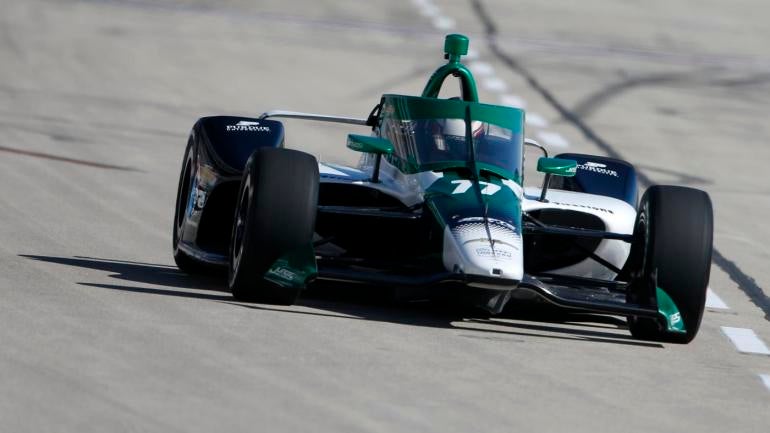
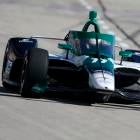
Of all of the advancements in safety that have been made in open-wheel racing over the past several years, arguably none has been a bigger game-changer than the introduction of the aeroscreen to IndyCar racing. Like its overseas counterpart, the "halo" in Formula 1, the aeroscreen has been pivotal in preventing serious injuries to drivers from debris intruding the cockpit, and the latest testimony can be given by IndyCar rookie Callum Ilott.
On Wednesday night, IndyCar president Jay Frye shared video from the onboard camera on Illott's car during a practice session at Texas Motor Speedway that showed Ilott approaching an accident in front of him. As Ilott drove into the crash scene, a projectile part off Jack Harvey's car -- believed to be a pushrod -- flew into the path of Ilott's cockpit.
The aeroscreen deflected the piece of debris, preventing it from hitting Ilott in the head, with zero subsequent damage to his car.
Here’s the video, virtually zero damage to the aeroscreen. Thank you @indycar https://t.co/wjb64GFkPK
— Callum Ilott (@callum_ilott) April 7, 2022
The aeroscreen, a ballistic laminated polycarbonate windscreen installed in front of the driver's cockpit, was introduced in 2020 in order to close the cockpit and protect drivers' heads from projectiles or other intrusions. The introduction of the aeroscreen was the culmination of a movement to close the cockpit following an accident at Pocono in 2015, when driver Justin Wilson died after being struck in the head by debris while driving through a crash in front of him.
The aeroscreen has since been hailed for its role in keeping tires and other debris out of the cockpit and protecting drivers from being hit with flying objects. As noted by Nate Ryan of NBC Sports, among the drivers who have attributed their walking away from accidents to the aeroscreen include Ryan Hunter-Reay, Will Power and Rinus VeeKay.
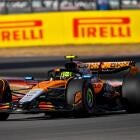
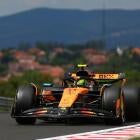
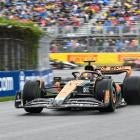
The IndyCar aeroscreen is an alternative to, but serves the same purpose as, the "halo" titanium ring bar introduced in F1 in 2018. The F1 halo was developed and introduced following a crash that killed driver Jules Bianchi in the 2014 Japanese Grand Prix and has been credited with saving the life of now-IndyCar driver Romain Grosjean at the 2020 Bahrain Grand Prix.
Illott, a British driver and member of the Ferrari Driving Academy, is in his first season of IndyCar racing driving the No. 77 for Juncos Hollinger Racing.