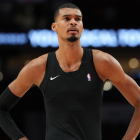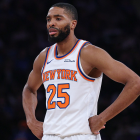
Despite their differences, Cousins, Barkley share many similarities
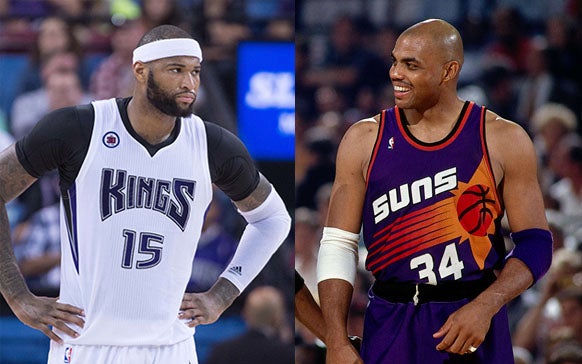
DeMarcus Cousins and Charles Barkley don't get along, which is unfortunate given how much they share in common and what the younger King can learn from Sir Charles.

Surly. Uncompromising. Gifted. A brutal competitor. Unfriendly. Nothing but attitude. Oh, and from the great state of Alabama.
Charles Barkley. DeMarcus Cousins. There are similarities, but the comparison deserves more nuance than those descriptions above. Cousins and Barkley are iconic in what they stood for when they played, but they're also human beings, and to link them intrinsically without context isn't fair.
Especially since Cousins holds such dislike in his heart for Barkley. A trip back in time from a Bleacher Report profile:
Which leads us to Barkley. There is coming to terms with the way your new world operates, but then there's feeling undermined in it by someone who came from the exact world you did.
That is how Cousins views Barkley, and it's why, in spite of playing for him on All-Star Weekend in the Rising Stars Challenge, sharing a dais in Sacramento with him for their mutual friend, Mayor Kevin Johnson, and spending a week together in Spain this summer, he refuses to acknowledge Barkley's presence.
Mention that Barkley doesn't believe the cold shoulder is merited, and Cousins responds as if Barkley is standing directly in front of him:
"I have no respect for you and I never will. We have nothing to talk about. So, yes, every time we see each other, there will never be words."
Barkley wishes he understood why Cousins holds such a grudge against him. He acknowledges that when Cousins was in high school, he went down to see him in a state playoff game. As Barkley remembers it, Cousins complained to referees incessantly, fouled out and picked up a couple of technical fouls in the process.
"I made a very conscious effort not to be too hard on him," Barkley said. "I said he had a chance to be really good; I just told the reporters afterward that I was a little disappointed. Since then, I've also said he could be the best big man in the game if he'd just grow up. He's never had a strong coach that held him accountable. I wish he'd had a Pat Riley or Gregg Popovich or George Karl or Doc Rivers that would've held his feet to the fire."
Cousins insists Barkley said much more, but what truly vexes him is that Barkley would say anything that could endanger a kid from Alabama's dream of making it big, knowing how rare that is for anyone from the Cotton State. Barkley also later stuck up for Westphal, whom he played for in his only NBA Finals appearance in '93, after he suspended Cousins for conduct detrimental to the team.
"Coming up as a kid and hearing that from one of the best players ever to come out of Alabama," Cousins said, "a guy people grow up looking up to, to hear him say, 'Well, he's not that good...' I remember it like it was yesterday. Then, coming into my rookie season, you take up for your ex-coach and say I'm the worst thing that ever happened to Sacramento on national TV. Yeah, I'm going to remember."
Source: Meet the Real DeMarcus Cousins: Strong-Willed, Maturing, Misunderstood | Bleacher Report.
As with most things with Cousins, you can understand both sides of the argument. For as much progress as Cousins has made in his on-court behavior (he didn't finish first in techs last season), it's still a problem (he finished third). For his progress and capability defensively, he doesn't maintain mental discipline with his effort. For every brief flash of being professional in the media demands of a player of his star stature, there's still the long periods of boorishness and recalcitrance.
You can point to Cousins' suspension for his altercation with Spurs announcer Sean Elliot... but that ignores a fact that simply never get brought up when it comes to Cousins: He has no off-court incidents to speak of. Not a parking ticket, not a citation, not a single solitary issue. Forget big violations like assault, domestic violence, or DUI, Cousins hasn't even been busted for things like parking in a handicapped spot like Lakers wash-out Andrew Bynum. Cousins hasn't shown up for camp out of shape, and he hasn't gotten into big brawls on-court.
"He's a pain in the ass," a league source recently said, "but he's not a bad guy. He's just not."
Which leads us back to Barkley. Barkley would clash with coaches, just like Cousins. He would rumble a lot more than Cousins has, mostly because the league has changed dramatically in its fine structure for such altercations. And like Cousins, Barkley bristled (to put it mildly) at the allegations that his behavior was as much of a problem as it was pointed out to be. Remember those techs we brought up earlier? Cousins had 14 last season, down from 16 the season before.
Here's some context on where Sir Charles was at in 1988, four seasons in and at Cousins' age last year:
Though Barkley is still definitely in charge, he could not be more pleased with the supporting cast. He may toss around some expletives,a few of which earned him what's believed to have been a single-season record of 30 technicals last year (he's collected five so far this season), but the four- letter word he has uttered most often in recent seasons is Help!
"It bothered me that I was always the scapegoat, always the reason the Sixers couldn't win,'' said Barkley at a Sixers' practice last week. ''Well, I'm here to tell you that one man can't do it alone. Not Magic Johnson, not Larry Bird, not Charles Barkley,nobody.''
Source: ON A MISSION Charles Barkley is out to prove he and the 76ers can be big winners - SI.com.
You see the same kind of things in that profile of Barkley then that you see in Cousins now. A player frustrated by a lack of recognition and the public perception that he's to blame for the team he inherited (from the 1983 title team which featured Moses Malone, Dr. J, and others). A player who was frustrated with the trade rumors that constantly surrounded him (that particularly strikes a chord after this summer's hijinx), and a player that was just starting to enter his real prime as a dominant big man.
These numbers compare Barkley's fifth year at age 25 to Cousins' fifth season last year, which was impacted by the viral meningitis:
Here's per 36 minutes:
And some advanced metrics:
What you see is Cousins having to do more than Barkley was asked to do, but not doing so as efficiently. Cousins takes more shots to create more points, and doesn't shoot as high a percentage. His efficiency isn't as strong, though you see him taking on a higher percentage of rebounds, assists and blocks for his team. Barkley had the Sixers on his shoulders that season ... and still had a usage rate 10 percentage points behind.
So Cousins has every right to feel as misunderstood as he does. The reality remains that no big man has done what he's accomplished over the past two seasons on the court in terms of production, period. Nobody. Not Dwight Howard or Marc Gasol, who are widely considered the best centers in the game. And not even MVP candidate Anthony Davis last year. Don't believe me? Per 100 possessions:
Don't make a mistake, Davis is coming up on Cousins fast. But Davis has been blessed with guards to penetrate and create for him, and no matter what you thought of Monty Williams before the Pelicans hired Alvin Gentry this summer, he's better than what Cousins had before Mike Malone. (And Malone, of course, was fired last year after the team got off to a hot start only to struggle when Cousins fell ill. Cousins did not like the decision, no matter who was responsible for it.)
It's reasonable to expect Davis to surpass Cousins this season in production; many already feel he's a better player for his versatility and discipline. But it should be noted that Cousins has played over 85 percent of the games each season until last year's fluke illness took him out, and that's despite being shut down late in the season every year as the Kings tanked over and over for draft position. He's durable, strong and plays through pain; that much cannot be denied.
Again, like Barkley.
Barkley was always known as friendly ... if he wasn't mad at you, or mad about something. There's a reason he's become one of America's most beloved, if often controversial, media figures on TNT. He's engaging, warm and gregarious. Cousins isn't nearly the extrovert or as warm to the spotlight as Barkley. The idea that Cousins is some grouch is simply untrue, as most of his Kentucky teammates and close friends (though they rarely speak publicly) will say.
I mean, check this guy out:
There are differences. Barkley notoriously said he wasn't a role model. Cousins embraces that identity. Barkley often criticizes Cousins based on one simple measure: his teams haven't won. While Barkley felt undue pressure and was frustrated with an inability to get out of the first round, Cousins has yet to make a playoff appearance. That's part of what prompted Barkley to say that Cousins having consulting power this year was "bull****." Cousins hasn't won anything, in Barkley's mind. Barkley's teams at least regularly won between 45 and 55 games during those early years of emergence in Philadelphia.
It should be noted, though, that Barkley played in the East back in 1989, and Cousins plays in maybe the toughest conference era in the sport's history. All players believe their era was tougher or the toughest, but it's just hard to look at what Cousins had to work with, who was coaching him and who he was up against year after year and really say "DeMarcus Cousins hasn't done enough for his team." Is there more he can do?
Absolutely, and he seems to be learning that, but more is not "enough" in this instance.
What's really unfortunate about Barkley and Cousins' fractured relationship is how much Barkley could help Cousins. I imagine Barkley becoming Cousins' manager as it is in pro wrestling, accompanying him to the ring and dishing promos for the "most dominant big man in the game." Barkley seems to have reacted to Cousins' comments by hardening his heart, when instead he should work harder to show Cousins what's apparent to so many: Barkley speaks to Cousins' immaturity from wisdom and experience, not judgment. If Barkley is hard on Cousins for not winning more, it's because he knows Cousins can be better. If Barkley blasts him for his behavior, it's because he's acted out and knows how it can limit you as a player and a brand.
Cousins is proud of his blue-collar background, Barkley the same. It's not just their southern roots that bind them, it's a shared experience of how many people doubted them, judged them, wrote them off.
Barkley is a legend, at times severely underrated for what he did in his time. (Seriously, check out the highlights and the numbers Barkley put up in the first four years of the 90s, they're simply insane.) If we're being real, the only thing that stood in the way of Barkley winning that ring that haunts him to this day is he was unfortunate enough to play during MJ's era. Cousins can be just as good, but he has to learn the same things Barkley had to learn.
It took Barkley until he was 29 to be traded from Philadelphia to Phoenix, before he started the brief run where he made the Suns championship contenders. It may take Cousins just as long to find a winning situation, but Barkley also grew into the player he needed to be for Phoenix in those last few years in Philly. Sacramento's obviously hoping that's not going to be the outcome for Cousins, that his career path and Barkley's will diverge.
From the outside, however, one thing remains seemingly the same: The divide between Barkley and Cousins seems built upon how similar they are, not the things that differentiate them. If anyone should understand how Cousins may not be what people believe him to be, it's Charles Barkley.