
Is the Pirates' Josh Harrison for real?
Pirates third baseman/super utility man Josh Harrison is having a tremendous 2014. Can he keep it up?

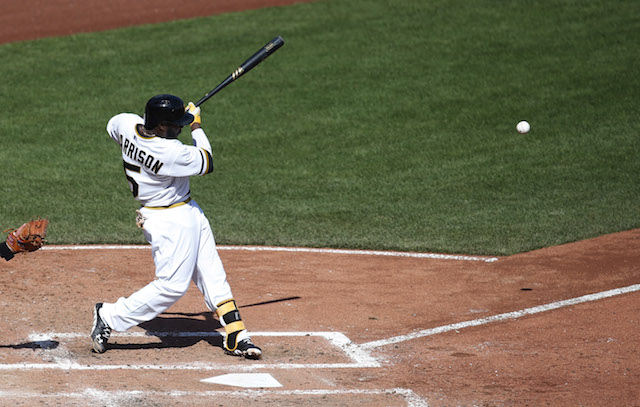
While Andrew McCutchen is the player most responsible for the Pirates' success in 2014, it's no exaggeration to say that Josh Harrison is next in the queue when it comes to the Most Valuable Pirate.
In addition to manning five different positions with defensive aplomb, running the bases well and stabilizing third base following the ineffectiveness and then injury concerns of Pedro Alvarez, Harrison has also raked in this, his age-26 season. After 492 plate appearances, Harrison is leading the NL in batting with a .317 mark, getting on base at a .351 clip and slugging .508 with 55 extra-base hits. That's excellent production in the current run-scoring environment and in a pitcher's yard like PNC.
The thing, though -- and there's always a "thing" with breakout seasons -- is that Harrison entered the 2014 season with a career line of .250/.282/.367 in 575 plate appearances. The question is thus raised: Is Harrison's performance this season indicative of genuine skills growth (not uncommon at his age), or can we expect regression ahead?
When surveying the deeper corners of Harrison's stat line, one thing jumps out: This season, he has a batting average on balls in play (BABIP) of .353 versus a pre-2014 career mark of .275. When you see huge variations in a pitcher's BABIP allowed, you can usually assume future correction. Even with hitters, though, some short-run noise is quite possible. In Harrison's case, it's tempting to dismiss his overall numbers as being driven by an unsustainable uptick in BABIP. However, there's reason to think Harrison has legitimately improved as a hitter.
This season, he's shown forward progress in his batted-ball profile. To wit, Harrison's flashing strong fly ball tendencies while also drastically reducing his rate of infield pop-ups. When you're able to hit the ball in the air more often while at the same time cutting down on the free outs that so often accompany a more "airborne" approach, that's a sign you're squaring up on the ball. While line drive rate is prone to randomness and even misclassification errors, it's still worth noting that Harrison is showing improvement in that area, as well. Also, Harrison's home runs/fly ball percentage -- so often a source of fluke performance -- is actually down from last season and not greatly out of step with career levels, so no concerns on that front. There's also the fact that Harrison this year has added about four feet of average fly ball distance relative to his prior big-league seasons.
Now to bind all that together ... Over at Beyond the Boxscore, they have a formula that allows you to turn a hitter's seasonal batted-ball data into an expected BABIP (it so happens that xBABIP has a moderately strong relationship with future perfomance). Run the numbers and out comes an xBABIP of .349 for Harrison this season -- i.e., very close to his actual figure. While we're still talking about a partial season's worth of data --if most of a season's worth of data -- there's little evidence that Harrison has been blindly lucky to any great extent in 2014. In other words, Harrison's BABIP is indeed high for his standards, but he's largely earned that mark by way of his improved bat-on-ball skills. Those standards may just be different now.
Elsewhere, Harrison has improved his walk rate a bit (though it's still low), and while he's striking out more, he's getting a better grade of contact, as detailed above. Moreover, he's shown month-to-month consistency, in terms of both his AVG/OBP/SLG slash line and his plate discipline indicators. That is, his season isn't propped up by an impossibly hot first six weeks or something of that nature.
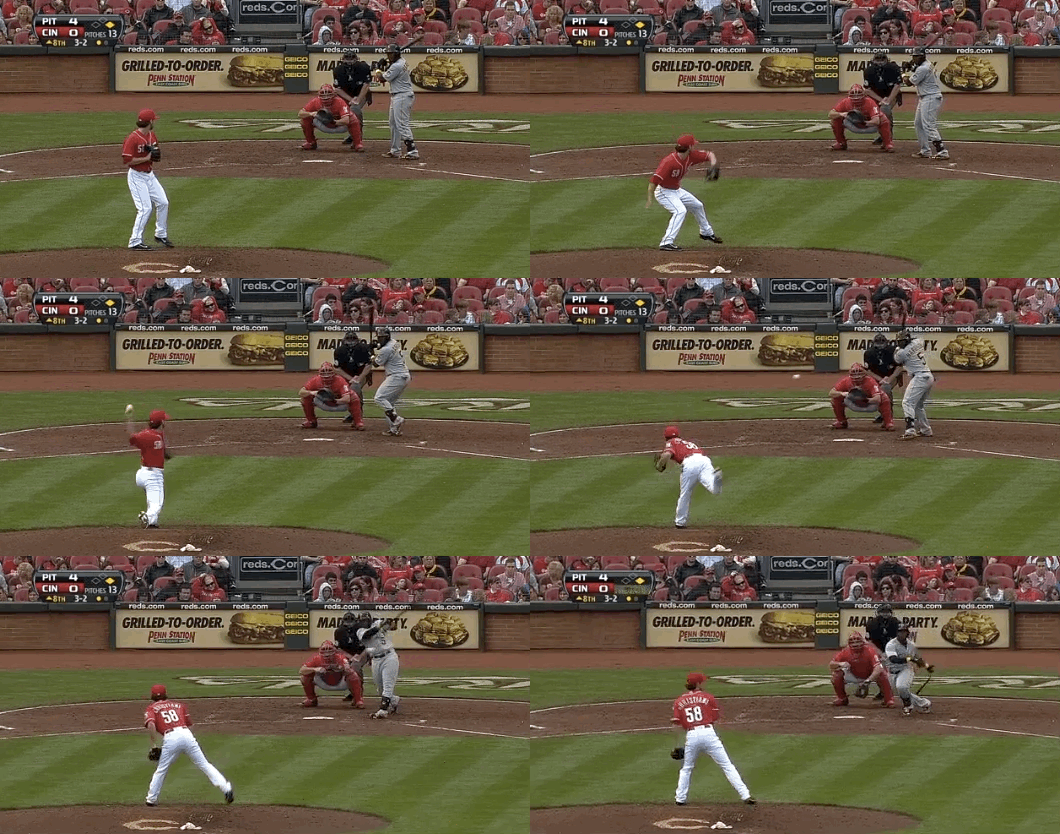
So is his swing the driver in all this? Let's take a look at Harrison putting a swing on two four-seam fastballs, each middle-in, each a batted-ball out, one from 2013 and one from this season (thanks be to Baseball Savant for the essential research tools).
First, here's Harrison grounding into a double play against Nick Christiani of the Reds in late September of last year ...
Now here he is flying out against Matt Garza of the Brewers on June 7 of this year ...
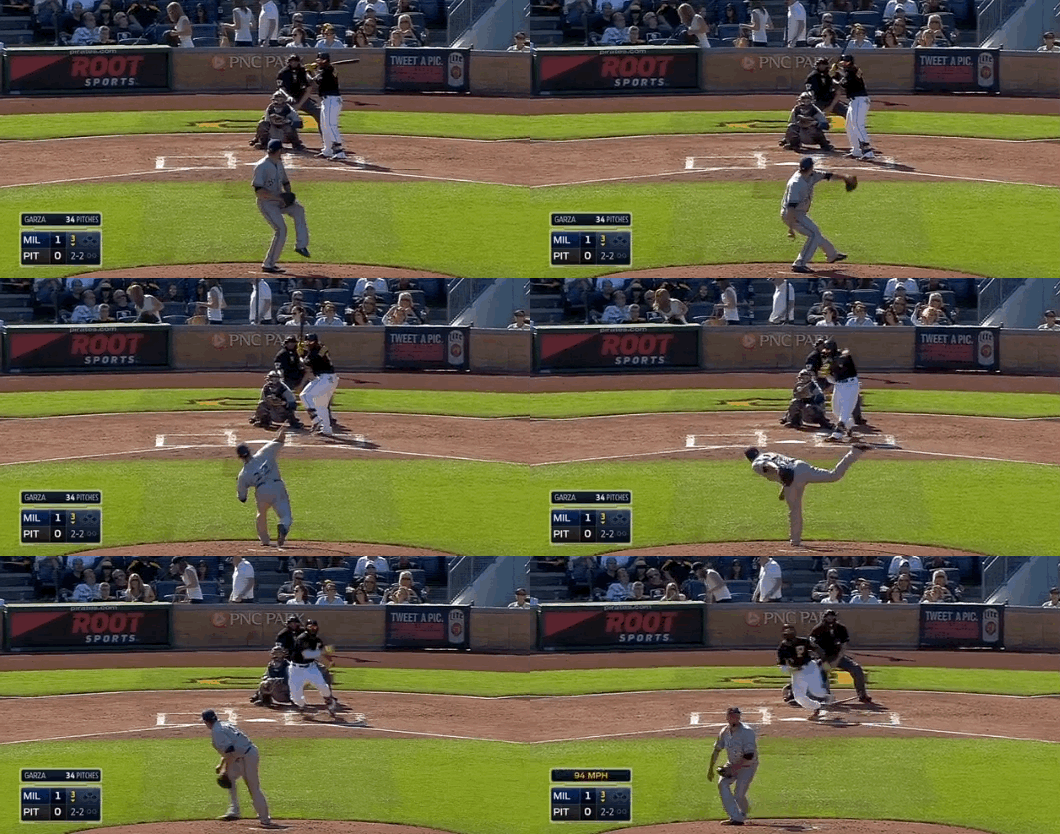
It's quite subtle (especially with the different center field camer angles), but in the 2014 example Harrison is setting up a bit closer to the plate and striding a little deeper, which puts a little more hip rotation into the swing. He also appears to be finishing his swing a bit higher and, intentional or not, releasing the top hand an instant or two earlier. All of that, however muted it might look, may be yielding more swings and misses but better results when bat meets ball, which, as it turns out, describes Harrison's outputs in 2014.
He's still something of a free-swinger, particularly on pitches out of the zone. However, he's now missing at a significantly higher rate on pitches out of the zone. That sounds bad at first, but since hitting those kinds of pitches often leads to weak, manageable contact, it may be a pleasing unintended consequence that Harrison's (possibly) altered approach means he misses more of those kinds of pitches but barrels more of the ones that are actually in the zone. Like it or not, it's not a contact games these days; it's a quality of contact game.
It's impossible, of course, to say whether this is the new normal for Harrison's pre-decline years. However, the changes possibly evident in his process and certainly evident in his outputs suggest that, yes, Harrison really can hit like this moving forward.
Now let's see if he does.