As the euphoric crowd spilled out of FedEx Forum onto Beale Street, it was a scene that Chris Wallace had seen many times before.
The Memphis Grizzlies had just manhandled and demoralized the Golden State Warriors, 99-89, to take a 2-1 lead in the Western Conference semifinals on Saturday night. And while the gritty, grimy Grizzlies have managed to make the NBA's best team uncomfortable, Wallace took a moment to reflect on a long, strange journey -- for him, for Memphis and for the Grizzlies franchise.
"The people here are the nicest and warmest of anyplace I've been," Wallace told CBSSports.com on the phone from Memphis. "They've just been dying for something to beat their chests about that's theirs and that they can take great pride in. This basketball team has been that for the past five years."
The breakthrough came in 2011, when the Grizzlies won their first playoff series -- hell, their first playoff game -- against the mighty San Antonio Spurs in the first round. Wallace had been there since 2007, and had wasted no time in controversially (to everyone but him) trading the ever-popular Pau Gasol to the Lakers for some flotsam, jetsam and oh, by the way, the draft rights to Pau's younger brother, Marc.
At the time, Spurs coach Gregg Popovich lampooned the trade, calling it “beyond comprehension” because he believed it would hand the big-market Lakers multiple championships on a platter. Indeed, the Lakers cashed in two more title chips in the Pau Gasol-Kobe Bryant era, but history tells a more flattering story about Memphis' side of the deal than Popovich -- or anyone else -- could have imagined at the time.
"Our crowds were minuscule, and in our own market we were second but might as well have been 100th," Wallace said. "We were nowhere near the Memphis Tigers in terms of capturing the imagination of the city. Pau's candle had been doused; he wasn't performing well and we weren't performing well as a team."
Only a few months on the job, Wallace told the late owner, Michael Heisley, "Even if eventually we are proven wrong, we've got to do something. The worst thing you can have in the sports and entertainment business is apathy."
The younger Gasol, of course, has since developed into perhaps the best two-way center in the NBA and will have multiple max offers on the table as a free agent this summer. The deal also created the cap room for Wallace to make a financially lopsided trade for Zach Randolph, who has joined Gasol to create a 1-2 punch of low-post dominance -- an old-school, front-line attack that has the up-tempo Warriors out of their element heading into Monday night's Game 4 in Memphis.
And Memphis, no longer exclusively a college sports town, has embraced all of it.
"We don't have an NFL team," Wallace said. "We don't have a baseball team or a hockey team. We're not an extremely wealthy city. But we're a very prideful city that loves its basketball. And to be a part of something as new and fresh as this is -- the revitalization of the Grizzlies -- is the most meaningful thing."
There are always personal stories behind these otherwise impersonal transactions, and Wallace's is oddly compelling. In 2012, Heisley sold the team to Silicon Valley entrepreneur Robert Pera, who appointed former agent and Sacramento Kings executive Jason Levien to head up the team's basketball operations.
Levien picked another former agent, Stu Lash, and former ESPN advanced stats guru, John Hollinger, to round out his front office. Wallace, who had acquired Gasol and Randolph, drafted Mike Conley and signed Tony Allen as a free agent, remained the GM in title only -- pushed so far out of the decision-making circle that he rarely even appeared at the team's offices.
"It was by design," Wallace said. "If I wasn't in the same chair that I was before -- even though my title was the same -- I didn't have any great desire to be around. I didn't want it to be awkward having this guy that’s in limbo hanging around all the time and trying to make his presence felt. I stepped further back myself because I did not want to be an issue. I just felt that was the best thing."
Though Wallace's name and quotes were on the press release, it was Levien who made the call to trade Rudy Gay, the team's leading scorer, to Toronto in January 2013. But after a first-round loss to Oklahoma City in 2014, Pera reversed course -- firing Levien and Lash and giving Wallace his GM powers back. After two months as interim GM, Wallace was fully reinstated that July.
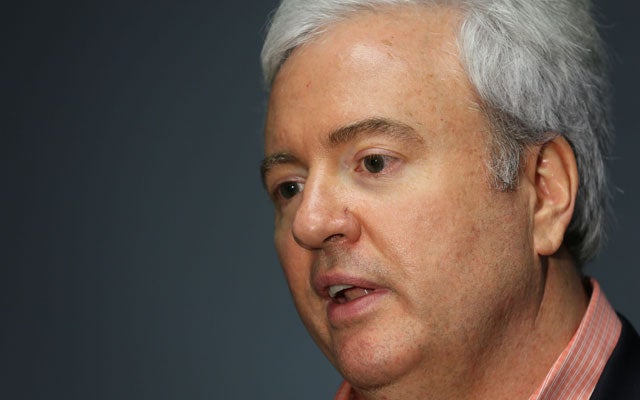
"I had a great deal invested in this team from an emotional standpoint," Wallace said. "I'd been here since 2007 when we were at our lowest, getting haymakers thrown at us on a daily basis. So when you actually have some success, you'd like to be around and enjoy it."
Despite what one might assume had been a significant blow to Wallace's ego, he insists he didn't hesitate before taking his old job back.
"There was no reason to deliberate," Wallace said. "When it was offered, I took it on the spot."
In a world where there are only 30 jobs as general manager of an NBA team, it wasn't Wallace's first rodeo -- nor was it the first time he'd instinctively said yes to a job offer without so much as a second thought.
Wallace had gone from Portland to Denver in 1989 at the behest of Jon Spoelstra (Erik's father) without even asking what the salary was. The elder Spoelstra, after all, had been one of his most loyal customers in a mail-order business surrounding the Blue Ribbon College Basketball Yearbook, which Wallace had founded at age 22 while a student at Kansas in 1981.
The orders were taken by phone, tracked on index cards and filed in shoeboxes. At the end of the day, Wallace piled the books into his station wagon and drove to the post office to send them off.
"Jon Spoelstra was buying 25 books a year," Wallace said. "That was a pretty big order for me."
After barely a year on the job as Denver's director of college scouting, Wallace was informed on the day he returned from his honeymoon that he was being fired. He picked up part-time work as a scout for the Clippers and Knicks before joining the Miami Heat as scouting coordinator in 1993. Eventually, he rose to director of player personnel before being traded -- that’s right, traded -- to the Boston Celtics in a swap of second-round picks in 1997.
"Luckily, the guy that Miami selected [Ben Pepper] never made it big," Wallace said, "otherwise I'd have never heard the end of it in Boston."
Wallace has worked for and with Red Auerbach, Pat Riley, Jerry West, Danny Ainge and Doc Rivers. His teams have reached the playoffs six times in nine-plus seasons as a lead executive.
"The real world doesn't offer these opportunities," Wallace said. "I stayed at home until I was 31, with my mom telling me, 'You need to make your bed clean your room up.' This has just been unbelievable opportunity for me, this odyssey I've been on since 1986. I've been able to live a fantasy."
By his count, Wallace has scouted basketball in 24 countries, including eight trips to Turkey and nine to Israel. He's attended a reception at the late Nelson Mandela's compound in South Africa and been to Shimon Peres' official residence in Jerusalem.
Not bad for an Army brat who was born in the Netherlands, grew up in Buckhannon, W.Va., and never dreamed of a life as a sports executive.
"These jobs are in tremendous demand," Wallace said. "And when the carousel spins away from you, it doesn't always spin back."
Wallace got back onto the carousel in Memphis last summer, and it's safe to say he's enjoying the ride. The crowds will form on Beale Street again Monday night, filing into FedEx Forum for what is now the hottest ticket in town.
"When we're in the playoffs, I feel every day like it's Saturday in SEC football in the fall around here," Wallace said. "You'll see it everywhere you go -- car flags, porch flags, 'Go Grizzlies' on the marquees of businesses."
Nights like Saturday night remind Wallace of that transformative playoff victory over the Spurs four years ago. On the night the Grizzlies clinched, Wallace -- basketball lifer and Memphian to the core -- walked outside to take it all in.
"I went up and down Beale Street and got caught up in it," he said. "It was pandemonium … a beautiful sight to see. That would be hard to top. We'd have to win a championship to top that night."
As the NBA Playoffs move one step closer to crowning a champion this week, here's the rest of the news that’s moving the needle:
Hack-Fest gets hideous. You can't say I didn’t warn you that the NBA’s intentional fouling problem was going to come to a head in this Clippers-Rockets series. After Houston futilely sent DeAndre Jordan to the line to attempt 34 free throws Sunday night -- five shy of Shaquille O’Neal’s postseason record -- the issue will take on an even more heightened awareness heading into the NBA's competition committee July meeting in Las Vegas.
Again, the "just make your free throws" logic is getting old. The intended purpose of free throws is to force the opponent to earn his points at the foul line when fouled on a legitimate basketball play -- not to turn them into a nonsensical gimmick and sideshow. The only shame is that the rule can't be changed in time to save the rest of this series, or the next one for the Clippers, assuming they finish off the Rockets and advance.
High coaching stakes in Cavs-Bulls. While it's widely expected that a loss to the Cavs in the conference semifinals will unravel the dysfunctional relationship between Bulls coach Tom Thibodeau and management, what about the Cavs and David Blatt?
The Cleveland coach almost cost his team the game Sunday night by trying to call a timeout he didn't have, and then was overruled by LeBron James on the game-winning inbounds play. Blatt had drawn it up for James to inbound the ball with 1.5 seconds left and the scored tied at 84.
"I scratched it," James said. "I told Coach, 'There's no way I'm taking the ball out, unless I can shoot it over the backboard and it'll go in.' I told him to have somebody else take the ball out, give me the ball and everybody get out of the way."
Everybody including the coach.