More MLB: Power Rankings | Expert Picks | Latest news & notes | Fantasy news
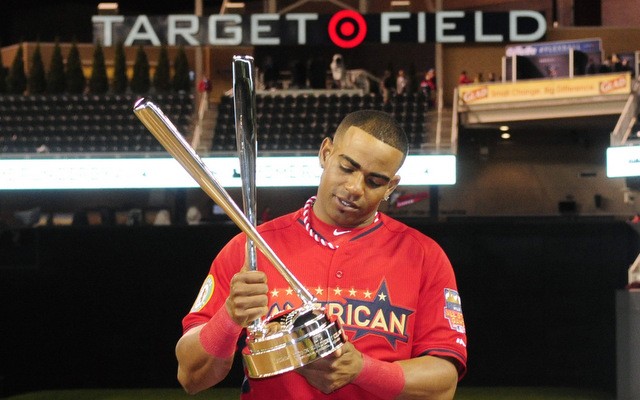
Athletics slugger Yoenis Cespedes won his second consecutive Home Run Derby on Monday, but only after a five-hour ordeal that featured an hour-long rain delay and four hours of swings. The event has had a problem with getting stale in the later rounds for a while now, and the rain delay only made things worse on Monday.
Scour the internet and you will find countless posts and articles with ideas to improve the Home Run Derby. People want this thing to be fun, they really do, so they're all trying to come up with a solution. Here is my attempt to make the Home Run Derby more entertaining and better able to keep the attention of those watching at home (the Derby is pretty awesome live and in person).
Shorten it up!
I applaud MLB's effort to spice things up by changing to a bracket style format, but four rounds and five players per league? That's just too much, even with players only getting seven outs per round. Jose Bautista hit the most homers in Round 1, earned a bye into Round 3, and sat around for nearly two full hours between turns. That's too long. Way too long.
So let's just cut the fat and shorten this thing up. Four players per team -- one captain plus three others -- and five outs per round. That's it. It puts instant pressure on each player and will undoubtedly speed things up. Seed the players one through four based on their season home-run total (if there's a tie, their previous year's total is the tiebreaker), and use a basic 1 vs. 4 and 2 vs. 3 bracket. That leaves you with three rounds and an AL vs. NL final. Nice and simple. And short. People don't have attention spans long enough to sit through four-plus hours of this.
(Obvious problem with shortening the Home Run Derby: advertising revenue. Shorter Derby means fewer commercials and fewer dollars for the networks and MLB.)
Points system to embrace uniqueness of each ballpark
One of my absolute favorite things about baseball is that every park is unique. Aside from golf, there is no other major sport in which the size and shape of the playing surface varies venue to venue. It's awesome.
MLB can take advantage of this with a points scoring system. Nothing too elaborate. Using Target Field as an example ...
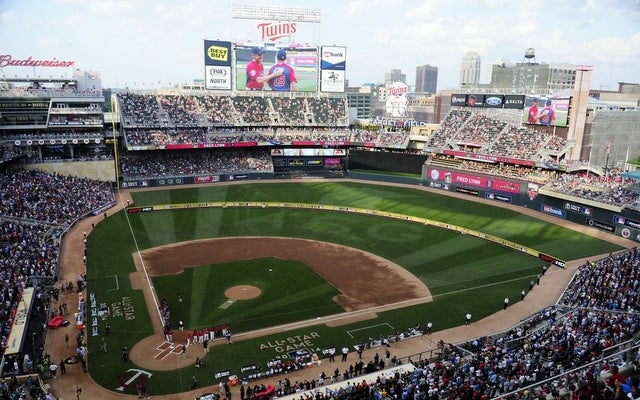
... players could get two points for home runs into the third deck in left field, two points for going over the batter's eye in center, and two points for hitting the ball into second deck in right-center. Everything else is one point. Unfair advantage for right-handed hitters? Maybe, but they already have the advantage at Target Field anyway.
Next year's Home Run Derby and All-Star Game will be held in Cincinnati's Great American Ball Park ...
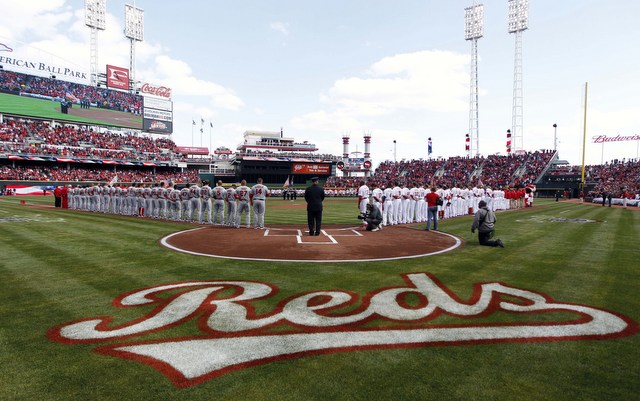
... so it could be two points for going into the top half of the second deck in left field, two points for going clear over the stands in right, and two points for hitting the steamboat in dead center field.
This is an imperfect system, I'll admit that, but the unique angles and features of the individual ballparks is something MLB can exploit and use to add intrigue to the Home Run Derby. Give players a bonus for hitting the hardest homers and giving the fans what they want to see.
Add prospects
This would be a tough sell because casual fans usually don't care about prospects, especially not prospects who don't belong to their favorite team. The league could try to liven things up by adding one prospect per league -- the four-player team would be the captain, two major leaguers, plus a prospect as the automatic four seed -- and let the kid take his hacks.
Remember, baseball's top prospects will already be in town for the Futures Game. So, for example, Kris Bryant of the Cubs and Joey Gallo of the Rangers could have been included in this year's Home Run Derby. Those two (especially Gallo) put on monster batting practice displays before the Futures Game and would have added an underdog element to the Derby. Imagine 20-year-old Joey Gallo coming out of nowhere and jumping into the public eye by beating Bautista in the first round of the Home Run Derby. How fun would that be? Answer: A lot more fun than the Home Run Derby is right now.