- Draft Prep Tiers: C | 1B | 2B | SS | 3B | OF | SP | RP
- Heath's Sleepers | Breakouts | Busts | Hitter regression candidates
- Scott's Top 100 prospects | Sleepers | Breakouts | Busts
For someone used to the traditional Rotisserie format, drafting in a Head-to-Head categories league can be unsettling.
Granted, both use the same 5x5 scoring -- batting average, home runs, RBI, runs and stolen bases for hitters and wins, ERA, WHIP, strikeouts and saves for pitchers -- so the valuation of players should be roughly the same.
It's the urgency that changes. Head-to-Head leagues offer just nine hitter spots and seven pitcher spots to strike that delicate balance between categories. In Rotisserie, it's 16 and nine.
What it means is there are fewer opportunities to counteract weakness. Every weakness that a player introduces to a lineup tips the balance so dramatically that it demands to be addressed both immediately and completely.
Bottom line: You need to make every pick count.
Drafting Dee Gordon in Round 3 only works if you've loaded up on power both before and after. In today's offensive environment, home runs and RBI are where you'll have a hard time hanging with the competition if you don't consistently feed them, so getting virtually nothing in those categories from 11 percent of the hitter portion of your lineup -- and at a point in the draft when most hitters have few weaknesses -- forces you down a certain path for your next few picks. Veer too long, and you're relying on Matt Olson and Joey Gallo types to make up all that ground, squashing the advantage Gordon gave you in batting average.
The same is true to some extent in Rotisserie leagues, but the additional lineup spots allow you to compensate more gradually, doing it across three or four draft picks instead of one or two. It's not something you want to overthink, but you have to remain cognizant of it. Drafting someone you like isn't as important as drafting someone who meets your needs.
Some observations from this particular draft:
- We saw Joey Votto go ahead of Paul Goldschmidt for the first time, which is particularly surprising in a format where Goldschmidt's steals are the most valuable. Blame the humidor.
- Seventeenth overall is the earliest we've seen J.D. Martinez go, and perhaps not coincidentally, this is our first draft since he finalized his deal with the Red Sox. As a general rule, players look more attractive when we can picture what uniform they're wearing. This offseason has been the ultimate case study.
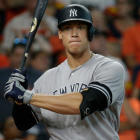
- Aaron Judge in Round 3? Those fully on board with last year's numbers draft him in Round 1. When you get a league full of skeptics, this can happen.
- Lorenzo Cain and Whit Merrifield in Round 6 both seem like ideal picks in this format, projected to contribute a significant number of steals without sinking you in home runs or batting average. I might say the same for A.J. Pollock a few picks later if not for that pesky humidor.
- Ozzie Albies went in Round 9 and Ronald Acuna in Round 11. I suspect both will continue to rise as the season approaches. Definite steals potential for both, in addition to everything else.
Here's who took part:
- Jason Johnson, FantasyPros
- Mike Barner, Lineup Lab
- Chris Towers, CBS Sports
- Mike McClure, CBS Sports
- Heath Cummings, CBS Sports
- Scott White, CBS Sports
- George Maselli, CBS Sports
- Chris Mitchell, RotoExperts
- R.J. White, CBS Sports
- Lawr Michaels, Creativesports
- Igor Mello, CBS Sports
- Adam Aizer, CBS Sports
And here are the results: