Latest News
-
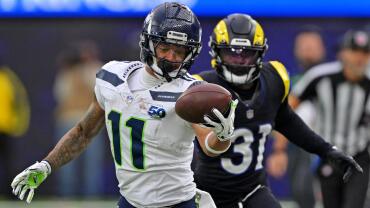
Jaxon Smith-Njigba lands record deal, plus Prisco's mock draft
John Breech -
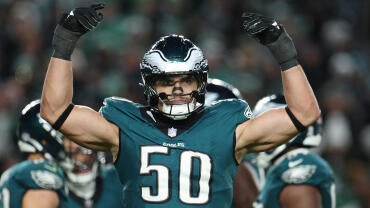
NFL free agency winners/losers after 2 weeks: Panthers, Rams load up
Garrett Podell -

Tom Brady 'unlikely' to play flag football at 2028 Olympics
Carter Bahns -
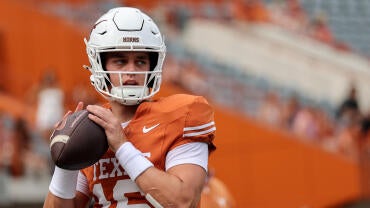
Tank for Arch? Dolphins join top contenders for No. 1 2027 draft pick
Carter Bahns -
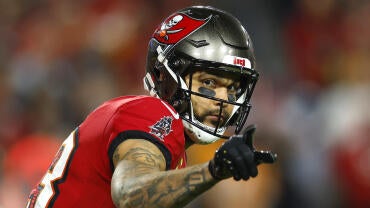
Six free agency moves that changed the NFL playoff picture
Zachary Pereles -
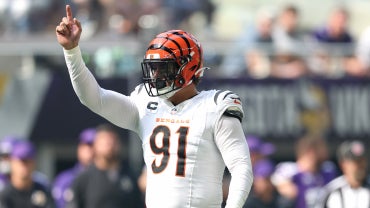
Ravens futures get slightly longer with pass-rushing musical chairs
Matt Severance -
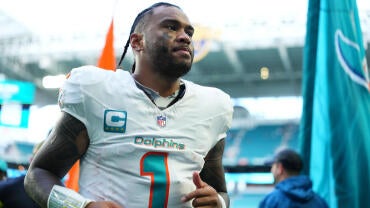
Tua or Penix? Proven model says Falcons have better odds with veteran
Matt Severance -
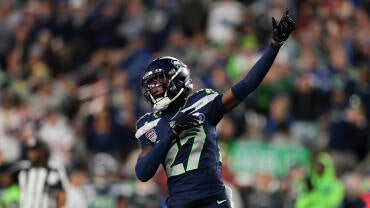
NFL free agency Day 2 grades: Eagles earn 'A' for Woolen signing
Garrett Podell -
How Kenneth Walker signing impacts Chiefs' Super Bowl odds
Matt Severance -

How potential Tua Tagovailoa signing would impact Falcons futures bets
Will Brinson -

Early AFC win total picks and leans before NFL free agency
Will Brinson -
Early NFC win total picks and leans before NFL free agency
Will Brinson -
Maxx Crosby next team odds: Bears favored to land star pass rusher
Matt Severance -
Kyler Murray next team odds: Jets, Vikings most likely to land QB
Chinmay Vaidya -
NFL Draft odds: Jets now have clear favorite to select at No. 2
Jordan Dajani -
A.J. Brown next team odds: Eagles favored but Chargers, Bills lurking
Matt Severance -
Tyreek Hill next team odds: Chiefs, Bills, Ravens contenders for WR
Chinmay Vaidya -
2026 NFL win totals, schedule breakdowns and best values
R.J. White -
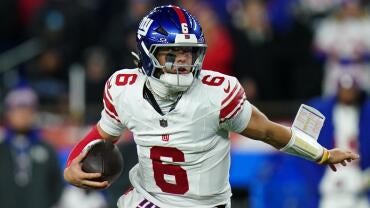
2026 NFL futures odds: Will 2026 MVP race have any viable longshots?
Josh Nagel -
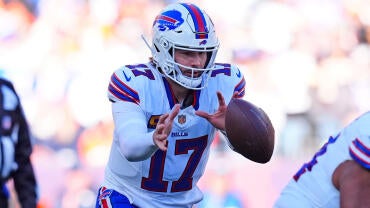
NFL picks: Teams with best Super Bowl chance in head coach's debut
Scott Erskine -
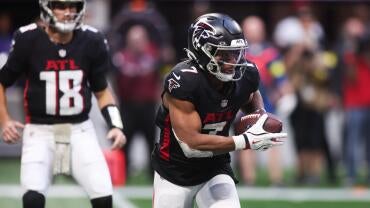
2026 NFL futures odds: Only one division winner favored to repeat
Josh Nagel -
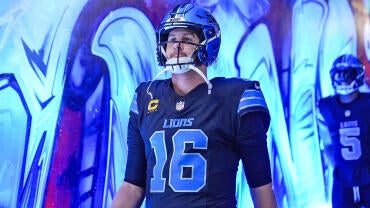
NFL picks: Teams most likely to go from worst to first in 2026
Chinmay Vaidya -
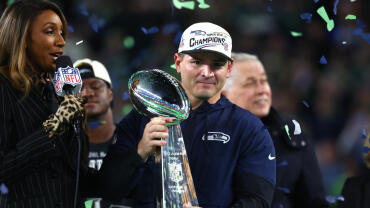
Super Bowl winners and losers, plus two Seahawks players steal show
John Breech -
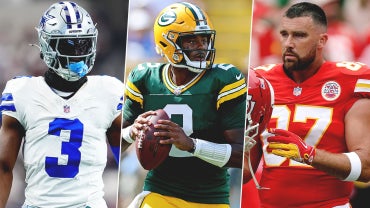
Early Super Bowl LXI odds and the NFL's biggest offseason questions
Garrett Podell -

2027 Super Bowl odds: Seahawks, Rams open as co-favorites
Garrett Podell -
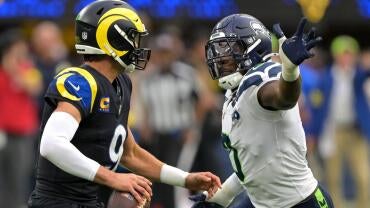
Super Bowl 61 odds: Ranking betting value for all 32 teams
R.J. White -

Where is Super Bowl 2027? Location, date for future NFL championships
Shanna McCarriston -
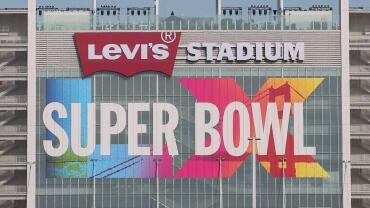
Super Bowl 2026: Where to watch Seahawks vs. Patriots
Zachary Pereles -
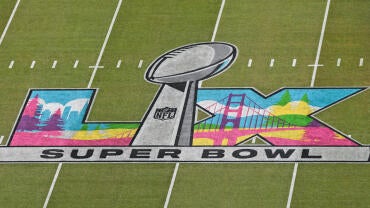
Super Bowl 2026 last-minute best bets, props for Patriots vs. Seahawks
Tyler Sullivan -
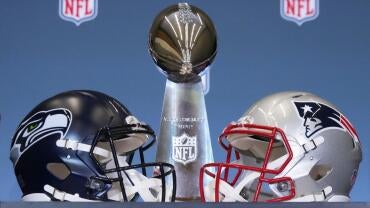
Super Bowl LX expert picks and predictions for Seahawks vs. Patriots
Tyler Sullivan -
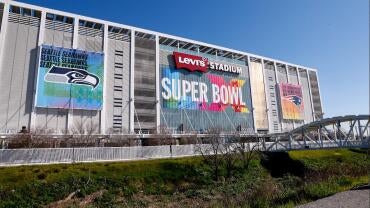
Super Bowl 2026: Key storylines, matchups, prediction
Jared Dubin -
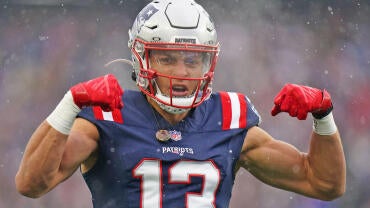
NFL picks: Mack Hollins among expert's best prop bets for SB 60
Scott Erskine -
Super Bowl 60 Betting Props Guide
R.J. White -
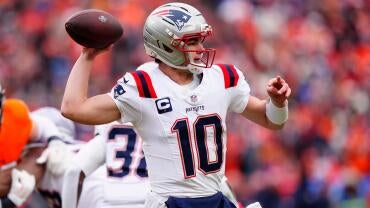
Today's best bets: Seahawks-Patriots in Super Bowl 60, NBA and more
Scott Erskine -

Super Bowl 60: 60 things to know for Seahawks vs. Patriots
Zachary Pereles -
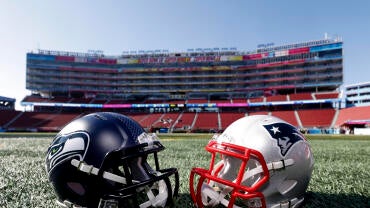
Unlikely but possible: 5 bold Super Bowl LX predictions
Garrett Podell -
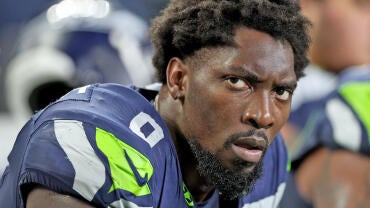
Super Bowl 2026 pick: Seahawks vs. Patriots rematch a super blowout
John Breech -

Today's best bets: Duke vs. North Carolina clash, NBA and more
Brandon Gustafson -
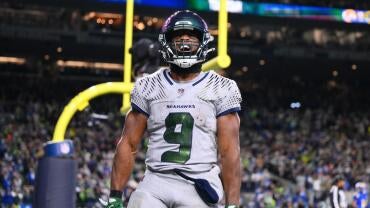
NFL picks: Seahawks vs. Patriots novelty props for Super Bowl 60
Chinmay Vaidya -
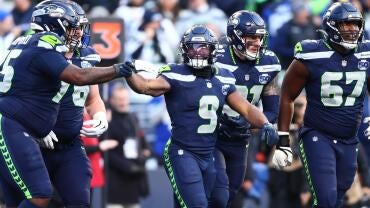
Seahawks-Patriots anytime touchdown scorer bets include Kenneth Walker
James Holliman
NFL Sports Betting Terms:
-
The NFL’s popularity in American sports betting and the nature of each team having just one game per week allows for bettors to dive into each matchup and look for ways to predict the outcome better than the sportsbooks. Here are a few terms you need to know if you want to learn more about NFL betting:
-
Lines:
Lines refer to the odds for any bettable outcome in an NFL game, and they can include spreads, money lines and totals. The most standard NFL lines are spreads, in which one team is given a scoring margin they have to beat in order to win the bet, which is also known as covering. For a three-point spread, the team that’s favored will be listed as -3 and will cover if they can win by four or more points. The underdog will be listed at +3 and will cover if it wins or loses by 1 or 2 points. If the favorite wins by exactly 3, the outcome is a push, and all spread bets will be refunded their original stakes. The money line involves betting on the winner of the game, regardless of the scoring margin. The odds associated with each team will be correlated with the spreads, so that betting on the underdog returns a higher profit on the same amount bet should they pull off the upset. Money line odds tell you either how much you have to bet to win $100 if the listed odds are negative, or how much can be won by betting $100 if the listed odds are positive. A -200 favorite would require a $200 bet to win $100 (or a $2 bet to win $1). A +200 underdog would pay $200 for a $100 wager (or a $1 bet would win $2).
-
Total:
The total refers to the total number of points scored. The standard total listed for each game allows bettors to take a position on how many points will be scored over the course of the entire game. Bettors also have the option to bet total points in each half or any of the four quarters. Totals will be listed with a line and bettors can choose over or under the total listed, with payouts tied to the odds given for each side of the wager. A total of 45 with an Over of -115 and an Under of -105 will pay out $100 for every $115 wagered on the Over if the final combined score is 46 points or more, while it will pay $100 for every $105 wagered on the Under if the final combined score is 44 or less. A final score of 45 combined points will be graded a push and wagers will be refunded their original stakes.
-
Props:
Prop betting allows bettors to take positions on any number of outcomes in a game. Those can include player props, like which players will score touchdowns; game props, like whether there will be overtime; or team props, like whether one team will go over or under a point total unique to them. Player props are one of the most popular ways to bet on the NFL and are typically a core component of building same-game parlays. Key players on each team will have lines assigned to statistical outcomes, and bettors can make wagers on whether they will go over or under the line. For example, a quarterback could have props on whether they will have over or under 250.5 passing yards, or 1.5 touchdown passes, or 0.5 interceptions. Game props allow for betting on certain events happening in each game, like each team scoring a touchdown and kicking a field goal. Bettors can also take positions on the winning margin, which team scores 10 points first and other variations of potential outcomes during the course of the game. Team props give bettors the opportunity to focus on one team’s point total, taking it over or under the line the sportsbooks provide. Team totals can also be available for individual halves and quarters of the game. Bigger games may also offer a number of additional team props like total yards gained as a team or sacks recorded.
-
Live Betting:
Sportsbooks will allow bettors to make live bets during NFL games, adjusting the odds on spreads, totals, money lines and props in real time as each play happens. This allows bettors to take stock of team or player performance as the game goes along and react to certain matchup advantages they identify, injuries that impact the expected performance of the rest of the team, and even to wager on improbable comeback wins at high potential payouts. There is often an opportunity to bet on the outcome of specific drives as well, like wagering on the team that gets the ball first in the second half to score a field goal or a touchdown. Or, if two offenses appear to be struggling, bettors can back the next drive to end in a punt. Live betting also allows bettors to hedge some of their pregame bets to guarantee a profit if their wagers get out to strong starts but they want a bit of insurance. For example, an underdog that is catching 7.5 points on the pregame spread will see that line drop if they get out to an early lead, and if the sportsbooks make that underdog +2.5 on the live line, a bettor can then take the other side and know they’ll win at least one bet with a chance of hitting both if the favorite wins by 3-7 points.
-
Futures Betting:
Futures betting refers to bets placed on future outcomes rather than a single game. These could involve which team will win a division, conference or championship, or even just whether they will make the playoffs. One popular NFL futures bet is a win total, where bettors can play whether a team will win more (over) or less (under) games than the line given by sportsbooks. A win total of 9.5 will pay to the Over if a team wins 10 or more games, while the Under will cash if that team wins nine or fewer games. Season-long awards also provide a way to take a position on certain players reaching their top outcomes. MVP, Rookie of the Year and Coach of the Year are just some of the awards that could be available at sportsbooks, depending on state regulations. Player props have a futures betting component as well, where bettors are predicting whether a player will finish higher or lower than the line set by the books in a particular statistical category. For example, a running back could be listed with a total of 1000.5 rushing yards or 9.5 rushing touchdowns.