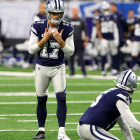

Brian Kelly cites Cam Newton while trying to better define the targeting rule
Notre Dame's quarterback, DeShone Kizer, took two big hits in the Week 12 loss to Virginia Tech

•
1 min read

College football's targeting rule has been controversial since the moment it was enacted, if for no other reason than no one seems to know exactly what targeting is.
Sure, there's the textbook definition of the rule, which defines targeting as many things, not just helmet-to-helmet contact. However, the inconsistency in the application of the rule -- from intent to area of contact -- has been drawn the ire of many.
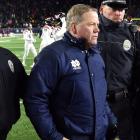
You can now add Notre Dame coach Brian Kelly to that group.
Kelly called on the NCAA to further clarify what targeting meant after quarterback DeShone Kizer took two hits in a Week 12 loss to Virginia Tech -- one in the third quarter and one on the second-to-last play of the game. The Irish have reportedly submitted tape of the hits to the supervisor of officials for further review.
"It's just not right. We're either going to protect the quarterback or we're not going to protect the quarterback," Kelly said (via ESPN). "Just have to figure out what they want to do with this. The supervisor of officials has got to make a clear edict as to how they want this officiated. He clearly has not made it clear enough how this is going to go."
"It's clear on film that it was a helmet-to-helmet on a defenseless player," he continued. "It's just beyond me why it doesn't get reviewed.That's what their job is, to review it."
Kelly also likened the hits to the ones Carolina Panthers quarterback Cam Newton has taken this year in the NFL. Newton made headlines last month when he said he planned "on talking to commissioner [Roger] Goodell" about the no-calls on the hits he had been taking. Statistically speaking, there was evidence suggesting Newton had a legit bone to pick.
Likewise, Kelly has every right to call upon higher-ups to examine hits closer if he feels like his mobile quarterback is getting unfairly punished.
The thing about targeting, though, is it applies to every player outside the quarterback. But, usually, only quarterbacks and offensive skill players are the ones who benefit from it. If the supervisor of officiating is going to further evaluate targeting, it needs to be done for the safety of all players, offense and defense.