
Following that Yankees-Cubs marathon, making a case for and against ties in MLB
We make the case for and against ties in baseball coming off that Yankees-Cubs marathon

By
Matt Snyder
•
4 min read

In major-league baseball, we're treated to a marathon of a game every once in a while. Many casual fans will wake up and see the headlines and then kind react with a shoulder shrug and "huh, there was a game that went 16 innings last night" and that's it. It's a fleeting thought and nothing more.
Meanwhile, those same people will blow a gasket if anyone ever suggests that maybe for regular-season games -- of which there are 162 per team, mind you -- maybe it wouldn't be so awful to just end the thing in a tie after, say, the 12th or 13th inning.
It's a hot topic right now because there was an 18-inning game Sunday night. Oh, and it involved the Yankees. And the Cubs. And it was on national television. So the level of discussion is skyrocketing and it's time to join in on it.
Let's be above that hateful/hot take nonsense and try to have a civil conversation about the possibility of ending games in a tie.
OK, so I admit I was laughing to myself while typing "civil conversation" on the internet in 2017, but it's worth a shot. Onward!
The case for ties
The major-league regular season is already a soul-crushing marathon for teams and players. It's 162 games over the course of six months. Teams play at least five games a week and many times every single day in a week. With more specialization in bullpens, relievers are often shuttled to and from the minors in order to keep guys fresh. A prolonged extra-inning game makes things even more tenuous.
Take the Cubs' recent flurry of roster moves. Their bullpen was taxed during a four-game series against the Phillies and the club designated outfielder Matt Szczur for assignment in addition to optioning reliever Justin Grimm to Triple-A Iowa in order to bring up relievers Rob Zastryzny and Felix Pena. They needed extended work from both relievers Saturday and then sent Zastrysny back down while placing Brett Anderson on the DL in order to bring back Grimm and infielder Tommy La Stella.

After the 18-inning affair Sunday, the Cubs now head to Colorado for a series in Coors Field. Expect several more moves.
This happens often throughout the season for many teams.
This isn't about feeling sorry for any players or teams -- though that strawman will surely be used by those staunchly opposed to ties -- it's about practicality.
The one thing I keep coming back to on this subject remains: What is gained by continuing the game past the 13th inning?
Taking Sunday's example, the Yankees won a game and the Cubs lost. What's the likelihood that it makes a difference in the standings at the end of the year to have a Yankees W and Cubs L instead of two Ts? There's a slight chance it will matter, but the odds are very low.
Honestly, though, I'm just not seeing a whole lot of redeeming value to making the teams play into the twilight. There were only 32 games last season that lasted more than 12 innings. Only 14 went past 13 innings and only eight went past 14 innings. If we change those to ties, the standings barely feel an aftershock, much less an earthquake.
Meantime, the stands are completely emptied out, every fan with a "real job" is already asleep and teams are using three pitchers as pinch hitters.
It's a novelty for a select few die-hard fans, but the overwhelming majority of people aren't paying attention while teams are draining their supply of energy for the next several days.
I'll also make a prediction: Many who are arguing the hardest over not allowing ties didn't stay up for the rest of the game Sunday night after, say, the 11th inning.
The case against ties
It just feels wrong. There haven't been extra-inning games ending in a tie by rule -- aside for weather or daylight-related matters -- since anyone alive has been a baseball fan. "You play until there's a winner" is how it has always been and, generally speaking, baseball fans hate two particular things here:
- Change
- Ties
There will be a chorus against any motion to declare games ties after a certain number of innings (I would prefer 12 but could deal with 13) because of those two items. It's different than it has been before and ties are evil.
Diving deeper, there's an argument to be made that roster moves could be more flexible or even expand in special circumstances. Perhaps they implement something like allowing two extra pitchers for two days following games of more than 13 innings or something like that.
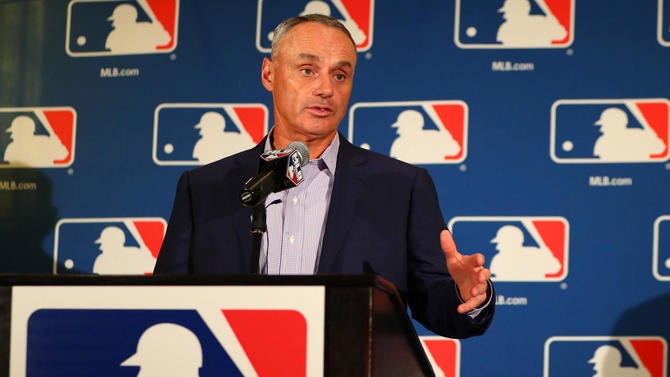
Or baseball could simply just leave everything as it is since it's not ultimately a huge problem. Take note of those numbers I cited above. Only 32 games last season lasted more than 12 innings. Only 14 went past 13 innings. That's out of 2,427 total games, meaning only 1.3 percent of the games went past 12 innings.
Is that really something that should be worrying the league enough to put a cap on the innings played?
I think the last point here is the greatest point of all. Maybe don't make a mountain out of a molehill? The reason the 18-inning game Sunday night is getting attention -- aside from it being the Yankees and Cubs -- was that it pretty much never happens. So why freak out and start talking about big changes to the game?
I don't love the idea of ties, but they would ultimately be pretty harmless compared to the destruction 18-inning games do to pitching staffs in the middle of our marathon of a season.
Then again, marathon games rarely happen in the course of the marathon season.
There's a good case to be made by both sides here. Where do you fall?