Agent's Take: A team-by-team guide to fifth-year option decisions
It's just about time for teams to decide whether they'll be picking up the fifth-year options on 2013 first-round picks (if they haven't already). Whose options are getting exercised, and whose aren't?
By
Joel Corry
•
14 min read

NFL teams haven't quite figured about the best approach to fifth-year options for first-round picks under the 2011 Collective Bargaining Agreement's rookie wage scale. 2016 is the third year teams are faced with the decision.
Linebacker/safety Mark Barron, linebacker Bruce Irvin and running back Doug Martin, all first-round picks in 2012, should be thankful the Rams, Seahawks and Buccaneers didn't pick up their respective fifth-year options with them for $8.263 million, $7.751 million and $5.621 million. Each signed lucrative multi-year deals for more than their options.
Barron remained with the Rams on a five-year, $45 million deal that has $20 million in guarantees. Martin also stayed put on a five-year, $35.75 million deal (worth up to $42,937,500 with salary escalators and incentives) with $15 million fully guaranteed. Irvin is making almost $5 million more this year with the Raiders than he would have made playing under the option year in Seattle. His four-year contract is for $37 million (worth a maximum of $39 million through incentives) and contains $19 million in guarantees.
All contracts for draft choices are four years. These deals can't be renegotiated until the conclusion of a player's third regular season. This means players selected in the 2013 NFL Draft are eligible to sign new deals.
The window for exercising fifth-year options with first-round picks starts after a player's third regular season in the NFL ends (Jan. 2, 2017 with the 2014 first-round picks). The deadline to pick up the option year is May 2. The fifth year is guaranteed for injury when the option is exercised. The option year becomes fully guaranteed on the first day of the league year in the fifth contract year (approximately March 8, 2017 for the 2013 draft class).
There's a difference in option-year salary depending where in the first round a player is drafted. The fifth-year salary for the top 10 picks is the transition tender (average of the 10 highest salaries) for a player's position in the fourth year of his contract. With players selected outside of the top 10 (picks 11-32), the fifth-year salary is the average of the third- through 25th-highest salaries at a player's position.
The chart below contains the fifth-year or option-year salaries for 2013 first-round picks.
| Salaries associated with fifth-year options, 2013 | ||
| Position | 1st 10 Picks | Picks 11-32 |
| Cornerback | $11,913,000 | $8,026,000 |
| Defensive End | $12,734,000 | $8,069,000 |
| Defensive Tackle | $10,875,000 | $6,757,000 |
| Linebacker | $11,925,000 | $8,369,000 |
| Offensive Line | $11,902,000 | $8,821,000 |
| Punter/Kicker | $4,123,000 | $3,011,000 |
| Quarterback | $17,696,000 | $11,357,000 |
| Running Back | $9,647,000 | $5,824,000 |
| Safety | $9,116,000 | $5,676,000 |
| Tight End | $7,713,000 | $4,782,000 |
| Wide Receiver | $12,268,000 | $7,915,000 |
Option decisions for 2013 first-round picks
Thirty-one of the 2013 first-round picks were eligible for the fifth-year option when the 2015 regular season ended. Here's the option-year prognosis for each 2013 first-round pick, in the order in which they were drafted.
Kansas City Chiefs OT Eric Fisher (No. 1)
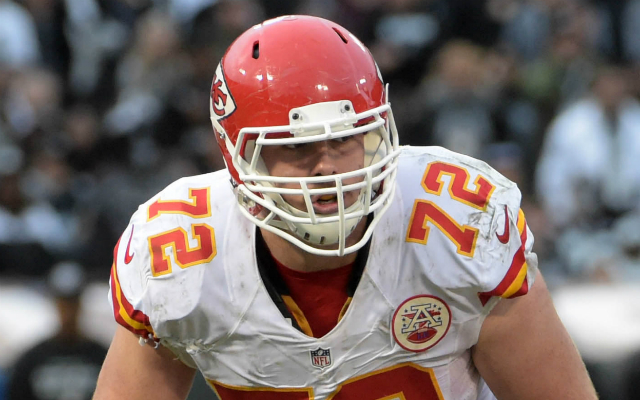
The Chiefs and Fisher have reportedly engaged in discussions about a contract extension that would render the option decision moot. Although Fisher hasn't developed as expected, he has shown enough promise to receive the benefit of the doubt with the option year.
Jacksonville Jaguars OT Luke Joeckel (No. 2)
Joeckel's disastrous regular-season finale against the Texans where he gave up five sacks was such a cause for concern that the Jaguars signed Kelvin Beachum, who is coming off of a torn left ACL, to provide competition at left tackle. General manager David Caldwell doesn't plan on making a decision about Joeckel's fifth year until the NFL Draft, which is April 28-30, is over. Since Beachum signed a one-year deal for $5 million with an option for $40 million over four years (worth up to $50 million through salary escalators), Caldwell hedging his bets at left tackle by picking up Joeckel's option would provide the Jaguars with the most flexibility. Joeckel could become one of the rare players released under the rookie wage scale before the salary guarantee date of the fifth-year option, like Robert Griffin III, if he doesn't beat out Beachum.
Miami Dolphins DE Dion Jordan (No. 3)
Miami doesn't have to make a decision on Jordan because his contract tolled with his indefinite suspension for violating the league's substance abuse policy. He'll be playing under the terms of his 2015 contract year if he's reinstated by commissioner Roger Goodell.
Philadelphia Eagles OT Lane Johnson (No. 4)
Former long-time high-ranking executive Joe Banner's practice of extending core Eagles players well in advance of free agency has returned with Howie Roseman regaining power. Johnson, who is expected to eventually switch to left tackle, received a five-year, $56.25 million extension (worth up to $60 million through salary escalators) before the 2015 season's playoffs were over.
Detroit Lions DE Ziggy Ansah (No. 5)
Ansah becoming one of the NFL's better pass rushers is why his option year will be picked up. He was third in the NFL with 14.5 sacks in 2015. An extension reportedly isn't in the works for Ansah right now. When the time comes, defensive end Oliver Vernon's five-year, $85 million free agent contract with the Giants containing $52.5 million in guarantees will likely be an important data point.
Cleveland Browns OLB Barkevious Mingo (No. 6)
Mingo reportedly being shopped to other teams prior to last season's trading deadline suggests that the Browns will pass on a fifth year for $11.925 million. Defensive coordinator Ray Horton, who held the same position with the Browns during Mingo's rookie year before joining the Titans, will try to get Mingo to live up to his draft position by using him differently than in the past.
New England Patriots OG Jonathan Cooper (No. 7)
Edge rusher Chandler Jones was traded to the Cardinals from the Patriots for Cooper and a 2016 second-round pick (61st overall) last month. Cooper was unable to remain in the Arizona's starting lineup and a move to center was planned for him in 2016 had he stayed with the team. His $11.902 million option year salary for 2017 may be too cost-prohibitive considering New England won't have much time to evaluate him before making the decision and it doesn't reflect the guard market.
Los Angeles Rams WR Tavon Austin (No. 8)
Picking up the fifth year is hard to justify based on Austin's production. Austin had career bests of 52 receptions, 473 receiving yards and five touchdown catches in 2015 without quarterback stability. The $12.268 million price tag on the option would be paying him like an upper-echelon No. 1 wide receiver when he has yet to demonstrate that type of ability.
New York Jets CB Dee Milliner (No. 9)
It's unlikely the Jets will exercise the option with Milliner. General manager Mike Maccagnan and head coach Todd Bowles don't have a vested interest in Milliner, who was drafted by former general manager John Idzik. Milliner's 2014 season was derailed by wrist surgery, which landed him on injured reserve with a designation for return. Once activated in Week 10, Milliner didn't receive any defensive snaps for the remainder of the season. Buster Skrine is getting first crack at replacing cornerback Antonio Cromartie, who was a salary cap casualty. Marcus Williams is also waiting in the wings.
Tennessee Titans OG Chance Warmack (No. 10)
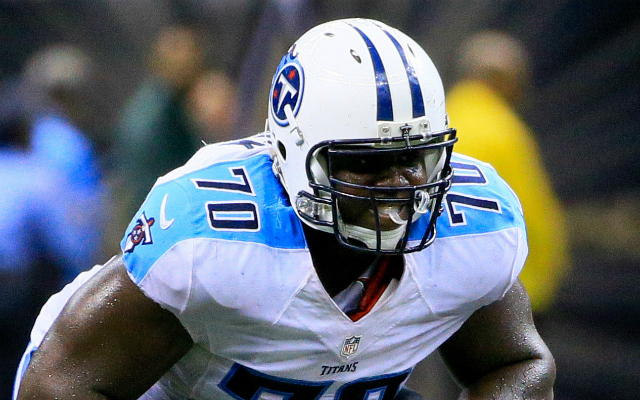
A salary of $11.902 million in 2017 could be a bit much for Warmack since he wasn't a standout on Pro Football Focus' fourth-worst NFL offensive line in 2015. Warmack would stand a better chance of getting the fifth year if a distinction were made between the offensive line positions (center, guard and tackle) with the options.
San Diego Chargers OG D.J. Fluker (No. 11)
Fluker was moved to guard in 2015 after struggling at right tackle during the first two years of his NFL career. The drop in option prices beginning with the 11th pick could be Fluker's saving grace with the extra year, since his $8.821 million salary is almost $3.1 million less than it would have been going one pick higher.
Oakland Raiders CB D.J. Hayden (No. 12)
It will be a surprise if Oakland exercises their option with Hayden. At best, he will be Oakland's third cornerback because of the emergence of David Amerson, who was a pleasant surprise last year as an early-season waiver wire pick up, and the signing of Sean Smith in free agency.
New York Jets DE Sheldon Richardson (No. 13)
The Jets have already decided to pick up Richardson's option. It's probably an either/or proposition for a long-term deal with franchise player Muhammad Wilkerson and the 2013 Defensive Rookie of the Year because the Jets have one too many 3-4 defensive ends with Leonard Williams, the sixth-overall pick in last year's NFL Draft, being as good as advertised. Signability is an issue with Wilkerson and Richardson's well-documented off-the-field problems may still be a cause for concern.
Carolina Panthers DT Star Lotulelei (No. 14)
The Panthers were the first team to announce a decision on an option year with a 2013 first-round pick. Lotulelei's fifth year was picked up during last month's owners meeting. Kawann Short, Carolina's other starting interior defensive lineman, will be a long-term signing priority over Lotulelei. The 2013 second-round pick is in a contract year and was a second team All-Pro in 2015.
New Orleans Saints S Kenny Vaccaro (No. 15)
The Saints picked up Vacarro's option after he rebounded from a disappointing 2014 season. Vaccaro's improved play in 2015 wasn't enough to keep the Saints from having a historically bad defense last season. The Saints were last in the NFL in points allowed (29.8 per game) and next to last in total defense (413.8 yards per game). The 45 touchdowns given up through the air were the most ever in an NFL season.
Buffalo Bills QB EJ Manuel (No. 16)
An $11.357 million option doesn't make a lot of sense for a backup even though starting quarterback Tyrod Taylor is in a contract year. $7 million to $7.5 million is currently top backup quarterback/compete-to-start money.
Pittsburgh Steelers OLB Jarvis Jones (No. 17)
Injuries and the return of James Harrison have hindered Jones' development. Harrison coming back for a 14th NFL season probably means Jones' role won't change dramatically this season. Nonetheless, exercising the option may make sense because Harrison turns 38 next month.
San Francisco 49ers S Eric Reid (No. 18)
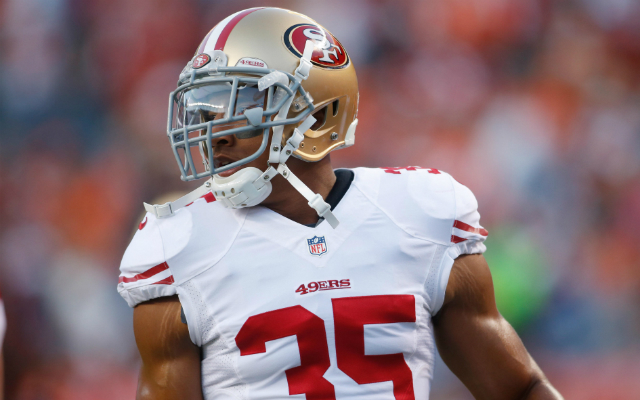
Reid made the Pro Bowl as an alternate as a rookie but hasn't played at that level since. The 49ers' lack of talent and abundance of salary cap room in 2017 could tip balance in favor of picking up Reid's fifth year despite his concussion history, which could bring the injury guarantee more into play than with others. Reid had three concussions in his first two NFL seasons.
New York Giants OG Justin Pugh (No. 19)
Pugh thrived in his move to left guard after spending most of his time at right tackle during his first two NFL seasons. This makes the decision on Pugh's option pretty easy for the Giants.
Chicago Bears OG/OT Kyle Long (No. 20)
The Bears have already decided to pick up the option on the 2014 second-team All-Pro. There had been some debate on whether Long would stay at right tackle for 2016. It appears that he will move back to his preferred position of right guard, which is better for him financially. The right tackle market has become depressed, with no one making more than $7 million per year besides Johnson, whose deal reflects his future move to left tackle. The five-year, $58.5 million deal (worth up to $60 million through incentives) containing $25.4 million fully guaranteed Kelechi Osemele received from the Raiders has dramatically changed the marketplace for guards.
Cincinnati Bengals TE Tyler Eifert (No. 21)
Picking up Eifert's option year was a no-brainer for the Bengals. He became one of the NFL's best red zone threats in 2015 after missing almost all of the 2014 season with an elbow injury.
Atlanta Falcons CB Desmond Trufant (No. 22)
It's just a matter of time before the Falcons exercise Trufant's option. As one of the NFL's better young cornerbacks, Janoris Jenkins' free-agent deal with the Giants ($12.5 million per year/$28.8 million fully guaranteed) set a salary floor for a long-term extension with Trufant.
Minnesota Vikings DT Sharrif Floyd (No. 23)
Floyd was slowed a little bit in 2015 by an ankle injury. It isn't going to impact Minnesota's decision to pick up Floyd's option year.
Free-agent OLB Bjoern Werner (No. 24)
Werner was released in March before the 2016 league year started. He never developed as a pass rusher during his three years with the Indianapolis Colts.
Minnesota Vikings CB Xavier Rhodes (No. 25)
The Vikings tried an unconventional approach by putting boxing gloves on Rhodes in practice so he would stop committing defensive holding penalties. The option year isn't a concern since Rhodes is Minnesota's best cornerback.
Green Bay Packers DE/OLB Datone Jones (No. 26)
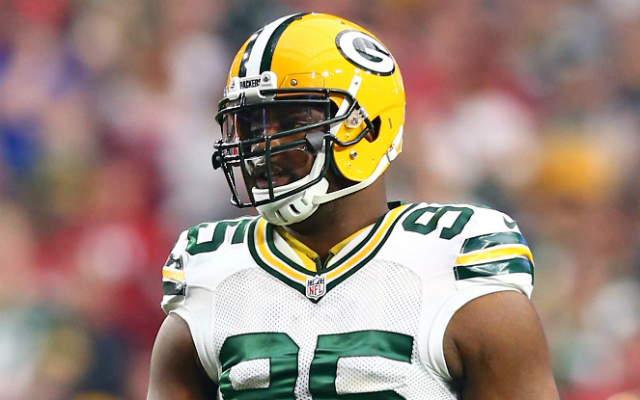
The Packers passing on outside linebacker Nick Perry's option last year because of his inability to become a full-time starter suggests that same will happen with Jones. He has three starts in three years. Green Bay experimented with Jones at outside linebacker as an edge rusher in 2015. The expectation is he'll spend more time in that role this season.
Houston Texans WR DeAndre Hopkins (No. 27)
Houston exercising Hopkins' option was an easy decision. He had arguably the best receiving season (111 catches, 1,521 yards, 11 touchdowns) in franchise history during his breakout campaign, in which he made fans forget about seven-time Pro Bowler Andre Johnson's departure. The real issue is whether Hopkins will sign an extension before his fourth year begins, like 2011 and 2012 first-round picks J.J. Watt and Whitney Mercilus. Hopkins won't come cheap. He could command the same type of deal Dez Bryant, A.J. Green, Julio Jones and Demaryius Thomas signed in 2015 averaging between $14 million and $15 million per year. With the exception of Green, the players received between $43.5 million and $47 million of guarantees in their contracts.
Denver Broncos DT Sylvester Williams (No. 28)
It's hard to image the Broncos passing on Williams' option after losing defensive end Malik Jackson and linebacker Danny Trevathan in free agency. Williams' option year is an affordable $6.757 million.
Minnesota Vikings WR Cordarrelle Patterson (No. 29)
Things went from bad to worse for Patterson. He got into the doghouse of head coach Mike Zimmer and offensive coordinator Norv Turner in 2014. He was primarily a return specialist in 2015. He caught two passes for 10 yards last season. It's one thing to pay Patterson a little less than $1.4 million for 2016 given his role, but $7.915 million in 2017 is a different story.
Los Angeles Rams LB Alec Ogletree (No. 30)
Ogletree was lost for the season after four games because of a broken right fibula. He is making the switch from weakside linebacker to middle linebacker in 2016. James Laurinaitis never would have been released if Rams weren't confident in Ogletree replacing him in the middle for the foreseeable future.
Dallas Cowboys C Travis Frederick (No. 31)
The Cowboys were widely criticized for trading the 18th-overall pick to the 49ers for the 31st-overall pick and a 2013 third-round pick (74th overall) in order to draft Frederick. Several teams reportedly had Frederick rated much lower than his draft position. Frederick quickly developed into a Pro Bowl center. Exercising his option year is certainty.
Baltimore Ravens S Matt Elam (No. 32)
Elam has bigger things to worry about than his option year, which the Ravens aren't expected to pick up. His roster spot could be in jeopardy with the addition of Eric Weddle and Lardarius Webb moving from cornerback to safety.
Option-year draft strategy
The two tiers of option-year salaries create added valued for those picks right outside of the top 10. Not only are the salaries for these picks lower than top-10 picks, there's additional future savings with the option year.
The 11th pick in the first round is the worst draft position from an option year standpoint as far as players are concerned. Defensive tackle Dontari Poe was taken 11th by the Chiefs in 2013. His option-year salary this year is $6.146 million. If Poe had been drafted one pick higher, he would be making $9.314 million. There's a $3.168 million difference in option-year pay because he went 11th instead of 10th. Teams trading out of the bottom portion of the top 10 to one of the picks right outside of the top ten may start to become more of a consideration because of the difference in option-year price, provided there's a belief the desired player will still available.
The reverse is already happening at the end of the first round. Teams with picks in the top half of the second round that covet a particular player, especially a quarterback, have traded into the bottom of the first round because of the fifth-year option. For example, in 2014 the Vikings gave the Seahawks second- (40th overall) and fourth-round (108th overall) picks to move up to the last pick in the first round (32nd overall) to select quarterback Teddy Bridgewater.
Derek Carr, who was taken four picks later (36th overall) by the Raiders, is probably going to get a second contract before Bridgewater. Since Carr isn't subject to an option year as a second-round pick, 2018 will be his contract year. Bridgewater won't be in his contract year until 2019. His option, which must be exercised next year, will probably be in the neighborhood of $12 million. That amount is below the average salary for a starting quarterback in 2015.
The dynamic could unfold with this year's draft if Paxton Lynch is still available late in first round. The Browns (first pick in the second round), Cowboys (third) and 49ers (sixth) could be prime candidates to move into the bottom of the first round, provided those teams don't draft a quarterback with their first pick.
Joel Corry is a former sports agent who helped found Premier Sports & Entertainment, a sports management firm that represents professional athletes and coaches. Before his tenure at Premier, Joel worked for Management Plus Enterprises, which represented Shaquille O'Neal, Hakeem Olajuwon and Ronnie Lott.
You can follow him on Twitter: @corryjoel | You can email him at jccorry@gmail.com