MLB open to shortening commercial breaks, but there are big obstacles to overcome
Is MLB willing to sacrifice revenue to improve the pace of the game?

By
Mike Axisa
•
2 min read

Over the last two years, MLB and the MLBPA have been looking for ways to improve the pace of play. The goal isn’t to shorten a game, necessarily. They just want to reduce the downtime within a game, the time when players are just standing around. Shortening games is a byproduct of that.
As part of those pace-of-play efforts, intentional walks are now automatic, MLB and the MLBPA announced earlier this week. Rather than forcing the pitcher to throw four wide ones, the manager now makes a signal from the dugout and the batter is sent right to first base. Rules about stepping out of the batter’s box and the time managers have to ask for instant replay have been implemented as well.
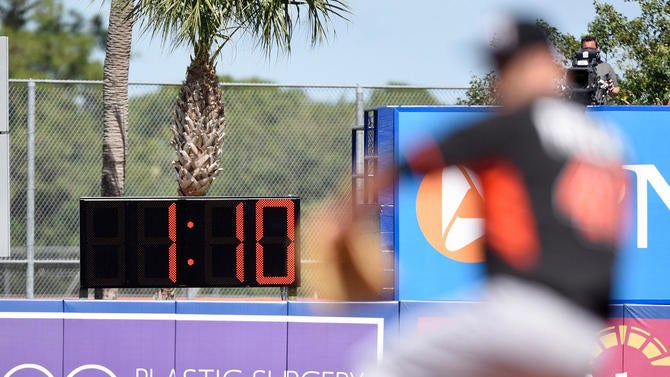
There is one obvious way for MLB to cut down on the time of game and get fans focused on the action: shorten commercial breaks. Right now there is a clock in each ballpark that ensures play begins as soon as the commercial break ends, though oftentimes the pitcher has completed his warmup and players stand around waiting for the commercial break to end. That’s not fun to watch at the ballpark.
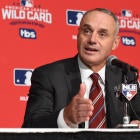
In a recent interview with Maury Brown of Forbes, commissioner Rob Manfred indicated he is not opposed to shortening commercial breaks to improve the pace of the game. Here’s what Manfred told Brown:
“I fully agree with the idea of examining our commercial load in our broadcasts and is something that we should be doing,” Manfred said. “There are contractual limitations on when we can do this; we have existing commitments. But, that certainly should be an issue we look at, as well.”
Therein lies the rub: contractual limitations prevent MLB from unilaterally shortening commercial breaks. The various television networks, both local and national broadcasts, pay lots of money to broadcast baseball games, and they have to be given the opportunity to sell commercial time to turn a profit.
Removing one 20-second ad per commercial break shortens a nine-inning game by a whopping five minutes and 40 seconds. However, sacrificing five minutes and 40 seconds of commercials per game across a full 162-game season would surely equal millions of dollars in lost revenue for the networks. That won’t fly.
Perhaps MLB and the owners are so determined to improve the pace of play that they’re willing to take the financial hit. They’d assume the loss by not charging networks as much to broadcast games. I have a hard time thinking that will happen.
To further complicate things, the television contracts all expire at different times. Some expire in two years, others expire in 20 years.
In his relatively brief time as commissioner, Manfred has shown he is very thorough and willing to consider new ideas. That’s a very positive trait in my opinion. Cutting commercial time would improve the pace of play, but the revenue hit figures to be substantial, and it seems unlikely the owners would sign off on anything that takes money out of their pockets.