Michele Roberts optimistic Players Union and owners can avoid lockout
With the Collective Bargaining Agreement essentially up in 2017, both sides are being cordial and making progress

By
Zach Harper
•
3 min read

The spending of the 2016 summer has sent some people into worry mode that there will be a lockout and it will be contentious in 2017. After next season, either side between the Players Union and the NBA owners are expected to exercise the option to opt out of the current Collective Bargaining Agreement. That means they'll need to agree to a new CBA before we can get into free agency and especially the upcoming 2017-18 season. The spending this summer has made some worry that the owners will push for a hard cap, which is a non-starter for the union and its constituents.
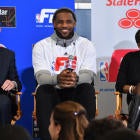
We may not need to activate worry mode though. According to Gary Washburn of the Boston Globe, we may avoid a lockout in 2017 altogether. NBPA executive director Michele Roberts told Washburn that she is making progress in her talks with NBA commissioner Adam Silver and they hope to have an agreement hammered out for the next CBA before we get to the possibility of a lockout.
Roberts told the Globe in a telephone interview that the two sides are talking and making progress.
"I can't [discuss the talks] because I promised [not to]," she said. "I'm not going to be too terribly substantive but I will say I do believe and [Commissioner] Adam [Silver], I hope he agrees, he and I continue to maintain a civil relationship. I actually like him. I think that he's a pro.
"We've had discussions. Our teams have been in discussions for some months now and we have made progress and we're inclined to continue along those lines. We have meetings this summer and we're meeting next week and [consistently] after that. We're trying to get a deal as quickly as we can, ideally before the start of the season."

This is great news for basketball fans. While a lockout doesn't necessarily mean the loss of regular season games like we had in 1999 and 2011, the two sides could certainly dig in on important issues and end up becoming too competitive for the league's own good in hammering out a beneficial deal for their side. The influx of television money with the new national TV deal means there is a much bigger pie to divide up. In 2011, the players ended up going from 57 percent of basketball related income (BRI) to just 51 percent. It seems unlikely the tenacious Roberts would be willing to give up more of the players' money in her first NBA CBA negotiation.
Whenever a big shift in the business of basketball happens, the owners typically overreact and lock out the players to get a grip on the CBA side of it all. It happened in 1999 when Kevin Garnett's record-breaking contract for a 21-year old caused the owners to find ways to not have to give such young players considerable money that early in their careers. It happened again in 2011 when LeBron James and Chris Bosh joining Dwyane Wade in Miami made the owners try to find a system that makes it even harder for star players to leave their incumbent teams.
With the spending this summer and the fact that Kevin Durant formed a super-team with the Golden State Warriors, it's not crazy to think the owners would overreact again to an outlier situation and try to hammer out a new agreement that makes it even harder for superstars to leave (even if they've been there nine years). That plus the popularity of the one-and-one deal for players to keep flexibility and maximize potential earnings within big percentages of a growing salary cap have some owners worried about their business side of keeping those players or having an advantage in re-signing them long-term.
Roberts and Silver don't want a lockout, by any means. This kind of positivity so far out from the deadline to get a deal done without a lockout happening (again lockout isn't a dooming occurrence -- 1996 lockout lasted a couple of hours) should hopefully lead to good things and no missed games.