Ex-Jets great Mark Gastineau: Diagnosed with dementia, Alzheimer's and Parkinson's
Gastineau attributes his playing style to his post-football health issues

By
Ryan Wilson
•
1 min read

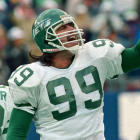
Mark Gastineau's NFL career spanned 10 seasons, all with the Jets, where he was a member of the New York Sack Exchange. He retired in 1988 with 107.5 sacks, including 22 during the 1984 season.
Known for his relentless motor and hard-charging style, Gastineau, now 60, says his health-related issues are largely related to how he played the game.
"When my results came back, I had dementia, Alzheimer's and Parkinson's," Gastineau said Thursday on 710 WOR Radio. "Those were three things that I have. ... It's something that I want every player that goes out and plays to be protected in the best way they can be protected. ...
"I know that there's techniques out there that if I would have had 'em, if I would have had the techniques out there that I'm teaching now to these kids, I know I would not be probably ... I know I wouldn't have the results that I have now," he said on the radio.
He added: "I led with my head all the time."
Gastineau said he was diagnosed about a year ago.
"You know, my first reaction was that I didn't believe it. I couldn't believe it," he told the New York Daily News in a phone interview Thursday night. "My second reaction was how can I help other people coming in to the NFL? That's what it's all about."

So knowing what he knows, does Gastineau think kids should play football?
"The only reason I would allow my child to play is because of this USAFootball.com," he said. "I would not allow my child to play if I did not have this Heads Up Football. There's no way in the world. You cannot expect your child to not be injured if you do not enter this program. If a high school doesn't have this program, there should not be a program."
Gastineau has been an ambassador for USA Football for several years.
"I don't want (my diagnosis) to over shadow the Heads Up Program," he continued. "I want it to be a warning to mothers and fathers to be able to put their kids in the safe places to be able to carry on a team sports that I think is going to be way more beneficial for them than if they didn't have it in their lives."