Coaches looking at how they are seeded but it all starts with how they schedule
A number of coaches will meet this summer to discuss issues with the NCAA Tournament

•
5 min read
Some interesting news came about on Monday: A handful of knowledgeable college basketball coaches are gonna have a few get-togethers this summer, talk about the NCAA Tournament and eventually give their thoughts, suggestions and talking points to the NCAA men's basketball selection committee.
Why are they doing this? To further a dialogue and, hopefully, create more consistency and understanding when it comes to not only reaching the NCAA Tournament, but landing a better seed, too. And within that discussion, more discourse on seeding vs. location for teams. Is is better to travel less but sacrifice a seed line if it means not getting on a plane for the first and second rounds?
The general public might think college coaches have a firm grasp of what makes for a good NCAA Tournament resume, but the reality is, the criteria alters on the regular (remember, the NCAA selection committee changes every year) and the ins and outs of a good profile have created plenty of speculation and consternation among the coaching constituency over the years. The NCAA's selection committee has gotten smarter, on the whole, when it comes to this.
(Though there are still serious missteps that occur. Hello, Tulsa in 2016. The mind still reels from that pick.)
This ad hoc committee, made on behalf of the National Association of Basketball Coaches (NABC), is a savvy move.
"The purpose of the ad hoc committee is to provide the perspective of men's basketball coaches as well as a team perspective to the NCAA Division I Men's Basketball Committee regarding the selection, seeding and bracketing process," according to the NABC press release.
If coaches address scheduling, all the other issues will be resolved.
You want to up your chances at selection, at landing a good seed? You want to know more about the selection process and how to help college basketball? It all begins with scheduling. Getting the 60-or-so college basketball programs that truly matter to agree to home-and-home series that can boost national interest, bring an uptick in television ratings and create stronger resumes by the time we get to March.
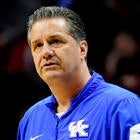
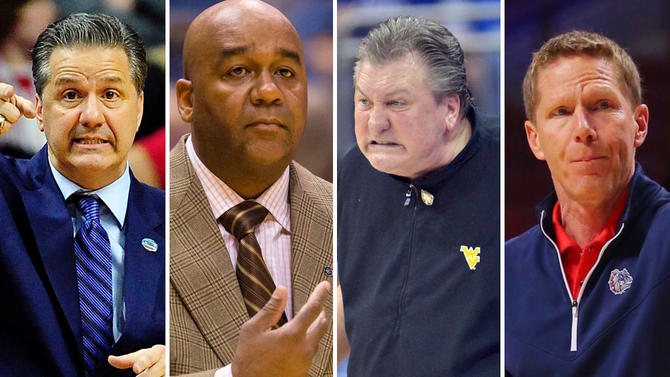
The most notable name on the list of coaches (all of them are listed below) is John Calipari. The sport's most vocal and recognizable commentator in the form of a coach, Calipari being on the committee is a big deal. His program doesn't need any more incentive in terms of reaching the Big Dance. He's been a No. 1 seed three times in his seven seasons at UK. But remember, Calipari has often critiqued the Selection Committee. Coincidentally, Bob Huggins is on this ad hoc group, and many times in years past those two coaches have been placed in the same region.
Calipari has joked it is no coincidence. And remember, he was very vocal on Selection Sunday this year. Kentucky won the SEC's automatic bid via a tournament win over Texas A&M mere hours before the bracket was released. Kentucky (26-8) got a No. 4 seed. A&M (26-8) got a No. 3 seed. Calipari now believes what the bracket reveals have indicated for years: The very few tournament finals that take place on Sunday, hours before the bracket is unveiled, mean little to seeding.
Calipari, due to the nature of his gig, always has a pretty good schedule. But, with the power of the UK job, he also has backed out of opportunities to play true road games. I can't necessarily blame him for doing this, but other coaches in similar situations (Roy Williams at UNC, Bill Self at Kansas) have not. Then again, no one dodges true road games out of conference as much as he possibly can like Mike Krzyzewski.
The NCAA should listen and seriously consider almost anything this cadre of coaches brings to them later this summer. But they should also remember: Like many things, when it comes to the NCAA Tournament coaches are always, always, always only in it for themselves. And they should be. Tournament bids get them more money, get them bigger jobs, all of that.
There's one coach on this committee that should do a ton of good and bring a lot of much-needed perspective to the bigger-school guys. Mark Few. Nobody in the country has scheduled as ambitiously -- and been as successful because of that scheduling -- in the past 15 years like Few has at Gonzaga. He understands the need for college basketball schedule up in November and December. He's never afraid to play true road games, to play them often, and to challenge his program.
Without him doing that, Gonzaga doesn't become the top-25 program it is today. A lot of coaches could learn plenty from how Few runs his program, and that goes beyond scheduling, too.
This experiment isn't going to create total transparency and it isn't going to suddenly unlock all of the answers for the coaches. But it will help them further understand the NCAA's mechanisms in place to seed and select the field of 68. Ultimately, it all starts with scheduling. The answer is so obvious, yet, collectively, college basketball still isn't where it should be when it comes to this.
It's not awful. Far from it, even. We'll have plenty of really nice top-25 matchups next season. But not enough, and certainly not as many as we should have in November and December. If not for TV-mandated, inter-conference series (Big 12/Sec, ACC/Big Ten, etc.) we'd see even fewer. These meetings, hopefully, can get the coaches thinking more broadly about the sport and not just have them sitting in a room nodding to each other about the issues that won't make the sport or the NCAA Tournament better.
And for the love of all that's holy in college basketball, I'll repeat this in capital letters: DO NOT SUGGEST A WEEKLY LIVE SELECTION SHOW THAT GIVES US A "CURRENT" LOOK AT THE BRACKET. College football will continue to do this, to its detriment, and I guarantee you it will not improve the mental well-being of coaches in the midst of the always-stressful January-to-March marathon.
The ad hoc committee isn't a first-time deal, by the way. The NABC has rallied coaches on two previous occasions. The first was regarding NBA Draft and a timeline for declaring and withdrawing. The second was in regard to college players' allowable practice times, in addition to time-management issues.
Here's who's on the NCAA tourney ad hoc committee:
John Calipari, Kentucky (SEC)
Bill Coen, Northeastern (CAA)
Mark Few, Gonzaga (WCC)
Steve Fisher, San Diego State (MWC)
Mark Gottfried, North Carolina State (ACC)
Bob Huggins, West Virginia (Big 12)
Ron Hunter, Georgia State (Sun Belt)
James Jones, Yale (Ivy League)
Jeff Jones, Old Dominion (C-USA)
Phil Martelli, Saint Joseph's (A-10)
John Thompson III, Georgetown (Big East)
Mark Turgeon, Maryland (Big Ten)
Gary Waters, Cleveland State (Horizon League)
Administrators (both former NCAA Men's Basketball Committee Members):
Doug Elgin, Commissioner (Missouri Valley)
Dan Guerrero, Director of Athletics-UCLA (Pac-12)
Consultants:
Dan Gavitt, Vice President for Men's Basketball (NCAA)
Reggie Minton, Deputy Executive Director (NABC)