College Basketball Insider

'This is so hard to watch,' says former Billy Gillispie colleague

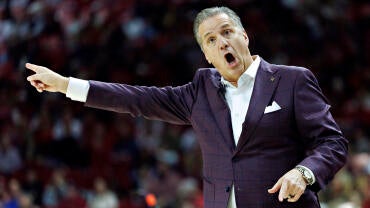
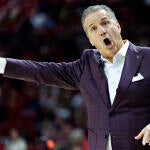
Gillispie was among the hottest names in college coaching five years ago. (Getty Images)

Dominique Kirk was among the players who once helped Billy Gillispie in a span of three seasons take a program from winless in the Big 12 to the Sweet 16, and he remembers those years fondly.

Were they hard years?

Of course they were hard years.

But they were also rewarding, which is why Kirk, a former Texas A&M guard, has struggled to make sense of the stories he's read over the past week about his old coach. Put simply, Kirk does not recognize the malicious and vindictive man Gillispie is now portrayed to be.

"All the stuff I'm reading -- the stuff about him pushing them too hard or practicing them too hard -- I just think we always thought that was Coach getting us prepared," Kirk said. "For us, he was always a coach who could get the best out of you ... if you bought in."

Billy Clyde Gillispie was released from the University Medical Center in Lubbock on Thursday after being hospitalized for six nights with what was described as high blood pressure. Whether he'll be allowed to continue coaching Texas Tech amid allegations of player mistreatment and NCAA rules violations isn't expected to be determined until at least early next week, but it's clear that his job is in serious jeopardy.

What's unclear is how things got to this point.

How did Gillispie go from one of college basketball's rising stars to a toxic figure fighting for his career? Is it because the times changed while he couldn't? Is it because the Kentucky job undid him on multiple levels? Or is it because, as Kirk suggested, the Texas Tech players decided to revolt after one season rather than buy in?

In an attempt to answer these questions, I spent the past two days talking to eight different men who used to either work with or for Gillispie before his move to Kentucky, and multiple former players from his five years at UTEP and Texas A&M. The opinions varied from person to person, but there were some constants.

Yes, everybody said, Billy Clyde has always enjoyed a strong drink. Yes, everybody said, Billy Clyde has always been a different dude. Yes, everybody said, Billy Clyde has always pushed players in a unique manner, sometimes even to tears. But nobody told me -- even when granted complete anonymity -- that they ever saw Gillispie act maliciously toward or intentionally harm a player during his time as an assistant or as the head coach at UTEP or Texas A&M from 2002 to 2007.

"His methods to get guys to play at a high level were always a little different but not to the point where it was over the top," said Albert Johnson, who worked with Gillispie in an administrative role at Texas A&M. "It was never to the extreme that it's being presented here."

Which is not to suggest that what allegedly happened at Texas Tech didn't really happen.

My colleague Jeff Goodman's reporting is detailed.

There are too many stories to ignore.

So Johnson's comments should not be interpreted as a defense of Gillispie's alleged actions at Texas Tech because, by Johnson's own admission, he doesn't know anything about Gillispie's alleged actions at Texas Tech. All Johnson was trying to make clear is that the stories of Gillispie's time at Kentucky and Texas Tech do not jibe with the stories of Gillispie before Kentucky and Texas Tech. They sound like stories about a different person. Or, at the very least, they sound like stories about a changed man.

"From the moment he got to Kentucky, he seemed to be a changed guy … and not for the better," CBS Sports' Tim Brando, who has known Gillispie since his days at UTEP, told me earlier this week. "It was as if the [Kentucky] job engulfed him. I saw noticeable changes in his approach."

There were also noticeable changes in his staff.

Some people have told me that might be a factor, too.

The staff that helped Gillispie have the type of success at Texas A&M that led to him getting the Kentucky job consisted of Buzz Williams, Steve Forbes and Alvin Brooks. Williams was the young Texan who could speak Gillispie's language and recruit. Forbes was the loyal guy who could help coach and convince players that Gillispie's hardcore approach was rooted in a good place. Brooks was a former head coach who had great relationships with players off the court.


"There were no egos on that staff," one coach told me. "Everybody had Billy's back, and they could save Billy from himself. They knew how to talk to Billy and be honest with him. They knew when to tell him to pull back. They knew how to get the players back on board when Billy pushed them over the edge. But when he lost that staff he started to lose his way. There was nobody there to keep him in check."

Williams, now the head coach at Marquette, left Gillispie to be the head coach at New Orleans. Forbes, now the head coach at Northwest Florida State, left Gillispie for a better-paying job on Bruce Pearl's staff at Tennessee. Brooks, now the associate head coach at Houston, went with Gillispie to Kentucky, but he was immediately demoted to an administrative role, which sources said soured that relationship.

Suddenly, Gillispie was surrounded by mostly new people.

In Lexington.

He was uncomfortable and in over his head.

All the evidence suggests he hasn't been the same since.

And now he's possibly just days from being removed at Texas Tech.

"There was always a method back then to what was perceived to be his unorthodox approach," Johnson said. "And it worked for him back then. It used to always work for him. That's why this is so hard to watch."

You May Also Like
 

Biggest Stories

CBSSports Facebook Twitter
COMMENTS
Conversation powered by Livefyre

Latest

Most Popular