Core Values: Arizona Diamondbacks
![]() |
| The Arizona core has a very different look lately. (Getty Images/EOB) |
As our "Core Values" series continues with a relentless sense of mission, it's time to turn our attention to the curious case of the Arizona Diamondbacks. As my colleague and personal hero Matt Snyder has already examined, GM Kevin Towers and his D-Backs have had a most curious offseason. And that's putting it charitably.
But what of the un-traded remainder in Arizona? That's our focus today, as we home in on the core of the Snakes.
| Core Values series |
| Previous posts |
As for our criteria and decidedly unscientific methodology, here's a brief refresher. If you've been with us for the life of the series, then feel free to skip ahead ...
What's a core? For our purposes, a team's core comprises a "cornerstone player," a "face of the franchise" and then the "future face of the franchise."
So what's a "cornerstone player"? For starters, it's one of the best players on the roster and perhaps the very best player on the roster. Beyond that, though, it's the player whom the organization has identified as the talent around which to build by signing him to a long-term deal. In other words, they've backed their faith in the player's abilities with the most powerful statement of all: lots of redeemable U.S. currency. Not only do they see this player as central to their current aims but also to their designs on future contention.
What's a "face of the franchise"? He -- and we're getting subjective here -- is the player who most prominently embodies the franchise in question. He's that player you think about when you think about this team. Is he the same guy as the "cornerstone"? Sometimes. But the cornerstone is primarily a financial designation. The "face" is, for lack of a better term, a cultural identifier. They're not mutually exclusive, but they're not not mutually exclusive, either. What about the word "values" you see in the headline above? After we identify and evaluate the three elements of the core, we're going to slap a letter grade on the whole thing.
And now on to the Diamondbacks ...
Cornerstone player(s): Miguel Montero
In May of last year, the Diamondbacks signed Montero to a five-year, $60-million contract extension. That means that the Arizona catcher is locked up through the 2017 season. Wise investment? Quite possibly. Committing to a catcher until he's well into his 30s (Montero is presently 29) is risky, but Montero has distinguished himself. Over the past two seasons, he's been one of the most productive catchers around, as he's shown some pop, an ability to hit for average and a disciplined approach at the plate. Given that base of skills, Montero should be worth the investment provided he remains healthy and durable. Of course, health and durability are never to be assumed with catchers.
Face(s) of the franchise: Justin Upton The rotation
While the Arizona offense won't be awful and will be made to appear as a plus by hitter-friendly Chase Field, this is a team now built around rotation depth.
As of now, the D-Backs' starting five runs Ian Kennedy, Brandon McCarthy, Trevor Cahill, Wade Miley and Tyler Skaggs. That, to say the least, is an impressive assemblage. There are questions, though. Can Kennedy rediscover his 2011 level of performance? Can McCarthy stay healthy? Is Cahill ready to take the next step? Can Miley capitalize on an impressive rookie campaign? Will Skaggs live up to the scouting reports?
Of course, the nature of pitching is such that questions will always abound. In Arizona's case, its present and near future depend upon having at least, say, three of those five questions answered in the affirmative. For better or worse, Towers and the D-Backs are "all in" on starting pitching. And that's by design.
Face(s) of the future: Trevor Bauer Paul Goldschmidt and Tyler Skaggs
There's no doubt that the D-Backs' winter machinations have harmed the organization moving forward. You simply don't part with the likes of Justin Upton and Trevor Bauer for such a modest return. Still, Goldschmidt and Skaggs are solid as building blocks go.
Goldschmidt, 25, is a career .278/.353/.487 hitter across two major-league seasons, and his offensive profile is trending in the right direction. In 2012, he put up an OPS+ of 123 and flashed excellent base-running by the standards of first basemen (18 stolen bases in 21 attempts). And although the sample size is small, ultimate zone rating noted good progress with the glove last season. Much depends on whether Goldschmidt can develop into an elite offensive first baseman.
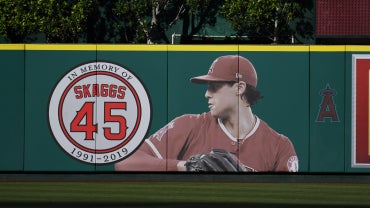
As for Skaggs, he doesn't have true ace stuff, but his fastball has oomph for a lefty, and his 12-6 curve could be a true wipeout pitch. If he's able to improve his changeup, then that "doesn't have true ace stuff" qualifier will no longer apply. Skaggs is much more likely to one day front the Arizona rotation than is the somewhat overrated Cahill. The reality, though, is that Skaggs is more likely to wind up a number-two man in terms of run prevention.
Grading the Diamondbacks' Core: C+
Montero is on the short-list of top catchers in the game. The rotation, while it should be the envy of many a team, has plenty of unknown quantities, and Goldschmidt and Skaggs lack the true ceiling of ideal future cornerstones. The core is solid but not top tier. To put a finer point on it, the Arizona core very much misses Justin Upton.
For more baseball news, rumors and analysis, follow @EyeOnBaseball on Twitter, subscribe to the RSS feed and "like" us on Facebook. Also, individually interact with us on Twitter: @MattSnyder27, @daynperry and @mikeaxisa.