This MLB postseason could be beginning of the end for traditional bullpen roles
Buck Showalter's gaffe in the AL Wild Card Game may have opened the floodgates

By
Mike Axisa
•
5 min read

CLEVELAND -- Through two Wild Card Games and the 15 LDS games, bullpens have reigned supreme in the 2016 postseason. Quality bullpens have always been necessary, no doubt about it, but these days dominant relievers have more impact in the playoffs than they have in a very long time.
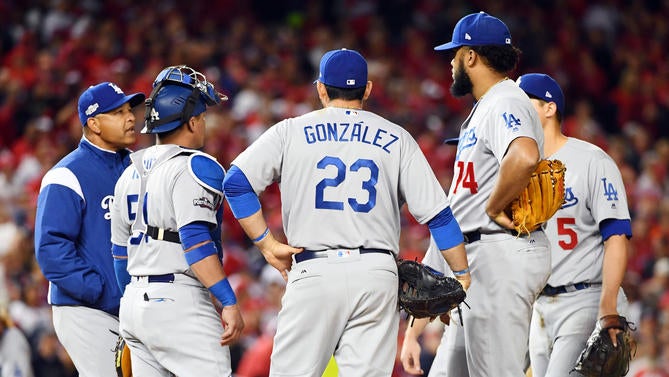
Thursday night, in Game 5 of the NLDS, Dodgers manager Dave Roberts brought closer Kenley Jansen into the game with the tying run on base and no outs in the seventh inning. That's two full innings earlier than we're used to seeing Jansen. It worked; he preserved the lead for seven outs before giving way to Clayton Kershaw.
"It was a situation where I talked to him earlier today and said that there might be an opportunity to come in in the seventh inning if a certain part of the lineup was up, and that part of the lineup was Trea Turner," said Roberts. "I felt that for me it was an opportunity to get Kenley in there, and just ride him as long as we could."
In the other league, Indians manager Terry Francona has been ultra-aggressive with his bullpen so far this postseason, most notably using ace reliever Andrew Miller for two innings at a time. Miller entered Game 1 with two outs in the fifth and Game 3 with no outs in the sixth. That's much earlier than usual.
"There was a lot of a combination of things," said Francona when asked about using Miller so early in Game 1. "I didn't want for them to come through the third time if they had a chance to tie the game. And Trevor (Bauer) was nearing 80 coming back on short rest. There was a lot of combinations."
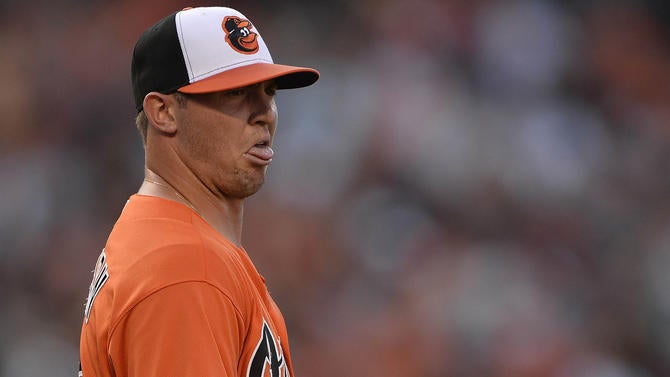
All of this happened after Orioles lost the AL Wild Card Game without Zach Britton, arguably the most dominant reliever in baseball in 2016, ever throwing a single pitch. Manager Buck Showalter, who is typically masterful with his bullpen work, saved his closer for a save situation that never came, and it cost the O's their season.
The Britton decision makes the way Francona has used Miller and the way Roberts used Jansen in Game 5 stand out even more. It's almost like the other postseason teams saw what happened to the O's and said forget it, we're not letting that happen to us, and decided to be as aggressive as possible with their top relievers.
The save statistic has done more harm than good for baseball since it was first adopted in 1969. Well, that's not true. Saves have helped increase salaries for relievers both through arbitration and free agency, and that's a good thing. The save has hurt baseball because it affects the way the manager makes decisions though. No other counting stat does that.
As Showalter showed, managers consistently save their closer for a save situation on the road, which often leads to a lesser reliever blowing the game. We see setup men blow leads in the seventh and eighth inning while the closer waits in the bullpen because it wasn't "his inning." The save statistic causes this. The closer pitches in save situations and that's it, even if it's to the detriment of the team.
This postseason may be an indication all this about to change. It's not going to happen overnight, of course. You're not going to suddenly see managers using their closers in the seventh inning in the middle of May, for example. But we are seeing managers no longer adhere to traditional bullpen roles this postseason, in the most important games of the year. Better late than never, right?
"Yes, but you also still have to be careful with that somewhat," said Blue Jays skipper John Gibbons. "But there is certain points in the game you might need them a little bit earlier. But if you're a team that has the luxury of a couple of guys you can do that with, it'd make it a heck of a lot easier to go to somebody earlier than you normally would. But this time of year is so much different."
For this change to happen around the league -- and by change I mean managers using their best relievers in what they consider the most important situations, regardless of inning -- I think two things need to happen first.
- It has to work. Bringing Jansen and Miller into the middle innings sounds great as long as it, you know, works. If another reliever blows the game in the ninth, the second guessing begins, and managers hate that. Trust me, they do. They're human. Many teams will want to see someone else have success doing this first before they try it themselves.
- The players have to buy in. Miller is a rare bird. He's said he doesn't care how he's used. Most relievers want to close though. Why? Because it pays the best. The players will buy in once baseball's salary structure begins rewarding the best relievers, not just the relievers with the most saves. The recent Miller and Darren O'Day contracts indicate this is already happening.
"I don't think you're going to see (managers break away from traditional reliever usage) as much as people think," said Francona prior to Game 1 of the ALCS on Friday. "Just because the way our -- like the arbitration system, the way people are rewarded for saves. Again, I'd love to see that changed because I think if that was changed you would see how pitches are used differently and I think we'd have a better game."
With starting pitchers throwing fewer and fewer innings with each passing year -- starters threw 721 2/3 fewer innings in 2016 than they had at any year since the 1998 expansion (!) -- it only makes sense for teams to optimize their bullpen usage. And hey, sometimes that may mean using your best reliever in the ninth inning. Many times it will not. It might mean going to someone like Jansen or Miller in the sixth or seventh once in a while.
This is a copycat league. Once the Royals rode their powerhouse bullpen to the 2014 AL pennant, teams began trying to build super bullpens. Now clubs, specifically the Indians and Dodgers, have had success using their best relievers in unconventional ways this postseason, which means it's only a matter of time until other clubs begin doing the same.
Chances are this change, if it happens at all, won't happen quickly. Redefining bullpen roles league wide is going to be a long process. If it does happen at some point down the line, chances are we'll be able to point back to the 2016 postseason as the days it all started.