Why the Braves had a great season, despite what the standings would indicate
Atlanta has a number of young players who seem to be legit contributors

•
2 min read

By conventional accounting methods, this season has been a joyless one in Atlanta. The Braves, 56-88, are going to miss their third consecutive postseason, and could well record their first 100-loss effort since 1988. The evergreen days of the '90s are so distant -- in time and relevancy -- that they nary merit a mention, and those disappointing teams of the Frank Wren era? Nowadays, their success is enviable.
But for the Braves diehards, 2016 has offered more than countless egg feasts served up by a poor offense -- it's given reason to believe in a more fulfilling tomorrow. That's because, bit by bit, the Braves' vision seems to be coming to fruition.
The biggest difference between the Braves' rebuild and the more conventional ones orchestrated by the Cubs and Astros is the starting point. Whereas most transitioning teams begin anew when their roster has reached the end of its competitive cycle, the Braves were quicker to hit the reset button. As a result, they were better positioned to restock their farm system with near-ready prospects. A few of those have already reached the majors -- and have shown signs of being legit big-league contributors.
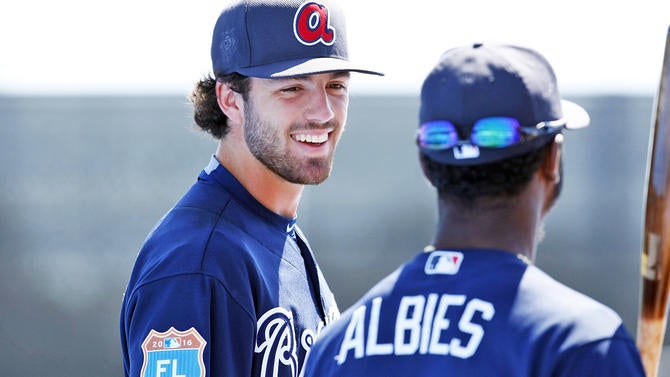
The most promising of those youngsters is shortstop Dansby Swanson. If you don't know him as the former No. 1 pick the Braves received in the Shelby Miller trade, then you probably know him for his inside-out swing, well-groomed hair, or name that hints at a post-playing career as a foxhunter. If you don't know Swanson at all, you will soon. He has a well-rounded skill that ought to allow him to stick at shortstop while batting high in the order. Swanson has already taken well to the majors, too, as he entered Monday hitting .306/.354/.431 in 20 games. He might not be a quality player in the making -- he might already be one.
In addition to Swanson, the Braves have to be pleased with the production they've received from outfielder Ender Inciarte and infielder Jace Peterson. Inciarte, another piece of the Miller trade, combines elite defense with a good feel for making contact and reaching base. Meanwhile Peterson, acquired for Justin Upton, has batted .266/.366/.402 with nearly a walk per strikeout since a mid-June recall. Neither will qualify for free agency until after the 2020 season.
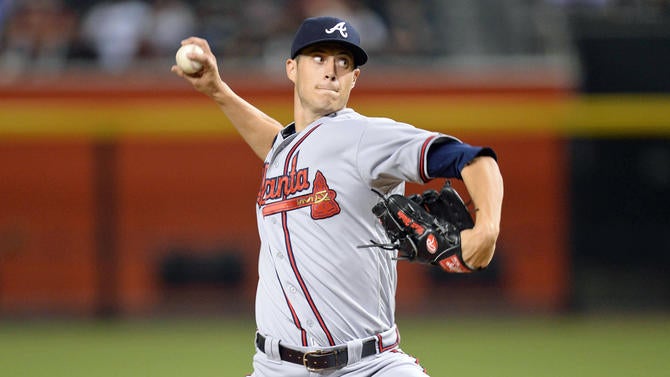
The Braves have had a few interesting seasons on the mound, too. Part of the Evan Gattis payout, Mike Foltynewicz has a starter's body, a closer's fastball, and a middle reliever's command. Nonetheless, he's allowed just seven home runs over his last 12 starts -- this after allowing four home runs in a July 5 start. Then there's Matt Wisler, who came over in the Craig Kimbrel trade and had his own stretch of competence earlier in the year (he entered June with a 3.16 ERA). Yet he's struggled since then, and has recently missed time due to an oblique strain. The best-case scenario here is both becoming mid-rotation arms.
Obviously the Braves need more of their acquired prospects to pan out, and need to make upgrades elsewhere before their trek back to Competitiveville is complete. For now, anyway, it seems like they're in position to do just that.
And who knows, maybe this time next year we'll be talking about the Braves as a major darkhorse for the 2018 season.