Celtics-Wizards takeaways: Wall's winner, Thomas' turnover, and Game 7 awaits
John Wall played hero, and the Celtics helped the Wizards out considerably

•
5 min read

The Washington Wizards stole Game 6 from the Boston Celtics with a clutch 3-pointer from John Wall, and the 92-91 victory means there will be a Game 7 in Boston on Monday. Here are three takeaways from the nailbiter:
1. Wall didn't wilt
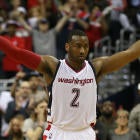
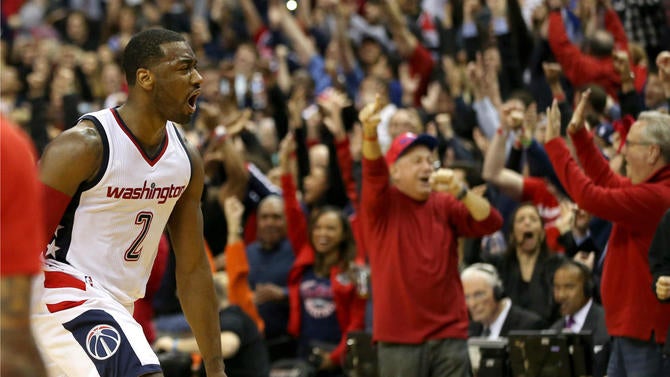
After the buzzer on Friday, Wall stood on the scorer's table, yelling at the crazed crowd at the Verizon Center. Then he delivered a post-game television interview in which he scolded the Celtics for wearing all black as if it was the Wizards' funeral. An hour earlier, this was almost unimaginable.
Wall missed nine of his first 10 shots. He had just three points at halftime. A night after the Houston Rockets' humiliating loss to the San Antonio Spurs, Twitter was full of James Harden comparisons. Wall got going in the third quarter, though, and finished with 26 points on 9-for-25 shooting. Few will remember the cold start.
"Not too many guys can do that," Washington coach Scott Brooks said. "When I played, I missed two shots, I didn't think I was gonna make the next shot. But he's a winner. He plays to win. He's not worried about his stats. He's worried about winning the game."
Playoff basketball is largely about solving problems and overcoming adversity. The best teams figure out ways to win games where things aren't going particularly well. Wall's slow start was certainly an example of that, but there were bigger issues. The Wizards only had eight fast-break points, and they shot 5-for-24 (20.8 percent) from 3-point range. Forward Otto Porter was scoreless in 36 minutes, missing all five of his shots.
None of this was what Washington envisioned. Still, after trailing by five with a minute and a half left, Wall and the Wizards did just enough to win. Even the game-winning play wasn't executed as planned.
"The last play was really for me to get to the corner, and [Bradley Beal was supposed to] come open," Wall said. "But he didn't get the opportunity to get open. I didn't want to get a five-second violation, so I just came and got the ball from Otto. I just looked the defender in the eye and took a shot I work on. And it went in. And to get on the scorer's table, it's just how much love I have for the city, how much love I have for my teammates, how much fight we have. And never quitting. A lot of people have doubted us in this series. After we was down 2-0, a lot of guys doubted us winning this game at home."
The way it all worked out reflected Washington's resilience as a team. Beal finished with 33 points on 15-for-26 shooting, but he was 0-for-7 from deep before hitting a clutch 3-pointer. The play that led to that is worth further examination.
2. How the Celtics hurt themselves
It looked like Boston had it wrapped up. After Isaiah Thomas hit a timely 3-pointer off the dribble, and a lengthy replay review determined that Wall had committed a charging violation, the Celtics had the ball and a five-point lead with 1:24 on the clock. All they had to do was hold their two-possession lead.
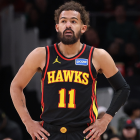
Thomas dribbled the ball up the floor and used a screen from Marcus Smart. Wall and Markieff Morris then trapped Thomas aggressively, pushing him to near half court. When he picked up the ball, nobody flashed up to the middle of the court to give him a passing target. Thomas passed it into open space anyway, and Washington center Marcin Gortat stole it. That resulted in a 3-pointer for Beal, which kept the Wizards alive.
"They went all out and trapped me," Thomas said. "I mean, I had nowhere to go. I gotta be better in that situation. They did a really good job of doing that. They trapped me, they took away the next pass as well. They hadn't really been doing that all game, and we weren't alert. Well, I wasn't alert as well. So that's definitely on me."
This was a massive mistake, not just because of the time and score but because this specific kind of turnover is so costly. Washington is one of the best transition teams in the league, and Boston has given up easy baskets in its losses in the semifinals, especially during the Game 4 blowout.
After a game as close as this, Celtics fans could easily point to Al Horford missing an uncontested layup in the first quarter, as it led directly to a Wall layup about three seconds later. They could also complain about Kelly Oubre's obvious offensive basket interference going uncalled. The Celtics had trouble dealing with traps earlier in the series, though, and it was obvious that they worked on it in practice afterward. Then, in a high-pressure situation, the Wizards caught them off-guard.
All those cliches about how hard it is to close a team out and win on the road in the playoffs? All those quotes about how every possession is more important this time of year? Plays like this are why you hear that stuff.
"There's going to be a lot of plays in a one-point loss that we go over and we look at really closely, and if Wall misses that shot, we don't look at any of it," Boston coach Brad Stevens said. "And that's me, too. That's just the way it goes."
3. The Wizards crashed the glass and owned the paint
In a way, it's hilarious that Washington won this game because of a deep 3-pointer. Of the teams remaining in the playoffs, the Wizards have been the worst in terms of 3s made and 3-point percentage. They were only in the position to extend their season because they had dominated the Celtics on the inside.
Washington scored 48 points in the paint to Boston's 26 points. The Wizards grabbed 26.8 percent of available offensive rebounds and 83.3 percent of available defensive rebounds, largely thanks to Gortat's physical presence. Brooks encouraged Wall and Beal to get into the paint whenever the Celtics switched a big man onto them, and that was how they got most of their offense.
"If they're going to put bigger guys on our quicker players, we have to attack," Brooks said. "We can't settle for jump shots. If the basket is big and you're confident, yes, absolutely, you can trick them into wide-open 3s. But if they're going to pressure you up, you gotta be able to attack them."
Like the Rockets found out against the Spurs, versatility and shooting doesn't always beat size and strength. In game where both offenses went cold for long stretches, every extra possession and high-percentage look near the basket mattered.