Examining the acceptance, abandonment of crashing the offensive glass
Teams like the Clippers, Hawks and Spurs typically forgo the offensive boards. Is this the right strategy in today's NBA?

By
Zach Harper
•
14 min read

There is a very real dilemma for teams in the NBA when it comes to crashing the offensive boards. Performing the cliché instruction of following your shot can be a huge gamble. If you follow your shot and don't get the rebound (or create a situation in which your teammate can snag the second chance opportunity), then you risk crippling the recovery of your team's transition defense. Grab the board and create another scoring opportunity, and not only do you extend the possession and delay having to play defense, but you also possibly get more points in that moment.
There are a lot of factors that go into whether or not your team should in fact crash the boards for those second chance opportunities. First and foremost ends up being philosophy on transition defense. Coaches like Doc Rivers, Gregg Popovich, Steve Clifford and Mike Budenholzer have often implored their players to abandon the pursuit of offensive boards and get back on defense. It doesn't mean avoid grabbing them at all costs but the completion of extending the possession with an offensive rebound should be more coincidental than aggressive.
Secondly, you need to have the personnel to grab offensive rebounds. It's not as simple as just having guys crashing the boards. There is an art to offensive rebounding and it's much more a skill set than the simple task of trying to hustle. There are techniques learned in offensive rebounding (some legal) that when worked upon can give you a real upper hand. It's also as precise as measuring the shot angles and knowing the shooting tendencies of your teammates as a player working on where in the offense they can get the best scoring opportunities.
Thirdly, it matters a little bit who is taking the shots and where the shots are coming from. There are some teams that excel at shooting from distance while also chasing down those errant shots to extend possessions. But that doesn't mean all teams that shoot 3-pointers would benefit from being aggressive on their own glass.
The Portland Trail Blazers did a great job of making shots (eighth in effective field goal percentage) and crashing the glass (third in offensive rebounding rate) last season. These two factors helped them produce the league's seventh most efficient offense. Only six teams took a higher rate of shots from beyond the arc than them. But look at Stan Van Gundy's Detroit Pistons and you get a similar approach with much different results.
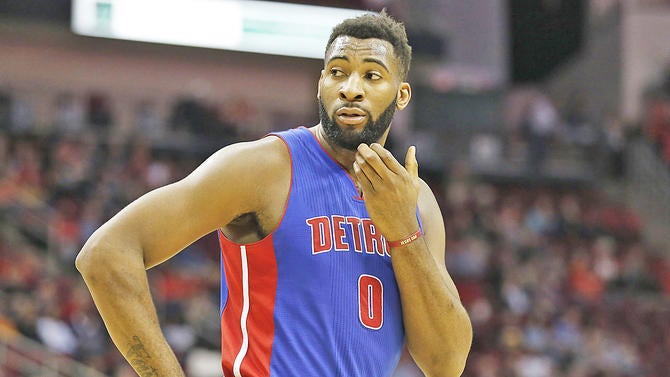
The Pistons had the 14th best offense in the NBA this past season and 10th highest 3-point rate. They also crashed the glass like crazy with the second highest offensive rebounding rate. But they really couldn't make shots. They had the 22nd eFG in the league and were actually pretty inefficient scoring when it came to offensive rebounding opportunities (23rd according to Synergy Sports). It's great if you can extend possessions by grabbing your own misses, but if your team can't make shots, there's a tipping point. Andre Drummond is arguably the best offensive rebounder in the world but it's not translating team-wide to a greater offensive efficiency in these moments.
This season, the NBA had eight teams with an average or above average offensive rebounding rate and an average or above average offensive rating. Nine teams were average or above average at offensive rebounding fell below the league average offensive rating. Five teams were below average in offensive rebounding but still had an above average offense. That leaves eight teams below average in both offensive rebounding and offensive rating.
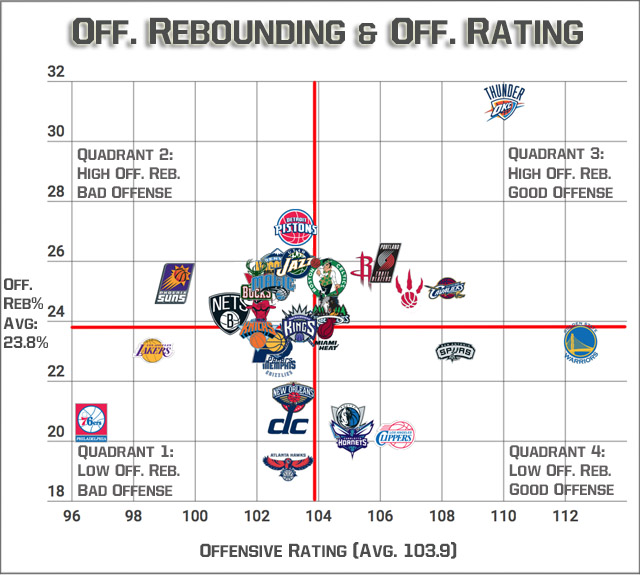
You'll notice the five teams that are good at scoring and have "abandoned" the offensive glass are all teams that are good at shooting. Each of those five teams is in the top half of the league effective field goal percentage. The Atlanta Hawks would've been one of those low offensive glass, good offense teams most seasons but saw an uptick in turnovers, a big drop off in trips to the free throw line, and a decline in effective field goal percentage.
A lot of the teams that were heavy on offensive rebounding and low on offensive efficiency ended up being bad teams. Some due to injury. Some due to youth. Some due to Billy King. Whatever the reason was, it's hard to link their lack of success on that end of the floor to concentrating on the boards, but it's also fair to question whether a more conservative strategy on the glass would have at least helped their defense and produced more wins.
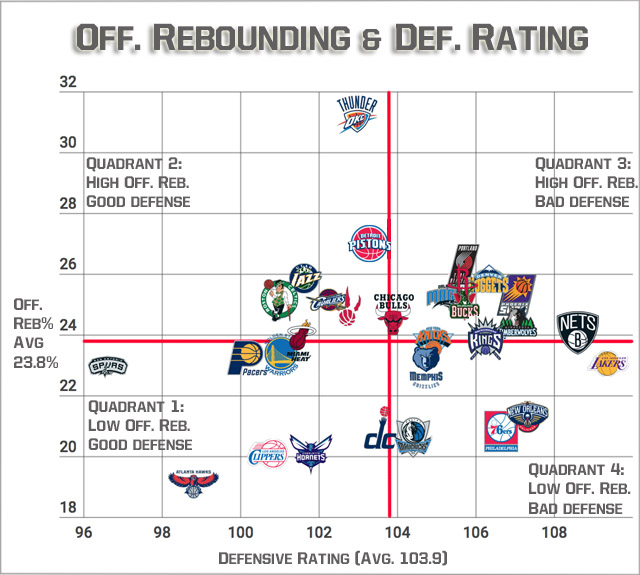
Taking a look at the offensive rebound and defensive ratings, a lot of those high rebounding, poor scoring teams were also bad at defense. And sometimes the only thing you can pull away from this kind of look at this stuff is those teams sucked for various reasons and it wouldn't really matter what they did. That can be an oversimplification of the issue but it can also be all you need.
The overall defensive rating is something to be cognizant of in dissecting whether or not a team's emphasis on offensive rebounding is helpful or damaging, but the main thing coaches really emphasize in this conversation is the transition defense. Most teams are terrified of giving up a quick, easy shot at the rim the other way. In an age of stretch-4's, who can now push the tempo once they grab a rebound, you want to make sure your defense is back and capable of getting set as quickly as possible. And against teams like the Golden State Warriors, you're foolishly running to protect the paint as they rain 3-pointers on you.
That's hard to do when you've got one or two guys really hammering the offensive boards. It's also not impossible either. The Utah Jazz, Detroit Pistons and Chicago Bulls were three of the best in the league at crashing the boards and still denying efficient transition scoring for the opponent. Most of that can stem from a good defensive system or sound defensive principles being hammered in from Day 1 of training camp. The Oklahoma City Thunder -- a team that has measured out well crashing the boards in the first two charts -- were below average at defending in transition.
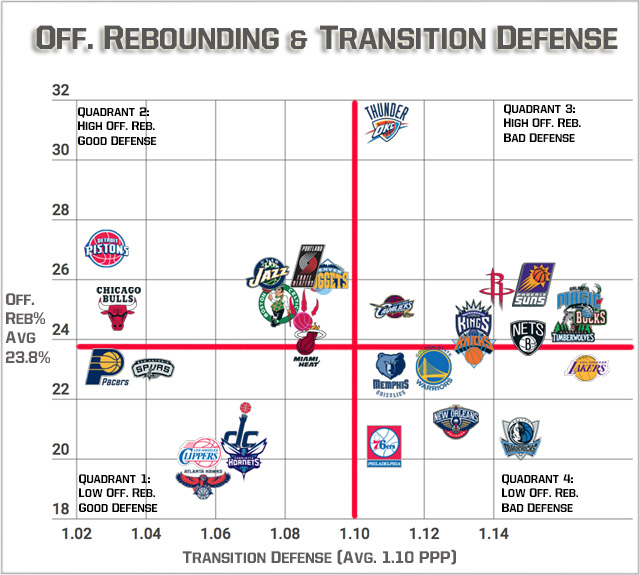
While it's not an entirely scientific model of breaking these downs, the four quadrants (high-good, high-bad, low-good, low-bad) in each chart bear out that there is a bigger risk but also a higher reward with the teams that have high rebounding percentages on the offensive end of the floor.
Out of the 90 possibilities from the three charts:
High Rebounding Rate, Bad Result: 28
High Rebounding Rate, Good Result: 23
Low Rebounding Rate, Bad Result: 21
Low Rebounding Rate, Good Result: 18
Again, not entirely scientific but a basic breakdown of the results/potential correlations. Over the last 10 years, we've seen the NBA go from a league that rebounded 27.1 percent of its chances on offense down to 23.8 percent this past season. From 2006 to 2012, we saw a pretty steady rate of offensive rebounding from 26.3 percent to its peak at 27.1 percent. Over the last four seasons, the league's offensive rebounding rate has declined each season with its lowest coming in 2015-16.
During that time, we've also seen the league's lowest transition efficiency allowed on defense over the last two seasons. It's clocked in at 1.10 points per possession allowed in each of the last two seasons and has been declining since its highest rating over that decade in 2010-11 at 1.15 PPP allowed. The game has certainly become more strategic over this time with teams finally trying to harness the 3-point line now more than ever and defenses scrambling to figure out how to take away both the pick-and-roll and those efficient 3-point shots.
Popovich, Clifford, Rivers, Budenholzer and others will continue to eschew those high offensive rebounding rates. Other coaches like Frank Vogel, Quin Snyder and Brad Stevens will look to be efficient at both keeping possessions alive and stop the other team from burning them in transition.
And of course, it helps to have the guys who can offensive rebound at a high rate while playing big minutes. These are the 10 situations for next season with the best offensive rebounders from last season.
(Note: these are players who played at least 20 minutes per game for most of the season and grabbed at least 12 percent of offensive rebounding opportunities.)
Oklahoma City Thunder: Steven Adams and Enes Kanter
The Thunder had two of the best offensive rebounding bigs in the NBA this past season. Enes Kanter led the NBA in offensive rebounding rate for a player with at least 20 minutes per game (16.8 percent) while Steven Adams was a monster on the boards for big stretches (12.4 percent). It will be interesting to see if Billy Donovan and the Thunder continue to have their players crash the boards like that. OKC was the top team in the league at it, grabbing an offensive rebound 31.1 percent of the time (Detroit was second at 27 percent).
With Kevin Durant gone, the Thunder could go one of two ways. They could keep trying to dominate the offensive boards, especially with Kanter in the game, and hope to keep their scoring efficiency high by extending possessions and trying to get those extra scoring opportunities. Or they could pull back and concentrate on defense more, since they won't have those Durant scoring sprees to bail them out in bad defense situations. I'm guessing they continue to hammer the boards, punish poor rebounding teams, and hope to use their brawn to get the other team into foul trouble.
Cleveland Cavaliers: Tristan Thompson
While Tristan Thompson didn't lead the league in offensive rebounding rate (seventh at 13.3 percent), he may be the most effective in the NBA during the postseason. Just ask the Atlanta Hawks and Golden State Warriors how good he is at it. I wouldn't say what he does is the most legal way of going about it, but if they're not going to call the little shoves he uses at the timeliest moments, then why would he stop doing them? He's also not the only guy to do it, and it's easy to look at what he does on the offensive boards and what great defenders do in protecting the rim with uncalled contact and believe it's a wash.
Thompson is surprisingly not very efficient at scoring off these offensive rebounds. He's mostly grabbing the ball and getting it to LeBron James, Kevin Love or Kyrie Irving, which is likely a smart strategy. If he did in the regular season what he does in the postseason, he'd earn himself a couple of All-Star appearances at some point.
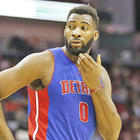
Detroit Pistons: Andre Drummond
Second in the NBA at offensive rebounding rate (15.3 percent), Andre Drummond has become the second biggest part of their offense when he's attacking the glass. The first is trying to create something in the pick-and-roll with Reggie Jackson, but Drummond's work on the boards becomes a quick second with an errant shot. Obviously, the free throw shooting is a problem, so when he does grab an offensive boards, the opponent is trying to wrap him up before he can throw down a big dunk.
The Pistons' offense falls by three points per 100 possessions and their offensive rebounding drops by nearly four percent when he goes to the bench. Ideally, the Pistons will get better at shooting from the outside like a true SVG designed team and then you wouldn't need Drummond's work on the boards as much. But he'll keep cleaning the glass until they get to that level.
Toronto Raptors: Jonas Valanciunas
Jonas Valanciunas is almost too big to keep off the boards. While most NBA players are giants, Valanciunas nearly dwarfs them all. Keeping him off the boards isn't as much a matter of strategy as it is a feat of strength challenge during Festivus. He's simply too strong to move out of position but he could be stronger with the ball when he's going back up following the board.
The Raptors were 12th in offensive rebounding rate this season. Without the Lithuanian big man on the court, they're an average offensive rebounding team. When he's out there, they creep up toward the elite of the elite.
Golden State Warriors: Zaza Pachulia
Zaza Pachulia was nearly an All-Star because of his offensive rebounding ability last season with the Dallas Mavericks. Well, that may not be true. We're not quite sure how he was almost voted into the All-Star Game, but he still was one of the top glass cleaners on offense. He pulled down 13.7 percent of the available offensive boards, which was sixth in the NBA. He was also the worst one on this list of players scoring after those offensive boards. Only he and Adams put up less than a point per possession.
The interesting question as he joins the Warriors is whether or not he'll be a big offensive rebounder for his new team. The Warriors were 19th in offensive rebounding percentage last season. He also may not need to do much of it because the Warriors were the best shooting team in the league and maybe history. But if Pachulia can keep these possessions alive for them, what more can the Warriors do offensively?
Denver Nuggets: Kenneth Faried
Third best offensive rebounder in the NBA (15 percent) and he does most of it with hustle and athleticism. It didn't help the Denver Nuggets that much because they were a bad offensive team. They ranked just 20th in the NBA in offensive rating while clocking in fifth in offensive rebounding rate. However, Faried's impact on their team rebounding is impressive. They lose about six percent on the offensive glass when he comes out of the game.
This season, the Nuggets will be deeper, healthier, and better than a year ago. Can that turn these extra chances into real points?
Portland Trail Blazers: Ed Davis
Of the players on this list, Ed Davis was the best at finishing following offensive rebounding opportunities. He clocked in at 1.212 points per possession on offensive put-backs with no other player cracking the 1.2 PPP barrier. Davis didn't play a ton (less than half the game) but he's incredibly effective on the boards for the Blazers. A lot of his time comes with the second unit though, so the team is much better on offense without him in the game.
Chicago Bulls: Robin Lopez
Last year, the Chicago Bulls were very good at offensive rebounding considering all of their injuries (especially to Joakim Noah). This year, they should be healthier and they have a starting lineup with questionable outside shooting due to Rajon Rondo and Dwyane Wade joining Jimmy Butler. Wade won't take a lot of deep shots and Rondo won't take a lot of shots period. If Butler can improve his outside shooting again, the team won't be in such bad shape offensively.
If he can't, Lopez's work on the glass could be huge for the Bulls. He was great with the New York Knicks last season, grabbing 13.2 percent of available offensive boards (eighth in the NBA). If he wasn't on the court, the Knicks' offensive rebounding dropped 6.6 percent. The Bulls need him to help clean up possessions if things don't go to plan -- much like last season.
Utah Jazz: Rudy Gobert
The biggest key for Rudy Gobert on the glass is becoming much stronger with the ball once he has it. You can say this about a lot of things when it comes to Gobert on offense. His roll game after setting a pick needs more strength. If they do post someone up with him, he needs to be able to get leverage and overpower his defender. But the glass is where it matters the most. He grabs so many freakish rebounds that he has no business getting to because his wingspan doesn't seem to stop.
The Jazz badly missed him keeping possessions alive when he missed time last season. For a team that both excels at offensive rebounding and stopping transition opportunities for their opponent, it allows Gobert to never stop his aggressiveness on the offensive glass. If he starts finishing these moments off with dunks or lay-ins, the Jazz could be a top 5 offensive team.
Miami Heat: Hassan Whiteside
Miami Heat coach Erik Spoelstra often tries to get his team to abandon offensive rebounding in the hopes of keeping the defense highly effective, but you just can't do that with Hassan Whiteside on your squad. Whiteside is awesome at offensive rebounding. With him on the floor, the Heat grab 27.4 percent of offensive rebounding chances. That would be the second best rate in the NBA if you were able to expand that for an entire season.
Without Whiteside on the floor, it drops to 19.7, which would be the second lowest in the NBA. He was the third most effective scorer on offensive rebounds on this list -- behind Davis and Kanter. The Heat's offense will end up needing these second chances if they continue to be a non 3-point shooting team.