NBA Draft power forward rankings: European star in same tier as Ben Simmons
Simmons is the best of the bunch, but there are plenty of power forwards worthy of attention

By
Sam Vecenie
•
18 min read
Over the next week, we are releasing position by position draft rankings to pair with scouting reports on each of the top 10 players at each position. That will be followed by the next 10 on the Big Board.
Each position will also be broken into tiers in order to help consumers understand how the players break down in terms of similar talent levels. For each player in each tier, it's often scheme-based in terms of which team fits each player best.
This time, we are breaking out the power forwards. In a ranking like this, power forward is often likely to be the best position. They pull in a lot of the players who could be classified as small forwards or as centers for one reason or another, such as Ben Simmons on one end of the spectrum and Henry Ellenson on the other. However, that still doesn't quite explain the overall strength of this group. Of my top 75 prospects currently, 23 are classified as power forwards. It's the only position that has multiple Tier 1 players and five top two tier players. Basically, anywhere you look in that top 75, you will see a massive depth of prospects that feature a lot to pick from in terms of floor spacing, shot blocking, rebounding, playmaking, scoring. Whatever you want from that position for your roster, you will find it in this draft.
It's an impressive array of young talent, and many of them will hear their name called on June 23.
TIER 1
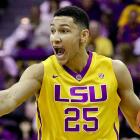
1. Ben Simmons | LSU | 6-10, 239 pounds, 6-11 wingspan, 19 years old
Simmons is the No. 1 overall prospect in the draft for a reason. Few players combine powerful athleticism with the fluid movement that Simmons has at 6-foot-10. Then, throw in preternatural basketball sense in terms of passing and reading the ways plays develop -- particularly on the glass where he is a superb rebounder -- and you have an elite level prospect. Simmons is going to be at the very worst a starting caliber NBA player as a point forward type. But there's a lot more potential for that, if he can improve in a couple of ways.
First and foremost, Simmons has a total lack of jump shot at this stage, and needs to continue to develop the confidence to even just take them, let alone make them consistently. That will open up his game in a terrifying manner. Second, he needs to provide more energy on defense. With his lateral quickness and intelligence, it's easy to see him becoming a plus NBA defender. But he did nothing of the sort this season at LSU due to effort levels, and defense is mental battle as much as it is a physical one. If you don't want to be great on that end, it's hard to actually become great.
That's the key at this point with Simmons. There's very little he doesn't at least have potential to do on the basketball floor. It's how badly he wants it at this stage that will determine if he becomes an all-star/All-NBA-level stud or just a solid NBA player.
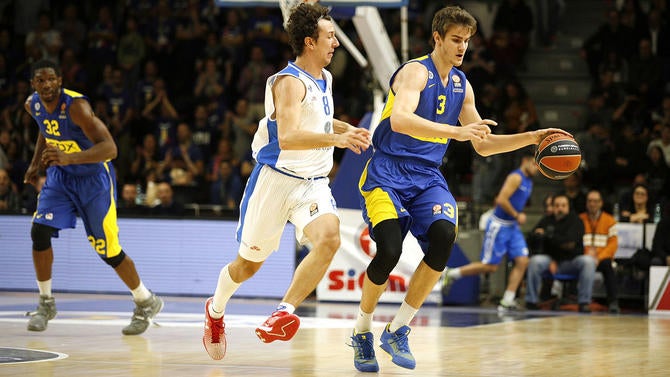
2. Dragan Bender | Maccabi Tel Aviv (Israel) | 7-1, 225 pounds, 7-2 wingspan, 18 years old
Bender joins Simmons as a top tier talent for plenty of reasons. But first and foremost, one thing has to be dispelled. He's not a mystery. He might be a bit of an enigma because it's unclear at this stage how his body will develop and what position he'll be best playing in the future. But scouts have seen a ton of him over the last few years as he's played 500 league minutes in 2015-16, 600 minutes at the international level in youth competition, at adidas Eurocamp each of the last two years, at the Jordan Brand Classic, and at Basketball Without Borders in 2015. Scouts know what he is at this stage of his development.
The question is where he goes from here. Bender is a 7-foot-plus forward who can really move laterally, defend both inside and out, and shoot the ball from distance. Those skills alone are extremely valuable in today's NBA where spacing and defensive versatility with height are so incredibly important. Where he differentiates himself for me is the incredible basketball IQ he has. He's a superb passer, and plays well within an offense because of the vision he has with the ability to see over defenses. He still needs to get better in terms of his strength and he's not a particularly explosive player, but there's a lot of potential for Bender in the modern game. That's what makes him such a valuable prospect in this draft.
TIER 2
3. Henry Ellenson | Marquette | 6-11, 242 pounds, 7-2.25 wingspan, 19 years old
Ellenson has an interesting skill set that could work really well offensively in the modern NBA. His skill set is en vogue at this stage. He's a stretchy combo big man who can attack the glass, pass the ball, and has potential to shoot it well from deep. Like the two players above him, he utilizes his superb basketball IQ to create plays for his team, and can score points from the low post, mid post or from the perimeter in a way that many players can't.
The key to his development will be twofold. First, he needs to become more consistent with his jump shot. The mechanics are there for it to become a major weapon, but it's not there production-wise yet. His effective field goal percentage of 45.8 off of the catch this season is far too low for a player to make a living out there. Ellenson needs that shot to open up the rest of his game and become a more efficient player. The second part is going to be defense, where his lack of lateral agility is going to be a bit of a question mark to whoever drafts him. Can he defend in the screen and roll? That's a tough question. He might be best off defending 5s rather than 4s in space, as well. In fact, he might be at his best as a stretch-five prototype if he can control the glass and the rim well enough at the next level.
Ellenson has potential to be an NBA starter, but there are some questions he'll have to answer and improvements he'll need to make.
4. Domantas Sabonis | Gonzaga | 6-10, 238 pounds, 6-10.5 wingspan, 20 years old
Sabonis is one of the toughest, most mature players in this draft. It's easy to see him making an impact early off the bench due to his physicality, rebounding ability, and talent at finishing. Like his father, Sabonis was one of the most efficient players at scoring in the post this season, using a variety of post moves to juke his defender out of his shorts. Once he gets even the smallest sliver of space, he uses his tremendous touch to flip the ball into the hoop at a highly efficient rate -- something he did from all over the 10 foot range this season.
Along with creating his own shot, he is a terrific offensive rebounder and creates extra possessions either with put-backs or out-and-out rebounds himself, which he often converts at a high rate in terms of put-backs. The key for whether or not he can become a starting caliber NBA player will be how his expanded offensive repertoire improves and how his defenses translates. Late in the season, Sabonis showed increased range out to the NCAA 3-point line, something he used to do occasionally on the Lithuanian national team in youth competition but not something that had been used much at Gonzaga. If he can consistently hit 20-footers, his game opens up big time. Then defensively, it's hard to see how he can become a rim protector due to his short arms, but he is relatively laterally quick and he plays hard on that end. There were times this season where he matched up on difficult wings defensively for the Zags (or even on Kyle Collinsworth against BYU) and saw success. If he can be a smart help defender and due a good job of cutting off penetration, it's easy to see him being a 10-year player in the NBA and having success.
5. Deyonta Davis | Michigan State | 6-10, 237 pounds, 7-2.5 wingspan, 19 years old
The next three players here are massive projects, but ones that could pay dividends to the team who patiently develops them. First is Davis, a 6-10 combo forward who could easily grow into becoming a center as he continues to develop his body and game. Davis was superb this season as a role player for Michigan State, and it's in that capacity that many NBA teams see him as a possible success. Davis finished efficiently around the rim this season, showed some potential to stretch the floor, and was superb on the offensive glass. However, it was on the defensive end that Davis showed the most potential.
Davis was an awesome shot-blocker on a per-minute basis, rejecting 4.1 per 40 minutes. Just as impressively, Davis was good at facing off against smaller players in one-on-one circumstances, moving his feet well and staying in front of whoever was placed in front of him. Be it perimeter-oriented forwards like Nigel Hayes or bigger guys inside, Davis was capable of holding his ground and forcing difficult shots and decisions. The biggest questions revolve around the overall rawness of his game and his basketball IQ. Is he going to be a guy you can trust to continue improving and always make the right decision? That's tough to say, but the physical tools are there for this prospect that most assumed would take at least a couple of years to develop in college.
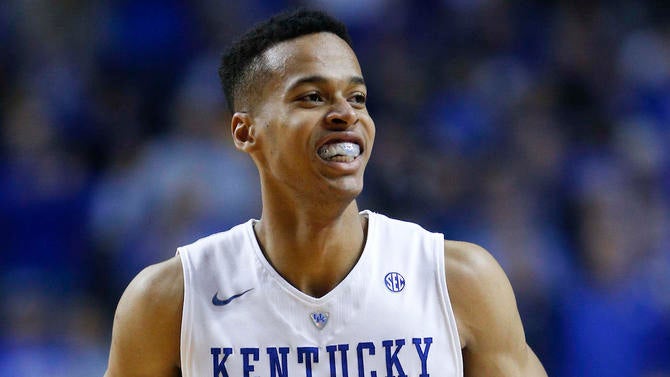
6. Skal Labissiere | Kentucky | 7-0, 216 pounds, 7-2.5 wingspan, 20 years old
Many words have been spilled about Labissiere this season. After coming into his much-hyped season as an expected top two pick, Labissiere struggled out of the gate and only played 567 minutes at Kentucky. He struggled to deal with the physicality of the NCAA game early, couldn't effectively rebound, and seemed generally lose confidence in his own abilities as the season wore on. But then a funny thing happened. Late in the season things seemed to click a bit, and we saw a different, more confident, better Labissiere who did many of the things that were expected of him coming into the season.
So where does that leave Labissiere? Well, undoubtedly he's a project. But he's one worth taking on for a team that's patient enough to let him develop at his own pace. At 7-feet tall with terrific fluid athleticism, Labissiere is already a good weak side shot blocker who put up a 10.3 block rate this past season that would have been tied for the SEC's lead had he qualified with enough minutes. He possesses maybe the prettiest-looking jump shot for any player his size that I've ever seen. He gets elevation, has perfect mechanics in terms of footwork and his upper body, squares up to the basket, and his follow through is perfect. His skill set is exactly what teams will be looking for from a modern forward.
To get there though, he needs to get better feel for the game. He doesn't seem to react instinctually to the ball off the glass, and doesn't really understand how to pass yet or attack closeouts all that well. If a team is patient and allows him to develop these skills, the sky is the limit in terms of his value. But it's going to take a lot of time. And a lot of teams might not think it's particularly worth it. In the right situation, Labissiere has all-star potential. In another, he could be out of the league in a couple of years. Fit is the key word here for him, which is why he's one of the toughest prospects to slot in this draft.
7. Marquese Chriss | Washington | 6-10, 233 pounds, 7-0.5 wingspan, 18 years old
Unsurprisingly given his profile, Chriss is the major riser of this draft season. At 6-10 with explosive athleticism and the ability to shoot, he has the kind of profile that every NBA team is looking for right now. It's not hard to imagine Chriss developing over the course of the next few years and becoming an elite player at the next level. But man, it's a major question mark if he'll ever get there, and there's a long road to go if he wants to.
On the plus side, Chriss averaged 13.8 points, hit 35 percent of his 3s (including catch-and-shoots at a 57.4 effective field goal percentage), put up a solid 5.8 block rate, and finished well around the rim with a 61.8 percent percentage in half court settings. Plus, he understands how to attack closeouts, has mobile feet (albeit less than ideal body control), and can handle the ball a bit. It's easy to see him being a weapon both in the pick-and-roll, in spot up situations, and in the mid-post in time. Oh, and he attacks the glass well offensively, throwing up a 9.8 offensive rebounding rate and finishing put-backs at a good rate.
The positives are clear, but the red flags are just as evident. First and foremost, Chriss is among the worst defensive rebounders to enter the draft as a legitimate prospect in the last decade. His 11.6 defensive rebounding rate is worse than point guard prospects Kris Dunn, Gary Payton, Dejounte Murray, Ron Baker and Josh Adams. But that's not even the biggest problem at this point. The much more worrisome aspect is that he has no idea how to defend at this stage.
He doesn't get down in a defensive stances, has no instinctual awareness of where he is on the floor and where players are in relation to him, and generally gives weak effort until the final moment when he tries to make up for everything by doing some spectacular. This shows most in how foul prone he is, as Chriss averaged 6.5 fouls per 40 minutes and fouled out of 15 games this season, including 10 of the 18 games in Pac-12 play. Blocking shots is nice and has an impact on defense, but it's far from the whole truth of how a player is succeeding on that end. Chriss has legitimate miles to go, and it's hard for me to believe given what we've seen thus far that he'll ever be a positive defensive player despite the tools he possesses to pull it off.
Typically, this would be the profile of a post-lottery home run swing. However, in the weak 2016 NBA Draft, teams are considering him as early as No. 3 and it seems unlikely at this point that he'll fall out of the top 10. The potential is there for him to reach that ceiling. If he continues to develop in terms of his feel for the game as he keeps playing hoops, he has potential to reach all-star heights. But it's one heck of a risk at this stage to take him there given where his game is, and I'm not sure I'd want to be the one paying a top 10 pick hoping that potential turns into production.
TIER 3
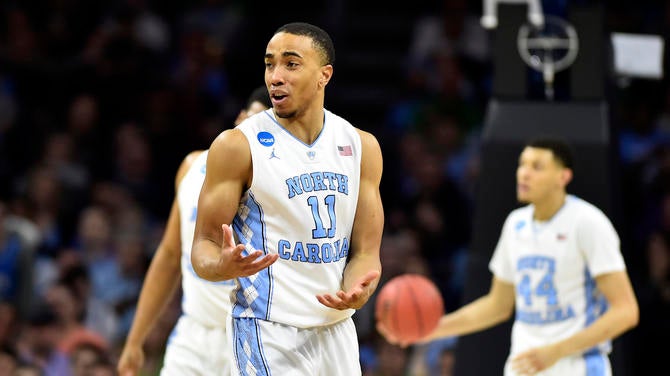
8. Brice Johnson | North Carolina | 6-10, 225 pounds, 7-0.25 wingspan, 21 years old
Johnson, simply put, turned his elite athletic potential into one of the most productive players in college basketball last season. He became a force around the basket, able to score off of cuts and dump offs like always, but also by creating his own offense in the post. He made 69 percent of his shots around the rim in the halfcourt, one of the top marks in the country. He improved as a jump shooter, showcasing that he might be able to step out into the midrange and knock down some shots to stretch the floor. Plus, the rebounding is always going to be there. His 28.5 defensive rebounding rate was one of the best marks in the country and tops in the ACC, and his offensive rebounding rate of 11.7 topped Chriss' defensive rebounding rate of 11.6.
The most tangible improvement Johnson made this season though was on the defensive side. Instead of being a pylon that didn't get down into a defensive stance, he at least became serviceable enough to slow down opposing attackers. Plus, Johnson's 5.5 block rate showcases some potential as a secondary rim protector inside. There's a lot to like about where Johnson's game is. The upside is probably a bit limited due to the fact that he doesn't really handle the ball and probably will never be an elite defender, but it's not hard to imagine Johnson being a first round pick and becoming a solid role player for a long time in the NBA.
9. Juan Hernangomez | Estudiantes (Spain) | 6-9, 220 pounds, 20 years old
Hernangomez won the ACB league's young player of the year award this season after performing well for Estudiantes. The brother of Willy Hernangomez, second round pick of the Knicks last season, Juan has an interesting profile that could fit well in the modern NBA.
In the toughest league outside of the NBA, Hernangomez averaged nearly 10 points and over five rebounds per game. He's a stretch four type with a terrific, fluid stroke, intelligence in the pick-and-pop, the ability to rise and finish with a dunk, and the touch to finish with both hands around the hoop. He also knows how to attack a closeout, and does at least move the ball well even if he's not necessarily creating open looks for others. Plus, it's worth noting that the guy just plays hard and isn't afraid to throw his body around with abandon if necessary.
The place that will be the difference between him carving out an NBA career though or being a star over in Europe will be on the defensive end. He's not the most laterally agile guy, and regularly gets blown by either when closing out on shooters or when players attack him off the dribble. Plus, with his height at 6-9 and the fact that he's averaging slightly under 0.3 blocks per game, it's unlikely he'll ever provide a ton in the way of rim protection. There's much to like about Hernangomez and his offensive repertoire, but there are significant questions on the other side of the floor.
TIER 4
10. Ben Bentil | Providence | 6-8, 229 pounds, 7-1.25 wingspan, 21 years old
One of the most improved players in the country, there's much to like about Bentil's game at the next level. First and foremost, the kid just has superb scoring instincts. He knows when to attack and what the player in front of him's weaknesses are. It'll be more difficult for him to exploit matchups at the NBA level but his combination of size, mobility and strength gave him an advantage over just about all comers in college hoops.
While Bentil does have a pretty hook shot and average ability to make shots around the basket (58 percent in halfcourt settings, per Synergy), where he'll need to make his mark is with his jump shot. Bentil put up an effective field goal percentage of 48.2 this season in catch-and-shoot opportunities, which is a bit below what you're looking for in terms of efficiency. But the shot looks good coming out of his hand and has room for growth assuming that the accelerated pace Bentil has improved upon continues forward. He's also a solid ball-handler and can attack a closeout well.
The key for Bentil's game moving forward will be whether or not he can become a better playmaker and passer when attacking closeouts and whether or not he can play better on defense. If he can do those things, he'll likely be a really solid NBA role player. If not, he'll make a killer living overseas as a small-ball center. Regardless, given where Bentil started the season, he's going to finish it in a much more lucrative opportunity.
11. Thon Maker | Orangeville Prep (Canada) | 7-1, 216 pounds, 7-3 wingspan, 19 years old
I've written pretty extensively about Maker at this point, so I won't belabor many of the points made there here. He's the most volatile prospect in the draft, with some teams going in open-minded and looking to workouts to tell his story and others questioning if he's even a legitimate prospect at this stage. They've all seen him a million times at different events and understand his game well. The mixtapes did him no favors in terms of building up public perception, but that doesn't mean his game doesn't have a chance to succeed at the next level.
He's a 7-footer who has potential to shoot it and protect the rim, and those players are highly in demand. Plus, he's as hard a worker as you'll find, and genuinely wants to be great. The question is whether or not he can improve his basketball IQ and his frame enough to make an impact at the NBA level at some point after developing. The jury is out on that, but he'll have a shot to go in the first round due to those skills.
12. Petr Cornelie | Le Mans (France) | 6-11, 220 pounds, 20 years old
Much like Maker above him, Cornelie is a massive stretch 4 man with a slender frame that may or may not fill out in time. Unlike Maker though, Cornelie is playing legit minutes for Le Mans in France, and succeeding in the process. He's averaging eight points and five rebounds per game while hitting 40 percent of his 3-pointers with a highly translatable shot that should look good in the NBA.
Like I said, with Cornelie it's a similar situation to Maker. Some question whether or not his body will ever get big enough to bang inside with NBA players. He has good feet and knows what he's doing out on the court, but there's still quite a bit in the way of development to go here physically. Also, his 2.99 assist rate would be among the lowest of any player to ever be drafted, and he needs to work on learning to move the ball a bit better. Still, Cornelie is tailor made for the NBA due to his shooting ability and potential to defend the perimeter. He makes a lot of sense as a draft and stash overseas who could eventually become an NBA player once he develops.
Next 11 (all top-75 prospects): (Tier 4 continued) Guerschon Yabusele, Rouen (France); Pascal Siakam, New Mexico State; Robert Carter, Maryland; Jarrod Uthoff, Iowa
(Tier 5) Perry Ellis, Kansas; Joel Bolomboy, Weber State; Sasha Vezenkov, Barcelona (Spain); Shawn Long, Louisiana-Lafayette; Kyle Wiltjer, Gonzaga; Jameel Warney, Stony Brook; Mathias Lessort, Chalon (France)