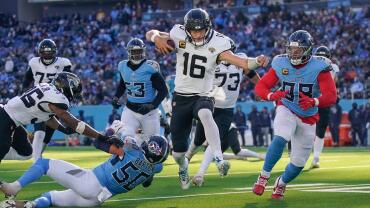

NFL owners vote to approve knee/thigh pads, IR change and trade deadline extension
![]() |
| Lots of NFL players think knee and thigh pads are bulky and unnecessary. (US Presswire) |
NFL owners also voted to extend the trade deadline and to make a change to the injured-reserve policy.
The change in pads policy is something that could be met with mixed feelings from the players and could ultimately be challenged by the NFLPA. Indeed, the union issued a statement on Tuesday that indicates they're not thrilled with the change.
"Any change in working conditions is a collectively-bargained issue," said the union in a statement. "While the NFL is focused on one element of health and safety today, the NFLPA believes that health and safety requires a comprehensive approach and commitment. We are engaged in and monitor many different issues, such as players' access to medical records, prescription usage and the situation with professional football's first responders, NFL referees. We always look forward to meeting with the NFL to discuss any and all matters related to player health and safety."

Though the pads are designed to improve player safety and minimize leg injuries, most players believe they slow them down and look silly. The union's decision to classify the mandatory pads as a "change in working conditions" is a clever one, and could potentially railroad the NFL's move. Of course, there's a reason why the league waited until 2013 to institute the pad rule -- you're seeing it right now.

The trade deadline and IR proposals aren't locked in quite yet, however, though both are likely to be passed.
The trade deadline proposal would move the trade deadline from Week 6 to Week 8 and, frankly, it's just too logical not to happen. The NFL trade deadline is the most boring of all the major sports because teams aren't as sure about their season's status by Week 6. (I'd move it back even further.)
And the injured-reserve change essentially would allow teams to place a "marquee" player on IR and move him back to the active roster after the eighth week of the season. Example: Terrell Suggs suffers an Achilles tear in the offseason but plans on returning at some point later in the year. The Ravens could put him on IR prior to the season but return him to the active roster after the eighth week of the season, giving them substantially greater roster flexibility with a star player, without losing him for the year.