AFC West exit interview: 3 good things, 3 bad things for each team
The Broncos surprised with their QB plan, the Chiefs hung on to key defenders and the Raiders missed out on playmakers


The roster-building portion of the NFL offseason is all but over. Your favorite team's lineup is pretty much set, with the big names in free agency all snatched up and the 2016 NFL Draft in the books.
How did your favorite team do addressing its biggest needs heading into May and June OTAs? We're taking a team-by-team look with offseason exit interviews for each division.
We kicked off our look around the league with the NFC East, and then jumped over to the NFC North, AFC South and NFC South. Next up? The AFC West.
 Denver Broncos
Three Positives
1. They didn't budge on the quarterback situation
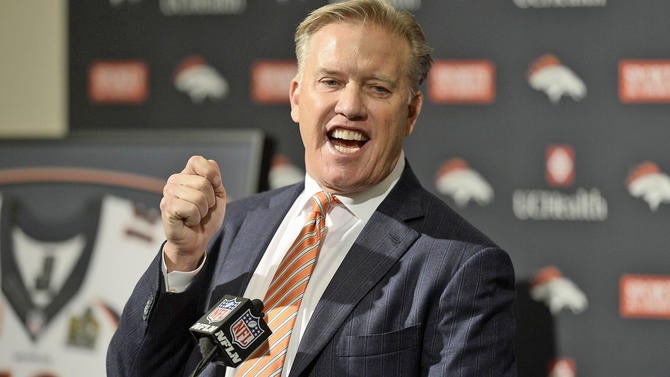
When Peyton Manning retired and Brock Osweiler decided to take $72 million from the Texans -- who can blame him? -- it would've been easy for John Elway to panic and start making rash moves to take care of the quarterback situation.
The 49ers were certainly interested in shipping Colin Kaepernick his way, but Elway wouldn't move off his price. The Eagles and Tom Condon both were interested in Sam Bradford going to Denver, but, again, Elway wasn't willing to pay.
His only pre-draft move was trading for Mark Sanchez. It's not the most inspiring move, but it did shore up the depth chart.
2. They did get aggressive in the draft at quarterback
Also shoring up the position? The draft, when Elway finally turned up the heat a little bit and went after his target. With Jared Goff and Carson Wentz off the board, Elway got aggressive and had the Broncos trade up to grab Paxton Lynch out of Memphis.
He's an ideal fit for Gary Kubiak's scheme, even if he's not going to be ready immediately. Lynch sets them up for the future after losing out on the their last highly-drafted quarterback, and it wouldn't be surprising if the youngster played out of the gate for Denver.
3. They did a perfect job of solving their left tackle issue
Former Seahawks first-round pick Russell Okung decided to negotiate without an agent, so the Broncos were able to poach him on a ridiculously cheap contract. He has little guaranteed money in the deal, and his cap hit/base salary doesn't spike until the back end of the deal.
If Okung is good next year the Broncos will likely exercise his option in 2017, triggering a lot more guaranteed money. But still, this was a low-risk upgrade for the Broncos, who were able to trade Ryan Clady to the Jets later in the offseason.
Three Negatives
1. They let everyone leave
This is one of the issues in the modern NFL when it comes to winning a Super Bowl -- we saw it with the Ravens most recently -- but it's still a problem. The Broncos saw a bunch of really good players leave. Malik Jackson took millions from the Jaguars, Danny Trevathan got paid by the Bears, Manning/Osweiler are gone, Evan Mathis and Louis Vasquez both left hurting the offensive line.
When you win it all, guys get paid, and they usually get paid elsewhere because it's hard to afford all your players. The good news for the Broncos is they've still got Derek Wolfe and Von Miller up front, not to mention the best secondary in the NFL with Aqib Talib, Chris Harris, Bradley Roby and T.J. Ward.
2. They didn't need to match C.J. Anderson's contract
Elway doesn't make many mistakes but he screwed up on Anderson's contract. The Broncos could've placed a slightly higher tender on Anderson and kept him from being approached by other teams with offer sheets.
Instead, Anderson drew interest from the Bears and Dolphins, ultimately getting a fairly onerous deal from Miami. He signed it, and then Denver matched!
The Broncos had been hemorrhaging players, so it's understandable they wanted to stop the bleeding, but it was just an unnecessary expense that could have been avoided.
3. They could've paid Von Miller and saved the franchise tag
There are a lot of machinations behind the scenes when it comes to negotiations, but the Broncos could've made a move to give Miller whatever amount of money he wanted (he's going to get that anyway) and then use the franchise tag on Malik Jackson, Danny Trevathan or Osweiler.
There was a zero-sum chance of Miller hitting the open market, and the window was short to work out a deal coming off a Super Bowl with a legendary quarterback retiring. Still, hammer something out to get him paid and you can keep another player in house.
 Kansas City Chiefs
Three Positives
1. They franchise tagged Eric Berry
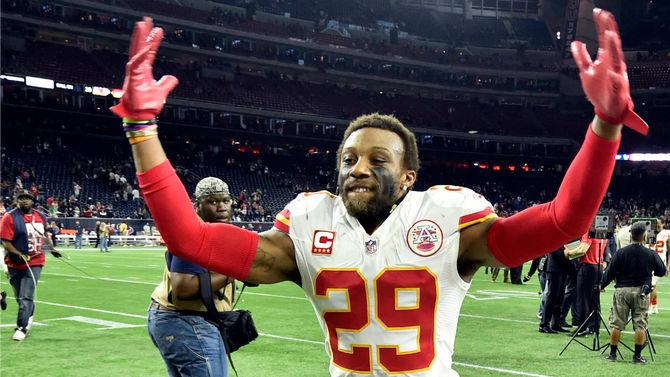
The Chiefs weren't big spenders in free agency. They didn't go out and make any splashy signings. That's not a criticism, though. What they did do well is retain their own talent.
Let's begin with Eric Berry -- easily the best story of the 2015 season.
Berry's been one of the best safeties in the game for a while now, but his career was threatened when he was diagnosed with cancer near the end of the 2014 season. Amazingly, Berry not only fought off cancer, but he returned to the field and maintained his caliber of play.
To achieve that, Berry worked out while he was undergoing chemotherapy. He even put on weight.
Berry opted to have IVs during each chemotherapy in order for him to work out during the process. He came out of chemo a pound heavier.
— Pete Sweeney (@pgsween) July 29, 2015
In all, Berry ended up totaling 61 combined tackles and two picks in 2015. He earned a Pro Bowl spot, was named first-team All-Pro, and won Comeback Player of the Year.
That moment when @Stuntman1429 gets his first INT since beating cancer... #BerryStrong#PITvsKChttps://t.co/u2YlzB7CfV
— NFL (@NFL) October 25, 2015
The Chiefs franchise-tagged Berry in the offseason, meaning he'll make $10,806,000. Of course, the next best thing -- for both sides -- would be to agree to a long-term contract. And, by the sound of it, that's what the Chiefs want to do.
I'm told the #Chiefs plan to tag safety Eric Berry. Both sides interested in working toward a long-term deal.
— Rand Getlin (@Rand_Getlin) March 1, 2016
Berry is still just 27.
2. They kept Tamba Hali
Let's stick with the defense. The Chiefs also retained pass-rusher Tamba Hali, signing him to a three-year deal. Hali is getting up there in age (32), but his skill set hasn't entirely diminished yet. He recorded 6.5 sacks last season and 12.5 in the past two seasons. For his career, Hali's up to 86 sacks, which gives him a chance to hit No. 100 with the team that drafted him in the first round a decade ago.
Remember when the Chiefs lost Jamaal Charles for the season and dropped to 1-5 on the year? There's a reason why the team still managed to rip off 10 consecutive regular-season wins and then a playoff win. The defense ranked seventh in yards allowed and third in points allowed. They generated the fifth-most takeaways. They totaled the fourth-most sacks.
Hali doesn't drive the defense anymore, but he's still a valued asset on an effective unit.
3. They extended Travis Kelce
Besides owning a top-notch touchdown celebration, Travis Kelce is also one of the league's best pass-catching tight ends. In the past two seasons, he's caught 139 passes for 1,737 and 10 touchdowns.
So, this offseason, the Chiefs extended Kelce's contract. They now control his rights through the 2021 season.
Considering their quarterback is Alex Smith, who dislikes receivers almost as much as Andy Reid dislikes saving time, keeping Kelce was a no-brainer. Kansas City is now guaranteed to be treated to plenty more "Fist of Zeus" moments:
Travis Kelce had one TD.
— NFL (@NFL) September 13, 2015
Travis Kelce now has TWO TDs.
And this one went for FORTY-TWO Yards. #KCvsHOUhttp://t.co/sT5Io8o0pT
Three Negatives
1. Justin Houston's injury is serious
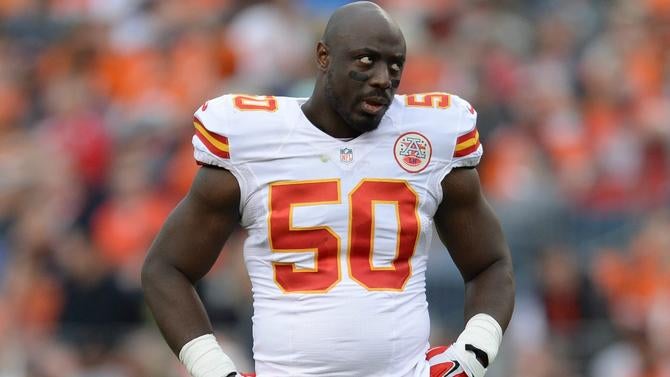
Much of the Chiefs' defensive success during the past several seasons can be traced back to Justin Houston. Since entering the league in 2011, Houston's racked up 56 sacks. Only J.J. Watt and Von Miller have accumulated more sacks in that time span.
So, it's not good news then that Houston is dealing with an ACL injury. Houston initially suffered a knee injury -- they called it a hyperextended knee at the time -- in November, but returned in time for the postseason. In the team's opening round win over the Texans, Houston saw the field for 44 snaps. The following week, in a loss to the Patriots, Houston rarely saw the field.
The Chiefs deny that Houston reinjured his knee during the playoffs, but they didn't discover the ACL injury -- they say it isn't torn -- until February. Initially, when the Chiefs announced the injury, they tagged Houston with a 6-12 month timeline. More recently, general manager John Dorsey said that Houston will play this season.
"I'm not a medical expert," Dorsey said, per NFL.com, "but I can tell you that Justin Houston will be playing this season."
When exactly that'll happen and how Houston will respond to an ACL injury is unknown. It's the Chiefs' biggest question mark entering the season.
2. They parted ways with Doug Pederson
Doug Pederson bolted to take over the Eagles and the Chiefs are now on to two new offensive coordinators (Brad Childress and Matt Nagy). I'm not sold on Pederson as a head coach, but the loss of a coordinator who helped turn an Alex Smith-led unit into top-10 scoring offense (as he did twice in three seasons) can't be overlooked. Though much of the attention last year went to the defense, let's not forget how the offense managed to average roughly 25 points per game.
The good news is that this is still Andy Reid's offense. The bad news is that this is still Andy Reid's offense that doesn't quite understand how the concept of time works.
3. They lost draft picks due to tampering charges
The Chiefs' signing of Jeremy Maclin -- a really darn good receiver -- last offseason came at quite the price. In addition to forking over $22.5 million in guaranteed money, the Chiefs lost two draft picks, a punishment doled out by the NFL this offseason.
The NFL hammered the Chiefs for tampering with Maclin while he was still technically a member of the Eagles. As a result, once the Chiefs' appeal was denied, they forfeited their third-round pick of last month's draft. They'll also lose next year's sixth rounder.
Last year, Maclin caught a career-high 87 passes for 1,088 yards and eight touchdowns. So clearly, he's been a worthy investment. That being said, had they simply followed the rules, they would've acquired him at a much cheaper cost.
Reminder: The Chiefs drafted Justin Houston in the third round back in 2011.
 Oakland Raiders
Three Positives
1. They shored up the secondary
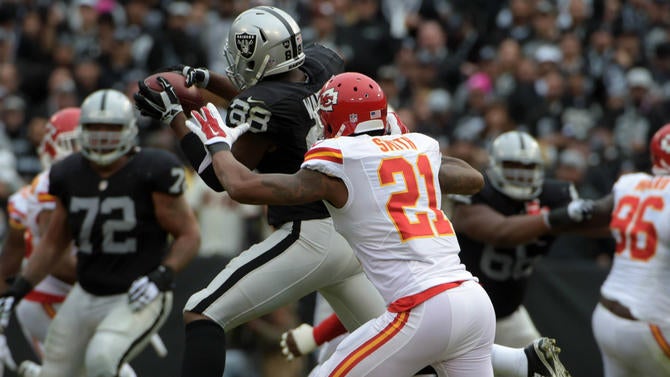
With everyone getting onboard with the Raiders hype, there were still a few glaring issues. Notably the secondary.
Kudos to Reggie McKenzie for finding a way to quickly patch up a weak spot, by grabbing Reggie Nelson and Sean Smith in free agency and then picking up Karl Joseph in the first round of the draft. Joseph is a heat-seaking missle and the Nelson/Smith combo, along with David Amerson, gives this team some serious talent on the back end of the defense.
2. They added another pass rusher
Actually, they added a couple! Only one will be ready right away: Bruce Irvin comes over from Seattle and is a fascinating addition for this defense.
Khalil Mack is a legitimate Defensive Player of the Year candidate who gets after the quarterback on nearly every play. Throw a speedy terror like Irvin out there and set him loose on quarterbacks and it's going to be difficult for offenses to figure out protections. It could get near impossible when Aldon Smith gets back.
3. They stacked the offensive line
Aside from Irvin, the big free-agent signing for Oakland was Kelechi Osemele out of Baltimore. He gives the Raiders an offensive line of Donald Penn/Gabe Jackson/Rodney Hudson/Osemele/Austin Howard. It might secretly be the best offensive line in the league, and it's going to mean a sneaky-good running game and nice protection for Derek Carr.
Three Negatives
1. They didn't add more playmakers
Pretty good nitpicking for the team most people feel had the best offseason in the NFL. But the reality is they aren't exactly loaded at wide receiver. Amari Cooper is a stud and Michael Crabtree became a reasonably reliable No. 2 option last year. But if one of those guys goes down or struggles to maintain expectations, Carr is going to be a little short on weapons.
2. They didn't shore up the running game
Latavius Murray is a home-run threat and at times looked like someone who could carry the load for Oakland. But they need more depth in the backfield to effectively run the ball.
Again, it's nitpicking, and the Raiders deserve credit for focusing on defense (similar to the Jaguars), but assuming the offense will simply progress exponentially is dangerous.
3. They didn't quell all the hype
This is the biggest nitpick of all, because no one is going to tamper a fanbase's expectations during the offseason. Hope springs eternal and whatnot.
But the Raiders are the borderline favorites to win the division and sometimes that's dangerous. They improved the defense at every level, the offense has all the tools in place to take another leap and the division is ripe for the taking. It all feels a little too obvious.
 San Diego Chargers
Three Positives
1. They essentially had the first pick in the draft
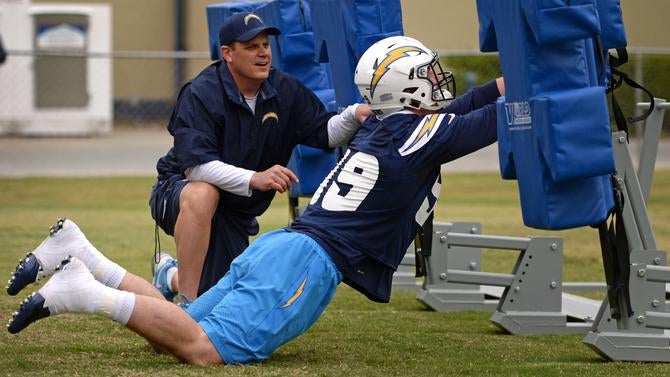
Thanks to the quarterback-desperate Rams and Eagles, the Chargers, sitting at No. 3 in the draft, were able to pick any player they wanted. With the steady as ever Philip Rivers on the roster, the Chargers gladly watched the Rams and Eagles draft quarterbacks.
Once Jared Goff and Carson Wentz disappeared off the board, the Chargers snagged defensive end Joey Bosa, which came as a complete shock. That doesn't make it a bad pick, though. The Chargers finished last season ranked No. 24 in sacks. Bosa boasts the necessary size (6-foot-5, 269 pounds), quickness, and versatility to excel at the next level.
He's more than just a pass rusher, too. At Ohio State last year, Bosa racked up 51 tackles, with 16 of those coming for a loss.
2. They lucked into signing Travis Benjamin
I'm not crazy about the money thrown at Travis Benjamin ($13 million guaranteed), but the Chargers acquired a young, speedy receiver who's flashed some incredible potential. Why Cleveland let Benjamin escape -- especially considering the watered down state of their receiver group -- is a complete mystery.
Benjamin caught 68 passes for 966 yards and five touchdowns last year with suboptimal quarterbacks. He should thrive alongside Keenan Allen, catching passes from Rivers.
3. They also lucked into signing Matt Slauson
Matt Slauson was the Bears' most consistent offensive lineman last year -- in large part because Kyle Long was learning a new position -- playing both guard and center. Yet, because he didn't fit perfectly within the Bears' scheme and because the Bears got great value in the second round by drafting Cody Whitehair, Slauson found himself on the outside looking in. The Bears cut him after the draft, and the Chargers scooped him up.
In terms of a post-draft signing, it's hard to think of a better one. Slauson is a dependable lineman who brings toughness to the interior and should provide the running game (which sucked last year) and pass protection some much needed stability.
Three Negatives
1. They said an ugly goodbye to Eric Weddle
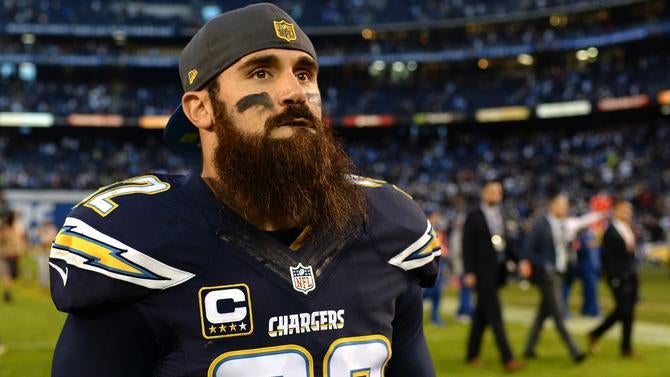
Severing ties with Eric Weddle certainly wasn't unexpected, but that didn't make it an OK departure for the Chargers. Losing one of the most consistent safeties in the league will negatively impact the team next season. And how they lost him already negatively impacted the front office's perception.
That's how strained the relationship has become. It started with a contract dispute, as the Chargers refused to give Weddle a new deal. But the relationship took an even uglier turn in recent weeks, when Weddle was fined $10,000 for watching his daughter perform at halftime.
Then, the team placed Weddle on injured reserve with a groin injury. But on Dec. 31, Weddle worked out at full speed during a Chargers' practice, seemingly trying to prove he didn't belong on IR. Weddle wasn't even allowed to travel with the team to Denver for the final game of the season because, as his agent put it, the airplane was too small. Now, Weddle is saying he'll never speak to the team that drafted him back in 2007.
In Weddle's career, he's snagged 19 picks and earned First-Team All-Pro honors twice. The Ravens gladly acquired that production this offseason.
2. They still have injury problems on the offensive line
The Chargers need a consistent option at tackle and they could've taken one (Laremy Tunsil or Ronnie Stanley) with the third pick in the draft. Instead, they went with Bosa, a pick that's a positive due to Bosa's potential, but that doesn't mean the team's situation on the offensive line is settled.
Slauson helps, but there's still reason to worry. Much of their collective success will ride on left tackle King Dunlap and if he can stay healthy. That's no guarantee given Dunlap's history. He missed nine games last year. He entered the league in 2008, but he's endured a full season just once. The same concern exists for left guard Orlando Franklin, who missed six games in 2015.
The Chargers did their best to add depth in free agency (Slauson) and the draft (Max Tuerk in the third round), but they passed on their chance to draft a long-term solution at tackle.
3. They don't know where they'll play in the future
The Chargers didn't move to Los Angeles like the Rams this offseason, but their future remains murky. They'll be based in San Diego for the upcoming season. After that, their living situation is a complete unknown.
Our own John Breech recently broke down what might happen:
The only way the Chargers would move is if funds for the team's new stadium didn't get approved by voters in November.
The team has to collect 66,447 valid signatures by June to get the stadium funding initiative on the ballot in November.
If the team gathers the appropriate amount of signatures, then San Diegans will get to vote on the new stadium. If the initiative passes, San Diego's hotel room tax would jump up four percent, which would help pay for the $1.8 billion stadium/convention center project.
If the initiative were to fail, then the Chargers would likely to move to Los Angeles.
As Breech also covered, the Chargers are now in play to move to Las Vegas, at least according to Las Vegas Mayor Carolyn Goodman. The Raiders are currently on the clock, but if they manage to stay in Oakland, then the Chargers could enter the mix.
Bottom line: This might be the last season in San Diego for the Chargers. Considering the Chargers' offseason from a personnel standpoint went smoothly -- I couldn't find an obvious third bad move -- their ongoing relocation saga deserves a mention.