After Further Review: How the Giants defense has been money so far in 2016
Big Blue's big leap after last season's debacle starts with the big guys up front

By
Pete Prisco
•
7 min read

When the New York Giants played the New Orleans Saints in the Superdome in 2015, Drew Brees put on a passing clinic, throwing for 511 yards with seven touchdown passes in a 52-49 New Orleans victory.
It was that type of season for the Giants defense.
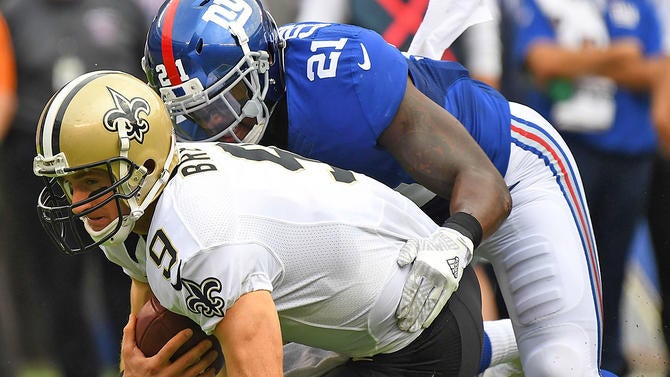
Fast forward to this past Sunday. The same Brees came into MetLife Stadium, the Giants home field, and could lead the Saints to only 13 points and just one touchdown. Playing at home in the Superdome matters, but that much?
So to get a better idea of why the Giants were able to contain Brees, and are off to a great start in 2016 on the defensive side of the ball, I decided to take a deep dive into the Giants defense.
The biggest difference: They have players.
The Giants spent big in free agency in an attempt to try and fix a defense that was deplorable last season. They brought in defensive tackle Damon Harrison (Jets), defensive end Olivier Vernon (Dolphins) and corner Janoris Jenkins (Rams) for a combined $200 million -- if they play out their deals -- and $105 million in guaranteed money. They added cheaper free agents in linebacker Keenan Robinson (Redskins) and corner Leon Hall (Bengals) and also re-signed end Jason Pierre-Paul. That's a commitment of $40 million this season for those six players.
So far, it's money well spent as the Giants are off to a 2-0 start.
The Giants were last in the NFL in total defense in 2015, giving up an average of 420.3 yards per game. They were 30th in points allowed, giving up 27.6 per game. That's terrible. Want more?
They were last in pass defense, 24th against the run, allowing 4.4 yards per rush, and they were 30th in sacks with 23.
Compare that to this season. After two games, the Giants are eighth in total defense, seventh in passing defense and tied for eighth in scoring defense at 16 per game.
That's unreal improvement, especially since they beat the Cowboys, who have a good run game no matter who plays quarterback, and then came home to limit Brees and the Saints to 13 points.
It all starts with the big guys up front.
By adding Harrison from the Jets, the Giants now have two power players on the inside. He teams with Jonathan Hankins to give the Giants one of the best inside duos in the league.
Harrison, whose nickname is "Snacks" played the nose for the Jets, an unsung player on their star-studded front. He is now in the 4-3 front where he can show off more of his skills. Hankins tore a pectoral muscle last November and missed most of the second half of the 2015 season.
Now healthy, he and Harrison are creating big problems up front in the run game. When they went to Dallas for the opener, the idea was that the Cowboys, starting a rookie quarterback, would lean on their offensive line and running game with Ezekiel Elliott. That line is considered the best in the NFL.
That day the Giants won the matchup -- in large part because of the two guys in the middle. Elliott needed 20 carries to get 51 yards. As a team, the Cowboys ran it 30 times for 101 yards, which is 3.4 per rush.
Harrison, who is 6-foot-4 and listed at 350 pounds, was a force at the point of attack, but also showed off his ability to move in that game. Here's a play that shows his athletic ability, which happens to be amazing for a man his size.
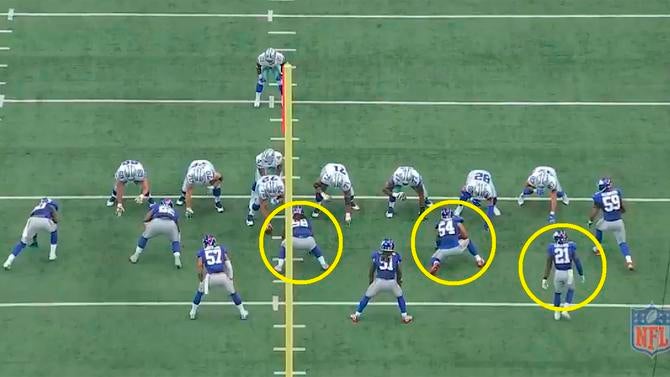
It's a first-and-10 play at the Giants' 13 in the second quarter.
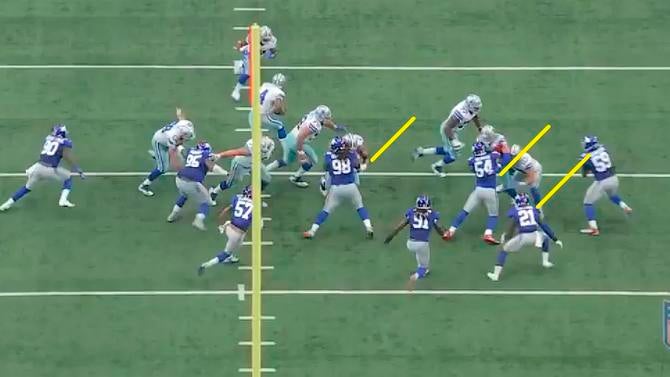
On this play, the Giants did a great job of stringing out the run. Here's the pre-snap look with Hankins, Vernon and Collins circled, left to right, and the flow of the play after the snap:
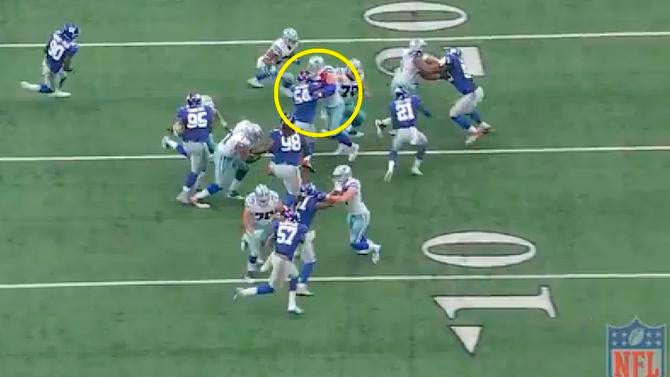
Vernon (54) beats Jason Witten at the point of attack.
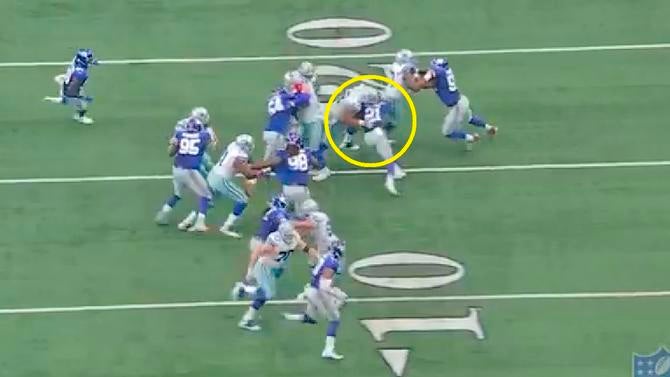
Landon Collins (21) comes up to fill and does a really nice job as a force defender.
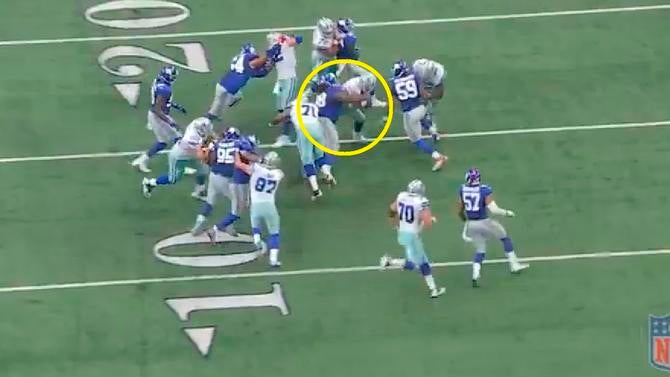
But watch Harrison (98). He explodes into left guard La'el Collins at the point, and then was able to use his feet to shuffle down the line to tackle Elliott. That's impressive.
Hankins does a lot of the same work, but he's a more-rounded player. Harrison plays the run better, but Hankins is better at pushing the pocket. But he's no slouch against the run.
Here are two plays that show that. The first came early in the first against the Cowboys.
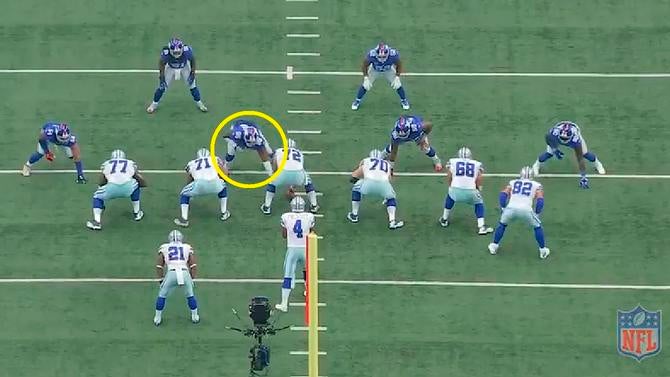
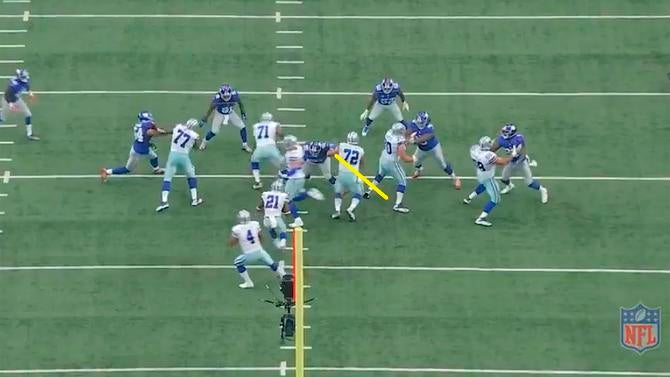
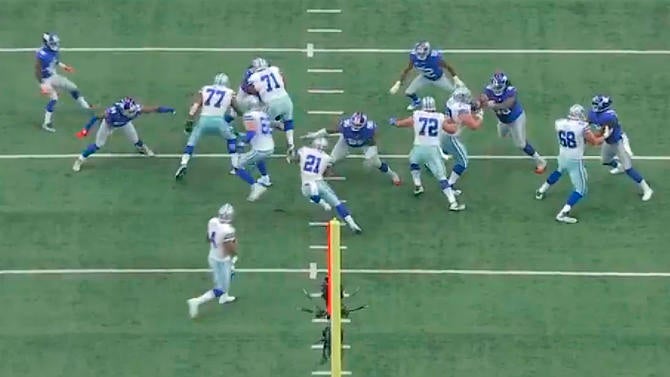
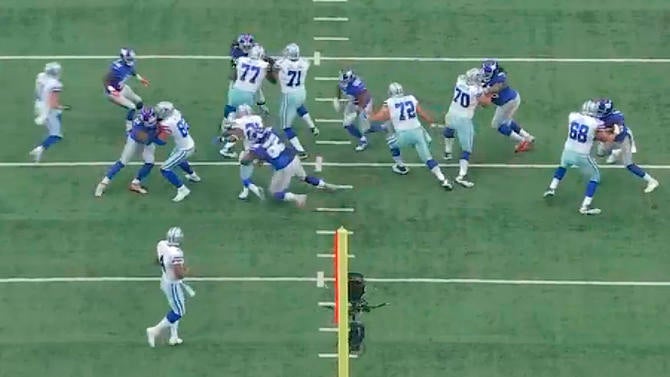
On this play, Hankins blew up Cowboys center Travis Frederick, almost knocking him on his butt, to make a tackle on Elliott for a 2-yard gain. That's power, and then he had the ability to get off the center and make the play.
Here's another run play from last week's game against the Saints in which Hankins excels.
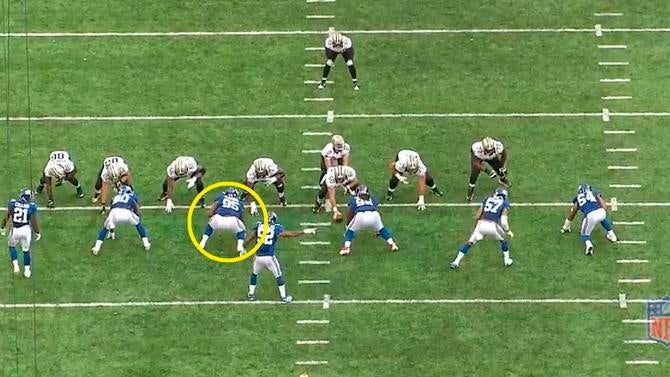
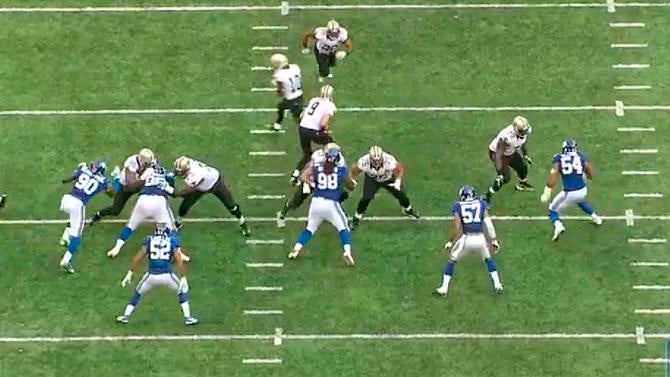
Hankins splits a double team, and is on his knees on the ground.
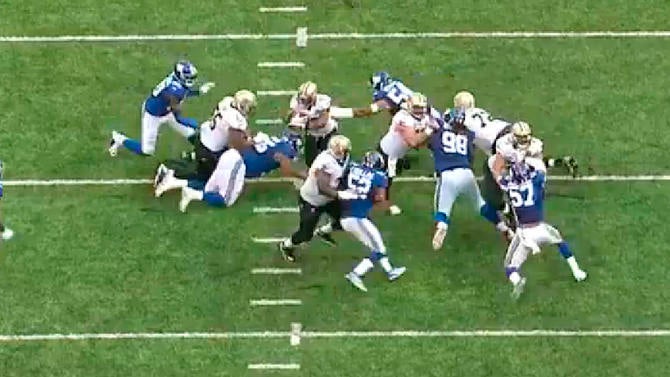
Yet he's was able to still react and make the tackle. That's a big-time play.
With those two clogging things up in the middle, it's freed up the linebackers to run to make plays behind them. It helps that ends Jason Pierre-Paul and especially Olivier Vernon are both good run players. It isn't going to be easy to run on the Giants this season with those four up front.
With no running game, it forces teams to throw in long down-and-distance situations. A year ago, that didn't matter. It does now.
Spagnuolo can be more creative with the talent he has now on that side of the ball. It's hard to be aggressive when players can't make plays. Now they can. So Spagnuolo will show a lot of different looks to confuse offensive lines and quarterbacks.
It helps that he has three good man-cover players in Jenkins, rookie Eli Apple and Dominique Rodgers-Cromartie. They can lock down receivers and take chances. They are also capable of blitzing. The Giants secondary is off to a really good start.
The corners are playing well, Collins is much better than a year ago after trimming down (he said he cut out Oreos), and rookie safety Darian Thompson has the look of a potential Pro Bowl player down the road.
The Giants had two sacks of Brees last week, and both came by defensive backs. Collins got one and Hall got the other.
Here's a look at the Hall sack. It was well executed. Take a look.
Play: Third-and-10 at midfield with 12:25 left in the second quarter.
Offense: Posse (3WR, 1TE, 1RB), shotgun, offset back.
Defense: Dime, Cover-3, blitz.
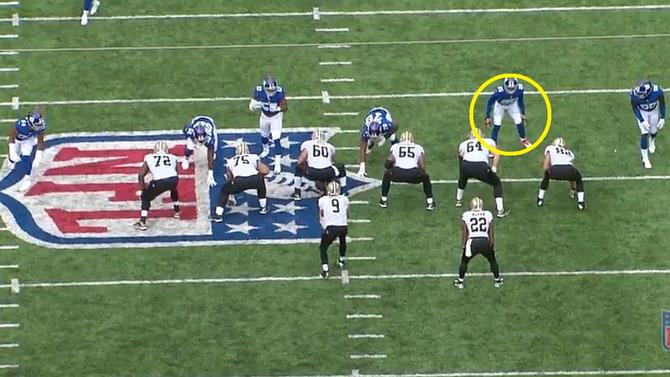
Hall (25) is lined up just outside the right tackle Zach Strief, inside of Pierre-Paul.
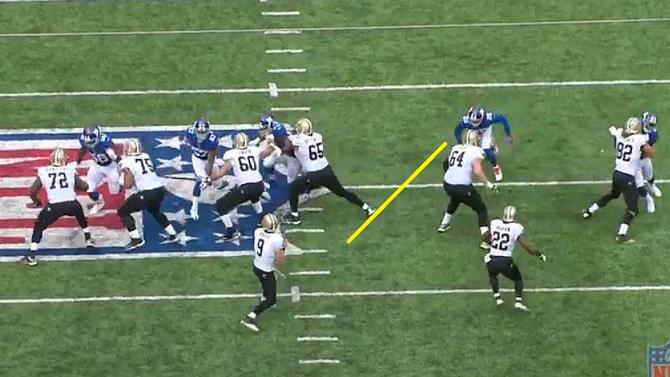
At the snap, Strief takes an outside step when he sees Darian Thompson coming from the slot. That enables Hall to run past him.
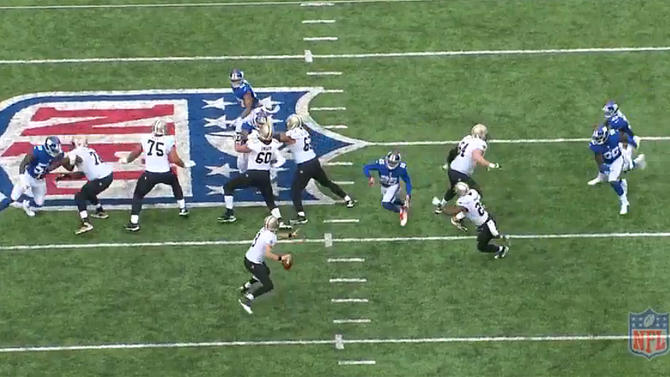
Running back Mark Ingram tries to get over and help, but he can't.
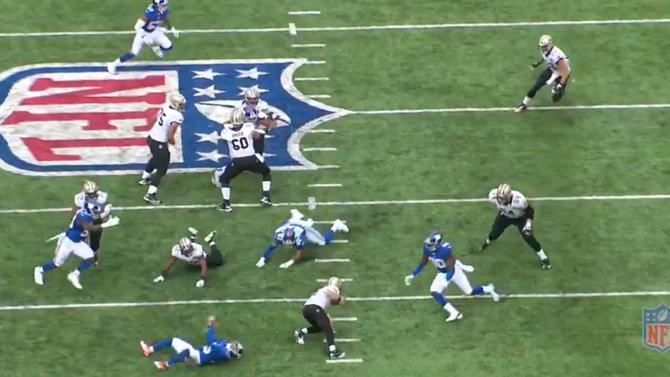
With a free run, Hall trips up Brees for the sack with Pierre-Paul there to finish him off just in case.
Later in the third quarter, the Giants didn't get a sack on a third-down play but their pressure look forced Brees into an incompletion and the Saints looked confused up front. Here's a look:
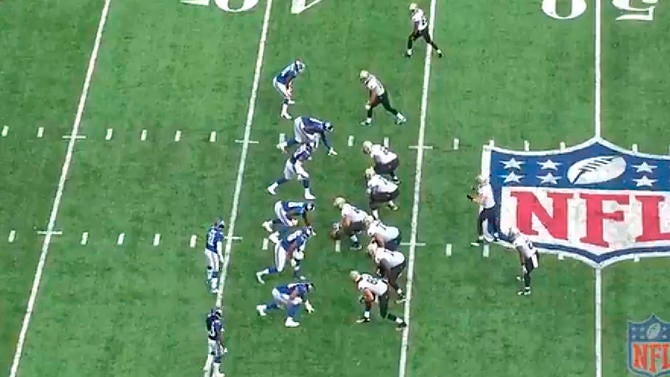
The Giants showed a heavy blitz coming from the right of Brees. So before the snap, he changed the protection and slid Ingram to his right.
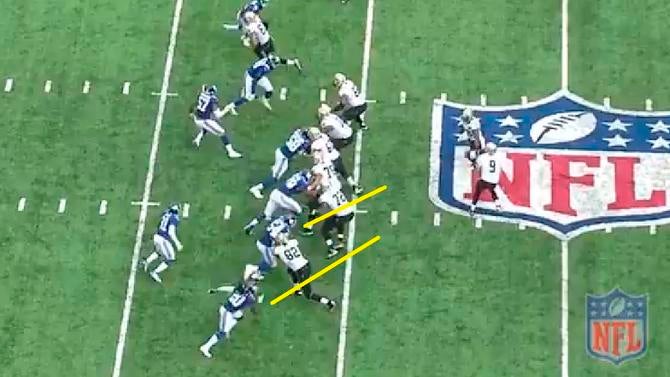
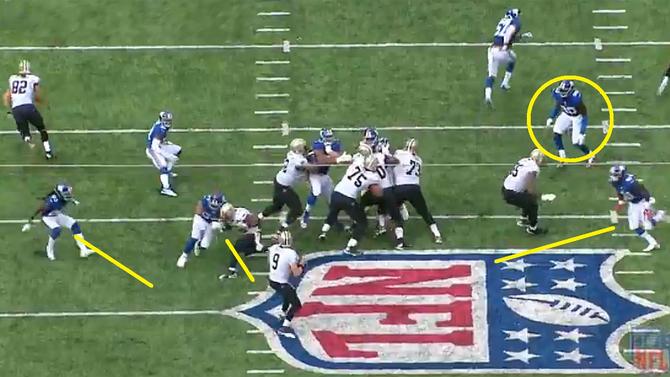
The Giants did bring Rodgers-Cromartie (41) off the slot, but the play was made because Pierre-Paul took a step forward before dropping. That held tackle Senio Kelemente for a brief second, so he could not get out on Rodgers-Cromartie, who was a free runner. On the other side, Ingram tried to get over and block Vernon to no avail. The Giants also brought Jenkins from the same side as Vernon.
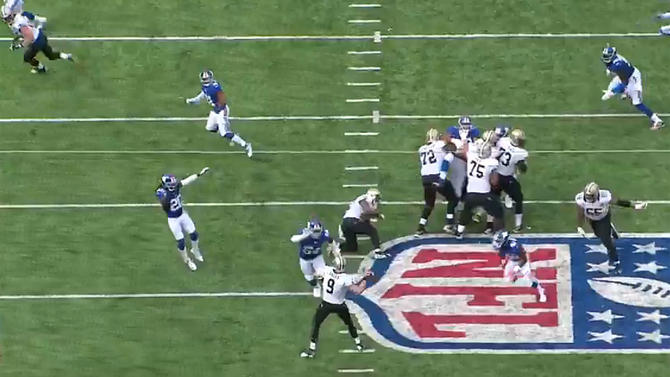
Brees had no chance to make an accurate throw to Coby Fleener.
It's that type of creativity on third down that will make the Giants tough to beat if you can't run on them.
If there are negatives on the tape, it would be that the Giants aren't great in their zone schemes. That takes time for group cohesion. But they do tackle when they do rally to the football.
The linebackers were also considered a weak spot heading into the season, but Robinson and Jonathan Casillas have done a nice job so far. They look fast being freed up to run behind the big guys up front who occupy blockers. They've also been pretty good in coverage.
It's a nice group so far. But it's just two games, and we know that won't define any unit.
Then again, after last season's defensive debacle, watching teams do whatever they wanted, the Giants have to be encouraged.