Agent's Take: Some of the NFL's worst teams have this one thing in common
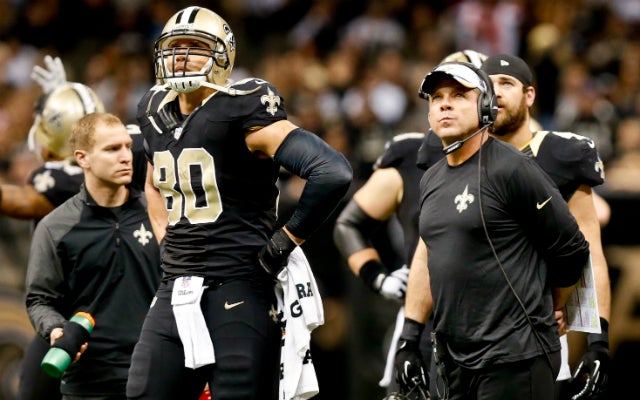
Dead money accounts for more than 20 percent of the Saints' salary cap, meaning more than one-fifth of the organization's cap resources are assigned to players no longer on their roster. Which other teams are 2015's biggest offenders?
By
Joel Corry
•
10 min read

Dead money is a salary-cap charge for a player who is no longer on a team's roster. It exists because of how salary-cap accounting rules operate.
Signing bonuses, option bonuses and certain roster bonuses are prorated or spread out evenly over the life of a contract for a maximum of five years. When a player is released, traded or retires, the remaining proration of these salary components immediately accelerate onto his team's current salary cap.
For example, $2 million of Greg Jennings' $10 million signing bonus counted toward the Minnesota Vikings' salary cap for each year of the five-year, $45-million contract he received in 2013. Since he was released in March 2015 after playing two years under his contract, the $2 million of signing-bonus proration from each of the last two years of the contract automatically accelerated onto Minnesota's current salary cap. The Vikings have $6 million of dead money this season for letting Jennings go.
There are two major exceptions to this general rule of accelerating proration. Only the current year's proration counts toward the salary cap with transactions occurring after June 1. The bonus proration in future contract years is delayed until the following season. A team can also release two players each year before June 1 (known as a post-June 1 designation) that will be treated under the salary cap as if they were released after June 1. With a post-June 1 designation, a team is required to carry the player's full cap number until June 2, even though he is no longer a part of the roster. The player's salary comes off the books at that time unless it is guaranteed.
This means dead money is typically a sunk cost where money isn't owed to a player. There will be a payment associated with dead money only if salary guarantees are present when a player is released.
Excessive dead money can inhibit a team's ability to improve its roster, limiting salary-cap room to scale back activity in free agency or give contract extensions to important players on the team. Although the NFL sets the salary cap annually, each team's adjusted salary cap varies because unused salary cap room can be carried over from one year to the next. The carryover ability can help offset the effect of dead money.
Seven NFL teams currently have more than $20 million in dead money. There's a strong correlation between dead money and team performance so far this season. The seven teams leading in dead money have a combined 9-25 record. The Detroit Lions, this season's only winless team, were close with almost $18.5 million in dead money.
Here's a look at the teams with the most dead money in 2015 and the players responsible for the largest amounts of dead money. Potential dead money amounts that are the subject of a grievance are not included in the calculations.
Team Leaders
Dead Money: $31.07 million
Adjusted Salary Cap: $145,092,430
Dead Money Percentage: 21.41%
Biggest Charges
TE Jimmy Graham: $9 million
OG Ben Grubbs: $6 million
ILB Curtis Lofton: $5 million
OLB Junior Galette: $4.2 million
The Saints' aggressive approach to managing the salary cap is catching up with them. In an attempt to bring more balance to a pass-happy offense, All-Pro tight end Jimmy Graham and a 2015 fourth-round pick were surprisingly dealt to the Seattle Seahawks early in the offseason for center Max Unger and a 2015 first-round pick. The trade happened less than a year after the Saints made Graham the NFL's highest-paid tight end with a four-year, $40-million contract, which included a $12-million signing bonus.
Another surprising move was the Saints cutting Junior Galette, the team's best pass rusher, at the start of training camp. Talent usually trumps character concerns, but not in Galette's case. He received a four-year, $41.5-million contract extension in 2014 when there was a year remaining on his deal for $2 million.
Galette's $1.25-million 2015 base salary, which was fully guaranteed, is the subject of a grievance where the Saints are contending that the guarantees voided because of his off-the-field conduct. $500,000 (40 percent) of Galette's base salary is counting on New Orleans' cap in addition to his dead money until the grievance is resolved. Assuming a favorable decision for Galette, the Saints will have given him a $16.7-million windfall thanks to the extension since he didn't play under any of the new contract years before his release.
The Saints will still be feeling the effects of Galette's deal next year. Galette's dead money is $12.1 million in 2016.
Dead Money: $24.44 million
Adjusted Salary Cap: $152,926,937
Dead Money Percentage: 15.98%
Biggest Charges
WR Mike Wallace: $6.6 million
OLB Dannell Ellerbe: $6.4 million
WR Brian Hartline: $4.2 million
The Dolphins made a splash when the free-agency signing period opened in 2013. During the first wave of free agency, the Dolphins signed Mike Wallace to a five-year, $60-million contract (with $30 million in guarantees) that made him the NFL's third-highest-paid wide receiver. The Dolphins revamped their linebackers by signing Dannell Ellerbe and Philip Wheeler to five-year, $35-million (including $17 million in guarantees) and five-year, $26-million (including $13 million in guarantees) deals. Before the start of free agency, wide receiver Brian Hartline received a five-year, $30.775 million contract (with $12 million guaranteed). Brandon Gibson was also given a three-year, $9.78 million deal to be the third wide receiver.
These signings were shown the door during the offseason. Wallace and Ellerbe were traded to the Vikings and Saints, respectively, instead of being released like others.
Dead Money: $23.866 million
Adjusted Salary Cap: $145,168,434
Dead Money Percentage: 16.44%
Biggest Charges
OLB Jared Allen: $11,678,616
WR Brandon Marshall: $5.625 million
CB Tim Jennings: $5,155,070
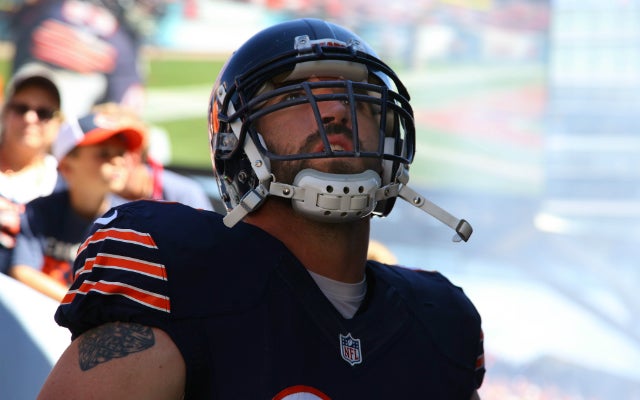
Chicago's dead money results from a regime change where the existing personnel isn't a good fit under general manager Ryan Pace and head coach John Fox. Marshall was traded to the New York Jets for a 2015 fifth-round pick after signing a three-year, $30-million extension the previous May. Jennings was released at the end of training camp despite a fully guaranteed $4.4-million base salary for this season.
Allen was traded to the Carolina Panthers early in the season for a conditional 2016 sixth-round pick when Charles Johnson went down with a severe hamstring injury. Allen, who had been a defensive end for the previous 11 years of his NFL career, wasn't comfortable making the transition to a standup outside linebacker in Fox's 3-4 scheme. Most of Allen's dead money is an $11.5-million roster bonus that he earned in March.
The Bears could move past the Dolphins in dead money, especially if more players are dealt before the Nov. 3 trading deadline.
Dead Money: $22.523 million
Adjusted Salary Cap: $149,855,980
Dead Money Percentage: 15.03%
Biggest Charges
DL Ray McDonald: $4,609,971
OT Anthony Davis: $3,366,670
CB Shareece Wright: $2.6 million
DL Darnell Dockett: $2.5 million
DL Justin Smith: $2,186,668
The 49ers are primarily the victim of unexpected retirements. Davis, who just turned 26, is expected to return next year. The inside linebacker position was decimated. Chris Borland ($463,077) gave up the game after a stellar rookie year playing in place of the injured NaVorro Bowman, saying the risk of playing football outweighed the reward. Willis ($843,500), a perennial All-Pro, also left the game prematurely because of medical concerns. Smith's retirement wasn't a shock to the 49ers. The 36-year-old considered ending his career before last season.
Aldon Smith also wore out his welcome with another off-the-field incident at the beginning of training camp. Since the terms and payment schedule of Smith's $9.754-million option year had been modified, San Francisco has a $1.1 million salary cap charge for him.
The 49ers have the right to demand repayment of the remaining prorated amounts of signing bonus from the retirees. A salary-cap credit will be received beginning next year for any money the 49ers collect.
Dead Money: $22.45 million
Adjusted Salary Cap: $144,909,889
Dead Money Percentage: 15.5%
Biggest Charges
DE Michael Johnson: $7 million
OG Carl Nicks: $4.714 million
S Dashon Goldson: $4 million
OT Anthony Collins: $3 million
S Mark Barron: $2,240,273
Tampa Bay is admitting free-agency mistakes instead of throwing good money after bad. Johnson was released one year into a five-year, $43.75 million contract before the remaining $2 million of his $5 million base salary this year and $5 million of his 2016 base salary became fully guaranteed. Johnson is pocketing $16 million for his one season in Tampa, which includes $7 million of guaranteed 2015 salary. The Buccaneers also opted to let Collins go after one season before the other half of his 2015 base salary ($6 million) became fully guaranteed.
These signings are merely the latest examples of Tampa Bay's free-agency futility. Nicks became the highest-paid guard in NFL history with the five-year, $47.5 million contract he signed in 2012. The two-time Pro Bowl selection, who was limited to nine games with the Buccaneers because of injuries, made $28 million from the deal before his release in July 2014.
Dead Money: $21.53 million
Adjusted Salary Cap: $145,131,127
Dead Money Percentage: 14.84%
Biggest Charges
RB Ray Rice: $9,676,470
DT Haloti Ngata: $7.5 million
WR Jacoby Jones: $2.625 million
Almost 80 percent of the dead money is because of Baltimore's use of the signing-and-option bonus structure with the lucrative contracts of Ngata and Rice. This structure compounds the dead-money problem because an option bonus is essentially an additional signing bonus that's usually paid in the second or third year of a contract to exercise later years in the deal and treated as such on the salary cap.
$176,470 of Rice's dead money is a carryover salary cap charge from the settlement of the wrongful termination grievance he filed against the Ravens after his release early in the 2014 season.
Dead Money: $20.566 million
Adjusted Salary Cap: $146,144,200
Dead Money Percentage: 14.07%
Biggest Charges
WR Dwayne Bowe: $8,894,117
CB Brandon Flowers: $4 million
TE Anthony Fasano: $2.25 million
DL Vance Walker: $2 million
The five-year, $56-million deal (included a $15-million signing bonus) Bowe received in 2013 after playing the 2012 season under a $9.515-million franchise tag paid him like an elite wide receiver. The Chiefs released him in March because he wasn't producing as one. 2014 was his third straight season with less than 70 catches and 1,000 receiving yards. Bowe's one-game suspension for violating the league's drug policy voided his $1.5-million 2015 base salary guarantee, which kept his dead money from topping $10 million.
Individual Leaders
There are 10 players with at least $7 million in dead money this year.
| Top-10 dead-money cap hits in 2015 | ||||
| Name | Position | Team | Dead Money | Transaction |
| Jared Allen | OLB | Bears | $11,678,616 | Trade, 2015 |
| Ndamukong Suh | DT | Lions | $9,737,500 | Void, 2015 |
| Ray Rice | RB | Ravens | $9,676,470 | Release, 2014 |
| Jimmy Graham | TE | Saints | $9,000,000 | Trade, 2015 |
| Dwayne Bowe | WR | Chiefs | $8,894,117 | Release, 2015 |
| LaMarr Woodley | OLB | Steelers | $8,580,000 | Release, 2014 |
| Haloti Ngata | DT | Ravens | $7,500,000 | Trade, 2015 |
| Andre Johnson | WR | Texans | $7,319,585 | Release, 2015 |
| Percy Harvin | WR | Seahawks | $7,200,000 | Trade, 2012 |
| Michael Johnson | DE | Buccaneers | $7,000,000 | Release, 2015 |
Suh's five-year rookie contract, which was worth a maximum of $68 million with $40 million guaranteed, had a 2015 contract year that voided on Feb. 6, which was five days after Super Bowl XLIX. When a contract voids, the bonus proration attributed to the remaining years doesn't disappear. It becomes dead money if the player signs with a new team. Suh's dead money would have been $3.47 million if the Lions hadn't restructured his contract on a couple of occasions for salary cap purposes.
Woodley, who was given a post-June 1 designation when released in 2014, is the third-biggest salary cap charge on the Steelers this year. There's a similar situation with Andre Johnson. His dead money is the second-largest offensive salary cap charge for the Texans. Only running back Arian Foster at slightly over $8.7 million is more. Harvin's dead money from his trade to the New York Jets during the middle of last season is almost $200,000 more than the combined salary cap charges for Seattle's two starting wide receivers, Doug Baldwin and Jermaine Kearse.
There are a couple of interesting situations that don't involve players responsible for the most dead money. Kyle Orton, who retired after last season, has dead money with two teams. The Dallas Cowboys have a $2.225-million salary cap charge this year from releasing him shortly before training camp started in 2014. He is on the Buffalo Bills' books for $1.5 million because he voided the final year (2016) of his two-year deal, which contained a $3-million signing bonus.
There are also double dead-money charges for Darnell Dockett and Josh Scobee. The Arizona Cardinals are carrying a $3-million salary cap charge for releasing Dockett early in the offseason. Dockett is counting $2.5 million on San Francisco's salary cap even though he was released during roster cutdowns. It mostly comes from his $2-million base salary this year being fully guaranteed.
The Jacksonville Jaguars' dead money for Scobee is $1,887,500. Nearly half comes from a salary conversion that helped facilitate a preseason trade to Pittsburgh. The Steelers still have a $2.5-million salary cap charge on Scobee although he was recently released. A little more than $1.9 million of Scobee's charge is termination pay.
Joel Corry is a former sports agent who helped found Premier Sports & Entertainment, a sports management firm that represents professional athletes and coaches. Before his tenure at Premier, Joel worked for Management Plus Enterprises, which represented Shaquille O'Neal, Hakeem Olajuwon and Ronnie Lott.
You can follow him on Twitter: @corryjoel | You can email him at jccorry@gmail.com