Brandon Marshall taking new Jets TE Austin Seferian-Jenkins under his wing
Seferian-Jenkins lands with the Jets after his second arrest for a DUI charge

By
Jared Dubin
•
3 min read

Brandon Marshall had some well-publicized personal issues at the beginning of his NFL career. He was charged with DUI, arrested on suspicion of domestic violence, injured in a wrestling match with family members, and suspended by the NFL, among other things. In mid-2011, Marshall revealed that he had been diagnosed with borderline personality disorder, and he has spent the years since raising awareness for mental health issues and becoming an advocate and mentor for other players that suffer from them.
In new teammate Austin Seferian-Jenkins, Marshall sees someone that he can help.
"I've been talking to Austin for a week now, even before this even happened," Marshall said, referring to the Jets claiming Seferian-Jenkins off waivers, per Newsday. "When I saw what he was going through I reached out to him. We've been talking for a while. He is a great talent. When I heard yesterday we claimed him I was like, 'This is God sent. If he needs me, I am there.' I've already connected him with the right people in the city if he needs them. Guys need second chances. When you make a mistake, it doesn't mean you are a bad person. You need people to believe in you, and sometimes a fresh start is a good start."
Seferian-Jenkins was recently cut by the Buccaneers after a DUI arrest of his own. He had also been arrested on suspicion of DUI in college and had been having well-documented problems with the Tampa Bay coaching staff throughout the 2016 offseason. (He was kicked out of an early camp practice for not knowing what he was doing, as one example.)
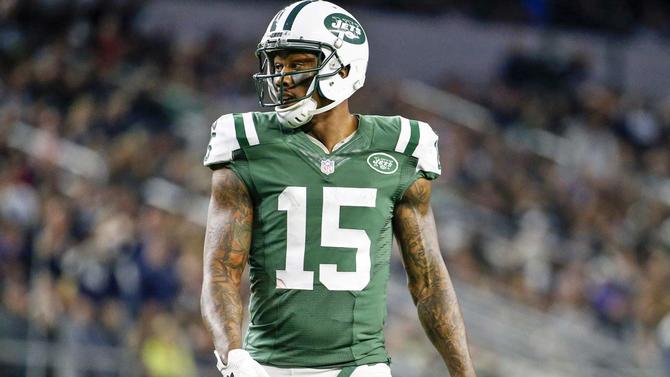
Marshall wants to help the talented young tight end reach his potential while dealing with anything that may be standing in his way off the field. "It was important for me to make sure kids are in position to reach their full potential,'' Marshall said. "If you look at my story, there's a human impairment side of it where I was diagnosed with borderline personality disorder. I spent time at McLean Hospital (in Massachusetts) learning skills and tools to manage my emotions, to manage ebbs and flows of the football season. What I was going through was holding me back. If I had something in school, that could have been preventative, and intervened early, I would have not gone through the things I went through."
Marshall, despite his early-career issues, was always going to be given more chances because he was productive on the field. After a rookie season in which he didn't play much, Marshall had lines of 102-1,325-7; 104-1,265-6; 101-1,120-10; 86-1,014-3; and 81-1,214-6 prior to announcing that he'd been diagnosed with borderline personality disorder. If there's anything we know about NFL teams, it's that they will take a risk on talent deemed "trouble" off the field as long as the player is still productive. (Notice how the Cowboys went after Greg Hardy last offseason when his most recent on-field season was a major success, but nobody chased him this offseason after he had an underwhelming season in Dallas. Adrian Peterson, who was still wildly productive, remained in the NFL after his child abuse allegations, but Ray Rice, who struggled in his most recent season before his domestic violence incident became public, has yet to return to the league.)
On the other hand, Seferian-Jenkins, now in his third season, has been largely unproductive. He's struggled to stay on the field due to various injury issues, and when he's been out there, he's averaged only 2.5 catches for 33.5 yards per game. So this may indeed be his last chance at sticking in the league if he doesn't rectify the off-field issues that have arisen. Marshall is determined to help him on both fronts.