Las Vegas was silly, but grassroots basketball remains in a pretty good place
LaVar Ball got all the headlines but a lot of good comes out of AAU-level tournaments

By
Gary Parrish
•
3 min read

Back home finally, my annual trip to Las Vegas for July's last Evaluation Period in the books, I did an interview Monday on NBC Sports Radio during which my friend Chris Mannix asked about the state of grassroots basketball.
It was a good question given the events of the past week.
Because from Wednesday night until the moment his Big Ballers were eliminated from the Adidas Uprising Summer Championships on Saturday afternoon, LaVar Ball was the story. First his mere presence, then his outlandish antics, dominated headlines on national websites -- including this one -- and created radio and television content for days. And if you didn't know better, you might get the impression that grassroots basketball is a coast-to-coast circus where coaches belittling women and pulling their teams off courts mid-game is normal.
It's not, though.
Truth is, the grassroots scene is as good as ever, if not better. And LaVar Ball and the Big Ballers are more of an outlier than the norm. Nobody else acts like him. Nobody else plays like them. So when they get all of the attention -- and they really did get all of the attention out in Las Vegas -- it can easily and understandably distort the reality of the situation. But the reality of the situation is this: Grassroots basketball isn't perfect -- but it's mostly good. And the improvements over the years are noticeable.
When I first started writing about college basketball, roughly 20 years ago, summer hoops was more about camps than tournaments, more about matchups than championships. But now Nike has the EYBL that prioritizes team-play and winning. So EYBL games -- including pretty much every game at the Peach Jam -- now look a lot like high-stakes high school games with better players.
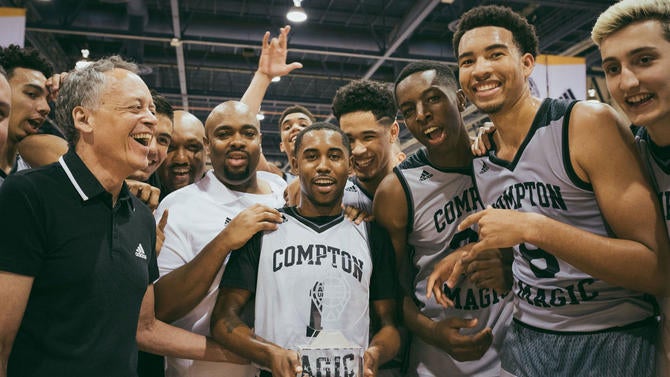
Adidas and Under Armour have launched similar leagues that have had a similar effect -- meaning there are three relevant circuits providing opportunities for thousands of young people to travel the country, compete in front of college coaches and create scholarship opportunities for themselves. How that gets twisted into the worst thing in the world has never made sense to me. The good has forever outweighed the bad. And, these days, the scale is more lopsided than ever.
Which is not to suggest there aren't issues.
Agents still finance programs to certain degrees. So some elite prospects are bought and paid for before they ever even enter college. And the amount of influence shoe companies have over where recruits ultimately attend school is disconcerting. And how some organizers have turned amateur events into blatant cash-grabs is gross. And there are some clowns coaching, sure.
A perfect system, it's not.
But it's better than the alternative -- if what you consider to be the alternative is a world without grassroots basketball. Because a world without grassroots basketball would be one of limited opportunities where college coaches are reduced to scouting high school games that offer relatively little. They'd see dozens of prospects in a week instead of hundreds of prospects in a weekend. Consequently, fewer kids would be evaluated and players who aren't teammates with elite prospects would largely go unnoticed.
Again, that's not a good thing.
I can't tell you how many times a college coach has entered a grassroots gym to watch one player and left intrigued by another he didn't know existed an hour earlier. Happens everyday. And as long as that's the case, grassroots basketball is worth preserving.
Can it get ridiculous?
Yes.
Last week was proof. But the good still outweighs the bad -- even if the bad gobbles up most of the headlines.