2020 Fantasy Baseball Draft Prep: 10 sleepers for strikeouts in Rotisserie and categories leagues
Strikeouts are what everyone looks for in a starting pitcher, so can you expect to get them late?

By
Scott White
•
1 min read
Strikeouts represent such a skill differentiator for pitchers that the ones who show the potential for more tend to get pushed up draft boards simply for that reason.
It makes it difficult to find a sleeper specifically for strikeouts. If a pitcher with big strikeout potential makes good on it, it probably means he had a breakout season and has awesome numbers across the board. And so most of my picks here are basically just breakout candidates. If they come through, you will indeed get strikeouts from them.

For my upside picks, I excluded pitchers who aren't already in line for a job — or at least don't appear to be. But I'll still give Michael Kopech, Spencer Howard and MacKenzie Gore a mention here. If they do get a shot in the starting rotation, strikeouts figure to be a big part of the equation.
We analyzed league-winners and runs/strikeouts sleepers Wednesday on the Fantasy Baseball Today podcast. Subscribe to the podcast here.
Note that only starting pitchers with an ADP of 160 or later, according to FantasyPros, were considered.
Strikeout sleepers
Getting swings and misses has never been a problem for Kenta Maeda, whose swinging-strike rate would have ranked seventh among qualifiers last year, right between Lucas Giolito and Patrick Corbin, and who has 9.8 K/9 for his career. Holding him back has been the Dodgers themselves, who would remove him early from games and send him to the bullpen for stretches so that certain incentive clauses wouldn't kick in. The Twins probably won't have that same luxury, which means Maeda may finally get the volume his ratios deserve.
| ||||||||||
The first year back from Tommy John surgery of course offers no guarantees, but Lance McCullers's curveball is a special pitch that he throws nearly 50 percent of the time. And it has allowed him to put together elite strikeout rates during his time in the majors, his 10.4 K/9 over the past three seasons nearly matching Walker Buehler's 10.6 K/9 last year. From there, it's mostly a matter of what sort of workload he gets, and with the shortened season, the Astros won't have to be so cautious with his innings, surgery or not.
| ||||||||||
Andrew Heaney has always shown a knack for missing bats, but he took it to a new level last year with the same K/9 (11.1) as Charlie Morton and a better swinging-strike rate (14.1) than Shane Bieber, Jack Flaherty, Yu Darvish and, yes, Morton, among others. Staying on the field has been a challenge but may be less so in a short season. The fly balls may keep the ERA on the high side, but he at least plays in a division with a bunch of big parks.
| ||||||||||
You may have forgotten that through 12 starts last year, Caleb Smith had a 3.41 ERA, 1.02 WHIP and 11.2 K/9, and it's probably because he then missed a month with a hip injury and wasn't the same thereafter. Some regression was likely coming anyway given his extreme fly-ball tendencies and shaky control, so you shouldn't hold out hope for a big breakthrough at age 28. But his high-spin fastball should nonetheless keep the whiffs high.
| ||||||||||
A.J. Puk led all minor-leaguers with 13.2 K/9 in 2017, putting him in a position to win a job in 2018 before Tommy John came a-calling. Strikeouts are his everything, though. He has a fastball that pushes triple digits, a gnarly slider and a 6-foot-7 frame that extends his release point, making it all appear even faster. It's a profile not completely unlike Randy Johnson (I'm sorry -- I shouldn't have said that), though like a young Randy Johnson, he still has some control issues to sort out.
| ||||||||||
Josh James had 14.7 K/9 as a rookie last year. Granted, it was mostly in relief, where you'd expect a pitcher's stuff to play better, but then again, it was mostly multi-inning relief. Bottom line is that by every way we measure "stuff," his is off the charts, and his numbers in his final minor-league season -- a 3.23 ERA, 1.12 WHIP and 13.5 K/9, mostly as a starter -- give us an inkling what he can do with his move to the rotation. He'll need to address last year's walk issues, but a mechanical tweak was paying dividends early in spring training.
| ||||||||||
Mitch Keller was a top-25 prospect according to most every publication for three straight years, but it was only last year that he developed the slider that quickly became his best swing-and-miss pitch. His 10.7 K/9 at Triple-A was his best mark for a full minor-league season, and while he had a tendency to unravel in his 11-start major-league trial, he had no trouble piling up strikeouts. His 3.19 FIP, 3.47 xFIP and 3.78 SIERA are probably more indicative of his talent than his 7.13 ERA.
| ||||||||||
I've made the case for Nate Pearson as an ERA sleeper as well, and with his overwhelming stuff -- namely an 80-grade fastball that has been clocked as high as 104 mph, along with a late-breaking slider -- he'll achieve it by missing bats. He made a number of established major-leaguers look silly in the initial spring training. His concerns are mostly durability-related after the Blue Jays were careful with his innings last year, but of course, the short season helps in that regard. Performance-wise, I have even more confidence in Peason than A.J. Puk.
| ||||||||||
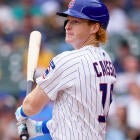
Dylan Cease didn't so much excel at anything in his first look in the majors, struggling to find the strike zone and the right pitch mix. But he has a high-spin fastball with elite velocity, capable of generating plenty of whiffs in its own right, and has demonstrated his strikeout potential time and time again in the minors, averaging 11.4 K/9 across five seasons. It's a boom-or-bust play, but the potential rewards are huge.
| ||||||||||
It'll be a clean sweep for Rich Hill across the four starting pitcher categories (which don't include saves, of course). The only real knock on him is that he never lasts a full season, but the shortened schedule greatly improves his chances doing so. Of course, there is the not-so-small matter of him coming back from elbow surgery at age 40, but at a next-to-nothing cost, you'll take a chance on the guy who has a 3.30 ERA, 1.11 WHIP and 10.7 K/9 over the past three years.
| ||||||||||