Fantasy Baseball: Answering your questions on Francisco Lindor, Shohei Ohtani and more
What should you do with slow starters like Francisco Lindor? Should you buy into fast starters like Ozzie Albies? Chris Towers answers reader mail.

By
Chris Towers
•
7 min read
- More Fantasy Baseball: Week 6 Sleeper Hitters | Week 6 Top Two-Start Pitchers | Waivers: All hail the Kingham | Podcast
You know what this is. It's a mailbag. You're asking questions, I'm answering them. I'm going to write a lot of words, so why waste any more than is necessary on an intro? Let's get to it:
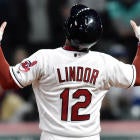
Are Francisco Lindor's struggles for real or just related to cold weather?
— Dan (@minutemandan) April 30, 2018
Francisco Lindor has been a dramatically different hitter this season than any version we've seen before. The main change being to Lindor's strikeout rate, and there are some concerning signs there. His plate discipline hasn't changed much — Lindor isn't swinging at pitches out of the strike zone much more than usual — but he is swinging and missing quite a bit more. Last season, Lindor made contact on 86.3 percent of his swings, a number that has dropped to 77.8 percent so far.
Given his track record in this regard, I'm not ready to panic, but it is slightly concerning given the spike in strikeout rate that's gone along with it. This is the highest strikeout rate Lindor has had over a 26-game stretch since he was a rookie, and it's going to be tough for him to return to hitting .300 if he's going to keep striking out at this pace. However, I'm willing to give him the benefit of the doubt, especially given how he pulled out of his early-season slump last year.
Should I trade albies? And at what price? (H2H cats redraft with OBP). I think I’d want 2nd round value to consider it but can’t see me getting that.
— Will Jordan (@KingWillyJ) April 30, 2018
What are we to do with a younger player who comes to the majors and almost immediately becomes a dramatically different player than he was in the minors? Ozzie Albies was a contact and speed guy in the minors, never hitting more than nine homers in any one stop along the way. He has nine in 27 games to open the season, with a 47.3 percent fly ball rate that backs up a change in approach. On the other hand, Albies ranks just 171st out of 333 qualified batters in average exit velocity on fly balls and line drives, which indicates that there's more than a little bit of good luck behind his early-season breakout.
So, in that regard, sure, he's playing over his head. But he was also a popular breakout candidate before the season, and one who should start running more often to make up for what he might lose in power when everything regresses. Albies looks legit, even if this version of him likely isn't legit. If you could move him for a slow-starting early round pick like George Springer, I would do it, but that's not a recommendation to move him for whatever you can get.
Has Schwarber turned the corner and became the player we were expecting based on his prospect status? Or is he a sell high candidate?
— Tom Glasspool (@gpool200) April 30, 2018
I was looking up changes in launch angle from last year to this year, and Kyle Schwarber has been one of the biggest in baseball so far. Among 265 players with at least 50 at-bats tracked by the StatCast system per MLB.com, Schwarber ranks 148th in average launch angle, at 9.4 degrees; last season, he ranked 25th out of 281 (min. 200 AB).
Launch angle, of course, isn't a measure of skill, and a higher or lower launch angle isn't necessarily better or worse. We want our power hitters to hit the ball in the air, but we don't want to see a bunch of pop ups or lazy fly balls. In Schwarber's case, he's hitting more balls on the ground, but he's also hitting the ball harder, both when he hits it in the air and when he hits it on the ground. There are still concerns about whether he'll hit lefties — or whether he'll even get the opportunity — but Schwarber is making more and better contact, and it makes sense to bet on that sustaining with a player this talented.
Who are your biggest "I don't buy it" guys? And I mean players who are off to great starts but you just cant fully embrace it.
— Dan Hoppen (@danhoppen) April 30, 2018
Since I've written about so many hitters to open this piece, let's go with a few pitchers: Chase Anderson, Kyle Hendricks and Mike Foltynewicz. Here's why:
- Anderson has lost the velocity gains he made last season, and his swinging strike rate and K% have collapsed. A fly ball pitcher can't survive pitching to contact, especially not when he pitches half his games in Miller Park.
- Hendricks is always going to live on a knife's edge thanks to his middling stuff, but he's seen further losses in his swinging strike rate and K%. He does perhaps a better job than anyone in baseball of inducing weak contact, but his 4.70 FIP points to regression coming, even if he has managed to consistently outperform his peripherals in the past.
- Unlike the other two names, Foltynewicz is among baseball's elite radar-gun performers, but the results have never matched that before now. He's showing a bit more confidence in his secondary pitches so far, which has led to an increase in strikeout rate, however he's also allowing a lot more free passes. A 3.73 SIERA and 3.87 FIP point to an improved pitcher, but if someone is buying him as a legit breakout, I'm selling.
What are realistic expectations for Ohtani the rest of the year
— Jacob Greenwald (@Jacob_817) April 30, 2018
To start with, hopefully some better luck. Shohei Ohtani looked too good to be true after his first two starts, and the injury bug has caught up with him, first in the form of a blister, and then with a sprained ankle. The Angels are going to be careful with their prized rookie, and I think that's more likely to impact him with the bat than on the mound. If it comes down to it, they'll limit his plate appearances before they limit his pitching opportunities, which makes sense -- he's a better pitcher than hitter. I think he'll be a Robbie Ray-esque pitcher, with moments of blinding brilliance, and his share of struggles too.
Who the heck is Garrett Richards this season?
— Chris Levin (@ChrisLevinAQ) April 30, 2018
Healthy, so far!
It's hard to say much beyond that, because we've seen so little of Garrett Richards over the past few years, and what we've seen so far this season is so far out of character. He's still throwing hard, and he's still inducing plenty of whiffs — when opposing batters deign to swing at his offerings, something that is happening less often than ever. Richards is inducing a career-low rate of swings on pitches both within and outside the strike zone, leading to an overall swing rate of 39.3 percent, the lowest of his career by a wide margin. Batters are daring Richards to throw strikes, and he hasn't adjusted yet. With the kind of stuff he has, you'd like to see him challenge hitters a bit more often, because he's likely to win more than he loses.
1. If McCullers keeps up his dominance (save for the one bad start) would you sell high in a month based on assumed innings limitations?
— Josh Wolfe (@Josh__Wolfe) April 30, 2018
2. Where/who is your trade floor (in terms of outfielders) that you'd take straight up for Acuña right now?
- When it comes to early-season trends, I don't want to react unless we get some new information, and I'm not sure we have any on Lance McCullers. Spoiler alert: He's really good. He gets a ton of strikeouts and groundballs, and gives out fewer walks than his reputation would suggest. As long as he's on the mound, he's likely to be very good, but his track record suggests he isn't likely to be on the mound as often as you'd hope. I'm not sure I'm so concerned about innings limitations as long as he's healthy, which means trading him is a risky proposition. If he manages to stay healthy, you're losing a star.
- I'll concur with my colleague Scott White, who has Ronald Acuña ranked just outside of the top-20 at outfield. I wouldn't trade Lorenzo Cain for him, but I would trade Andrew McCutchen for him. That feels like the right answer.
What should we do about Michael Conforto?
— Brendan Callahan (@BrennieCallahan) April 30, 2018
Hold on to him.
Look, maybe Michael Conforto came back from his shoulder injury a little too early, and it's hampering his swing. That's not hard to believe, and the data backs it up; his hard-hit rate and average exit velocity are both down from last season. However, neither is so low as to be alarming, and he's still showing above-average plate discipline and occasionally uncorks the kind of blast that portends better days ahead. Don't give up on a player this talented.
JA Happ a top 30 starter with these strikeouts?
— Jamie Sayer (@Jamie__Sayer) April 30, 2018
Nobody would ever rank J.A. Happ as a top-30 starter, but he might be one. Since the start of the 2015 season, Happ ranks 19th in ERA among starters with at least 400 innings pitched, so any improvement in his skill set could cement his place among the 30-best hurlers in the game.
However, there really isn't any sign of an improved skill set here. He's not throwing any harder, and he's not really throwing a different assortment of pitches, either. He's throwing them in different places — Happ is elevating his four-seam fastball more often, as this FanGraphs piece shows — but that probably isn't enough to explain this start. The better explanation is likely the simplest: It's random.
Happ has struck out 34 percent of opposing hitters over his past six starts, and he had a similar stretch in the summer of 2016. That didn't lead to a breakout, and this likely won't either. The good news is, Happ is a good pitcher, one you probably got at an age-discounted price before the season. Enjoy it.