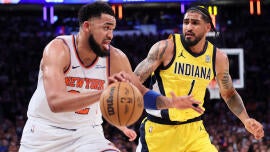
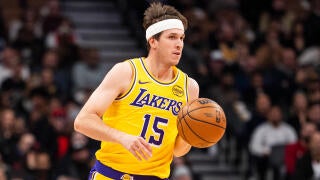
The Indiana Pacers are headed to the NBA Finals for the first time in 25 years after a 125-108 Game 6 victory over the New York Knicks on Saturday night. The Pacers steadily grew their lead in the second half and the Knicks were unable to mount one of their trademark late comebacks, sending Indiana to face the top-seeded Oklahoma City Thunder in the Finals, which begin on Thursday night.
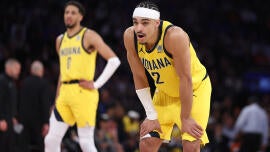
Tyrese Haliburton, who shook off a rough Game 5, was once again the orchestrator for the Pacers. He finished with 21 points and 13 assists, and made some key floaters down the stretch while the Knicks attempted to fight back. Pascal Siakam came up with another steady performance, while Andrew Nembhard was brilliant defensively, collecting six steals while hounding Jalen Brunson all night on the other end.
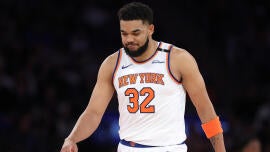
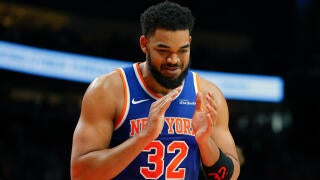
New York was plagued by turnovers, committing 17 of them which led to 34 Indiana points. With Brunson and Karl-Anthony Towns struggling, relatively, on the offensive end, the Knicks simply couldn't make up for all the free points they gave the Pacers.
The Thunder, who dispatched the Minnesota Timberwolves in the Western Conference finals, 4-1, will host Game 1 of their first Finals appearance since 2012. With the Eastern Conference finals now concluded, below are our takeaways from the series as a whole.
Here are a few takeaways from the thrilling Eastern Conference finals series between the Knicks and the Pacers.
Game 1 will haunt Knicks
The Pacers were the better team in the series as a whole. They dictated the terms of engagement every step of the way, forcing the Knicks to play in track meets early in the series and then dominating mismatches as it progressed. Play this series out 100 times and they win far more than half of them.
But the Knicks led Game 1 by 15 points with under five minutes to play. If they could have just forced Aaron Nesmith to miss one of his five made 3-pointers in the final five minutes, they win that game. And if the rest of the series goes as it did in reality, this thing is tied going back to New York for a Game 7 on Monday.
Instead ...
That collapse embodied so many things this Knicks team did wrong all year and all series. The defense fell apart at the worst possible time. They missed key free throws that could have put the game away. They were as careless as they possibly could have been with the ball. It was a historic collapse, but it was an appropriate one. That's what's going to sit with the Knicks as they move into this offseason. They did this to themselves.
The Knicks never quite found themselves
One of the dominant stories of this series was whom the Knicks chose to play and when. They leaned on their starting lineup more than any other team in basketball this season, but they abandoned it after Game 2 to start Mitchell Robinson in Josh Hart's place. That's also when they added Delon Wright and Landry Shamet into the mix off of the bench, cutting Deuce McBride's minutes significantly in the process.
These moves were broadly successful, turning a potential sweep into a competitive series, but they also spoke to just how disoriented the Knicks have been all season. They made a surprising blockbuster trade for Karl-Anthony Towns before the season that completely changed the theory of their roster, and then they spent the entire season trying to figure out how to use their new players.
What's next for Knicks? New York has one fundamental roster flaw, and this offseason will focus on fixing it
Sam Quinn
It just never really clicked. Maybe if Tom Thibodeau had experimented with his lineups more in the regular season, he wouldn't have needed to make these desperate, on-the-fly changes in the playoffs. But he didn't, and that's going to be another major regret for the Knicks. Maybe if they had a better understanding of the roster they were working with coming into this series, they could have won it. That was never a problem for the Pacers. They've used their entire roster all season and have a defined identity built around their speed. That was one of the biggest differences in this series.
Can the Pacers compete with OKC?
The Thunder have practically been crowned the champions already by most prognosticators, and, well, it's easy to see why. They won 68 regular-season games. The Denver Nuggets pushed them to the brink, but OKC steamrolled the Memphis Grizzlies and Minnesota Timberwolves. They've simply been the best team all year.
But we can't really judge the Pacers on what they've been all year. They started out slowly as Tyrese Haliburton recovered from the hamstring injury that hampered him last season. They were without Nesmith for most of the first half of the season. It took them a few months to round into form, but they've now made it through three Eastern Conference playoff rounds and taken only four losses, the same number as the Thunder out West. They're about to face a 68-win team, but they've already beaten a 64-win Cavaliers team. At a certain point, we might just have to acknowledge that the Pacers are not the 50-win regular-season outfit we expected and are instead something far greater.
They have some real advantages in this series. The Thunder live off of the turnovers they generate -- the Pacers never turn the ball over. The Thunder allow more corner 3s than anyone -- the Pacers are a good shooting team. Indiana is perhaps the only team in the playoff field that can match Oklahoma City's depth. The team that pushed Oklahoma City the furthest, Denver, did so with a historic passer. The Pacers have one of those in Haliburton.
The Thunder are -700 favorites to win the series, according to DraftKings, and deservedly so. But the Pacers just knocked off back-to-back higher seeds. They overperformed in last year's playoffs too. This team is probably better than they've gotten credit for all season, and the Knicks series highlighted that.