Five things we learned: Errol Spence beats Kell Brook for the welterweight title
A welterweight unification bout against Keith Thurman could be the biggest fight of 2018

•
5 min read

In the biggest test of his young career, welterweight Errol Spence Jr. not only picked up a passing grade in impressive fashion -- winning by 11th-round TKO against Kell Brook -- the unbeaten American secured his first world title, too.
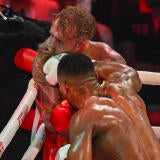
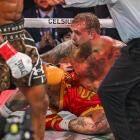
In front of a passionate crowd at Bramall Lane in Brook's hometown of Sheffield, England, Spence (22-0, 19 KOs) made a strong case for pound-for-pound recognition by forcing Brook (36-2, 25 KOs) to submit due to a badly swollen left eye.
Let's take a look at five things we learned from Spence's victory.
1. Thurman-Spence is boxing's best fight to make for 2018: Just about the first words out of Spence's mouth after defeating Brook focused on what he wants to do next, and that's unify titles at 147 pounds. He instantly referenced Keith Thurman, who holds the WBA and WBC titles, and WBO titleholder Manny Pacquiao. A fight against Pacquiao would be difficult to make due to the political divide between networks and promoters that still haunts boxing to this day. But a fight against Thurman, who Spence has been calling out for two years, is the kind of mouth-watering fight that would help fuel the resurgent notion in 2017 that boxing just might be back (more on that below).
Thurman-Spence would be a meeting between unbeaten welterweights champions in their prime, not dissimilar to Thurman's last fight, a victory over Danny Garcia in March. But this one would undoubtedly solve the one question that has lingered most in the two years since Floyd Mayweather's retirement: Which fighter from boxing's glamour division truly has next and can lead the sport into a new era? (Not to mention the follow-up: Which one can become marketable enough to lure Mayweather out of retirement and into a legitimate test?)
While the latter question is more of a pipe dream, the idea that the winner of Thurman-Spence would find himself potentially competing for the status of pound-for-poumd king in the sport is much more realistic. Thurman is out for six months following elbow surgery, so don't expect the fight right away. But with Showtime calling its recent investment into matching the best welterweights under the PBC banner against each other an "unofficial tournament," there's no good reason we don't see it.
2. England is now the best place to hold a big fight: Sorry Las Vegas -- or my personal favorite, New York's legendary Madison Square Garden -- but England has become the heartbeat of boxing in recent years thanks to a renaissance of U.K. champions and one passionate and raucous crowd after another. Just weeks after 90,000 packed Wembley Stadium to watch a classic heavyweight championship war between Anthony Joshua and Wladimir Klitschko, 27,000 fans rocked an outdoor soccer stadium that is home to Sheffield United.
The rush from the crowd, particularly during the theatric European ring entrances, was palpable. And while it seems unlikely you'll ever see an American promoter eschew the big money of a Vegas casino to bring a fight between two non-U.K. fighters across the pond, there was enough interest in September's Canelo Alvarez-Gennady Golovkin fight that promoter Oscar De La Hoya reportedly considered it. The early evening start time from British fights provides a welcome respite (particularly for those who live in the Eastern Time Zone) and the raw energy that surrounds the ring can make even a marginal fight feel like a classic when watching from home.
3. Spence-Brook had an old-time, classic feel: There's a reason why today's boxing fan has become so cynical -- they are used to being let down. It's really that simple. Boxing fans have become almost conditioned to expect that top fighters will avoid each other, not to mention the recent trend of elite foes refusing to go for broke on the brightest stage (knowing their bank accounts will be handsomely filled regardless).
Spence-Brook was a different story from the get go. Brook, who had already revealed he was likely moving up to 154 pounds regardless, went out of his way to defend his belt one more time against the most dangerous foe possible. Spence, meanwhile, went overseas to take on a world-class titlist in his backyard, rather than wait for an easier opportunity down the line in the U.S. And once they finally met in the center of the ring, the fight was exciting because both were willing to empty the tank in order to win.
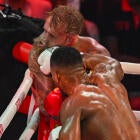
Both Spence and Brook forced each other to make key adjustments. And despite both being known more as boxers than punchers, the majority of the fight was contested at close range with a series of highly technical combinations and power shots. This was high-speed chess, reminiscent of great welterweight title fights of old and the best representation of such since Shane Mosley defeated Oscar De La Hoya in their epic first meeting in 2000.
4. Spence answered all of our questions: In the era of the protected fighter, a top boxer can go as far as even winning and defending a world title until they are finally tested against an opponent with the skills to make them pay. But Spence jumped into the deep end of the pool by fighting Brook and the way in which he responded to challenges was nothing short of impressive.
Any questions we had about Spence's chin were quickly answered thanks to an aggressive start from the stiff-punching Brook. But it the was the adjustments Spence made from a boxing standpoint that helped him make up for a decided disadvantage in terms of experience.
Spence fought with the poise of a veteran and overcame the early success of Brook, who countered clean repeatedly off Spence's jab in Round 2 and surprised him with a quick lead right hand, showing his intelligence. Spence also proved he was patient by attacking the body early in hopes of slowing Brook down late and never panicked during periods of heavy storms.
5. If you build it, they will come: We all know why boxing has repeatedly fallen on hard times over the past two decades, alternating periods of growth and optimism with one year after another of underwhelming big fights and childish division. It's a sport that operates within a broken system that fails to provide a foundation for sustained success. Yet there's a formula that still remains true and can often supersede the pitfalls: Make great fights and good things will happen.
When the best fight the best, it becomes contagious. And even though one can never guarantee a good fight on paper plays out to its expectations, only good comes when you consistently place your best foot forward in terms of matchmaking and promotion.
The first five months of 2017 have felt like an oasis of sorts with seemingly one strong fight after another that has delivered. Whether 2017 has only felt this good because of how awful the previous year proved to be is irrelevant in this case because, either way, the formula still works. Make great fights and customers will come. If they are entertained, more often than not, they will come back again.