Dodgers-Nationals Game 1: Final score, six things to know about L.A.'s opening win
The Dodgers took a 1-0 lead in the series

•
3 min read

On Friday, the Dodgers defeated the Nationals by a 4-3 score in Game 1 of the NLDS in Washington (box score). As a result, the Dodgers now lead the best-of-series by a one-game margin. Game 2 is coming your way on Saturday, again from Washington.
Here are some things to know about Game 1.
1. The pitching matchup failed to deliver
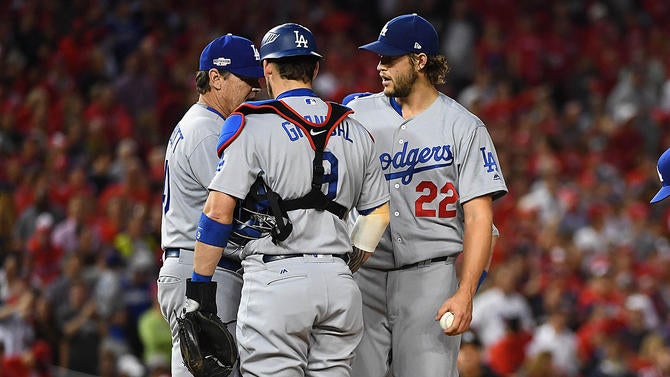
You see Clayton Kershaw and Max Scherzer as the probables and you expect a breezy, low-scoring pitcher's duel. That was not the case in Game 1.
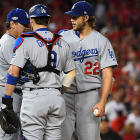
Kershaw's night ended after five innings, during which he allowed eight hits and three runs. He fanned seven batters and had his moments -- he struck out the side in the first inning -- but he was largely inefficient and he struggled to locate his slider. It was the third time in Kershaw's postseason career he failed to record more than 15 outs.
Scherzer, conversely, completed six innings. He appeared on the ropes early, allowing a home run to the game's second batter, then later yielding three runs in the third. Yet from that point forward, Scherzer retired nine of the last 10 batters he faced. In all, he threw six innings, allowed four runs on two home runs, and struck out five batters.
2. Kershaw's brilliance has yet to translate
While Friday's start was far from Kershaw's worst, it's certain to embolden those who consider him a substandard playoffs performer. How merited is that?
True, Kershaw has seldom been his dominant self in October. His average Game Score for his career is 64 -- a mark he's matched or topped just four times in 11 postseason starts -- but he hasn't been a total mess, either. Everyone remembers the consecutive brutal starts against the Cardinals, yet Friday was only the fourth time Kershaw had failed to notch a quality start.
So, while postseason Kershaw hasn't been regular-season Kershaw -- or, um, postseason Madison Bumgarner -- he has been better than his reputation suggests.
3. Rookies contributed all over
As previously noted, the second batter of the game jumped the yard on a Scherzer fastball. That batter? Dodgers shortstop (and wunderkind) Corey Seager.
Seager, 22, authored a brilliant freshman season -- to the extent that he's certain to win the Rookie of the Year award. This was actually his second postseason, since he appeared in all five games last fall. Still, Seager's home run earned him an important distinction, as he became the youngest player in franchise history to hit a playoff homer:
Corey Seager is the youngest player in #Dodgers franchise history to homer in a #postseason game.
— Ryan M. Spaeder (@theaceofspaeder) October 7, 2016
The Dodgers received contributions from other rookies, too. Andrew Toles started in left field and scored a run, and left-handed reliever Grant Dayton threw two-thirds of a scoreless inning. The Nationals' youngsters also came to play: Trea Turner walked and lifted a sacrifice fly, and Sammy Solis threw two shutout frames.
4. The Dodgers were aggressive with their bullpen
Dave Roberts is known for making pitching changes (and using pinch-hitters). He lived up to that billing on Friday.
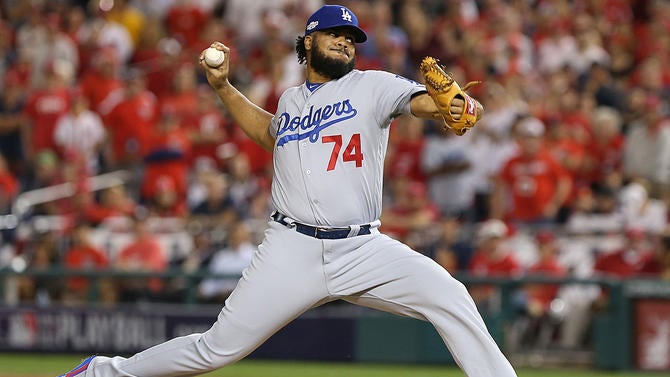
Roberts successfully bridged his way from Kershaw to closer Kenley Jansen using a combination of Joe Blanton (0.2 innings), Dayton (0.2 innings), and Pedro Baez (1 inning). That trio allowed zero hits, walked two batters, and held onto a one-run lead. Roberts then turned to Jansen in the eighth inning, and the All-Star closer came through.
As we all know, there are veteran skippers without the foresight or willingness to use their best reliever in an unconventional way. Not Roberts, not on Friday. That's partially why Roberts is now 1-0 in his postseason managing career.
5. History was made
Dusty Baker and Dave Roberts don't have much in common. Baker is in his 21st season as a big-league skipper; Roberts his first. Baker is reviled for his old-school tactics; Roberts is a progressive strategist. Nonetheless, Baker and Roberts made history on Friday, becoming the first pair of African American managers to meet in the postseason.
Here's what Baker said about the milestone:
"I mean, significance is, you know, it gives us some pride in being African American." Baker said. "to show people that, you know, not only can we do the job, but we can do the job better than most."
6. Wilson Ramos threw out the first pitch
The Nationals originally declared ex-pitcher Livan Hernandez would throw out the ceremonial first pitch. Hurricane Matthew intervened, however, leaving Hernandez unable to make the trek to D.C.
The Nationals then announced Hernandez's replacement would be a "special guest." That guest turned out to be Wilson Ramos -- the Nationals' starting catcher who suffered a torn ACL in late September. Predictably, Ramos received a hero's welcome:
Ramos throwing out the first pitch. pic.twitter.com/CNVEEEeXQr
— Citizens of Natstown (@CitsofNatstown) October 7, 2016
Obviously Ramos would prefer to be behind the plate -- that honor instead fell to rookie Pedro Severino, he of 18 career big-league games -- but it was nice to see him honored for the pivotal role he played in the Nationals' season.