Don't overreact to Gordon PED suspension and lose sight of history
While players like Justin Verlander have every right to be furious at players who get caught cheating, they -- and those of us reacting to the Dee Gordon PED suspension, should not lose sight of history.

By
Jonah Keri
•
6 min read

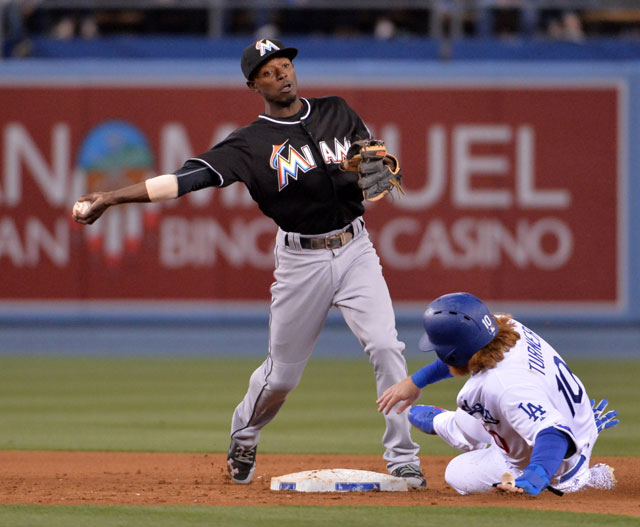
Major League Baseball suspended Dee Gordon for 80 games, after the Miami Marlins second baseman tested positive for exogenous testosterone and clostebol. The resulting backlash reminds us that far too many people have no idea what unions are supposed to do. Including some of the members of those unions.
Justin Verlander is one of those people. The All-Star Tigers pitcher took to Twitter late last night to voice his disapproval of the sport's process for performance-enhancing drug suspensions. Among other things, that process stipulates that a player may appeal his suspension and continue playing in the meantime, until he drops the appeal, or the case is otherwise resolved. Gordon had tested positive in spring training, and played in 21 games before dropping his appeal. That slate included a game-tying hit in last night's 5-3 win over the Dodgers, completing a sweep for Miami.
If Verlander or other players play without the benefit of PEDs, only to get beaten by players found to have used them, anger and frustration become wholly reasonable reactions. But venting that anger and frustration publicly is a counterproductive approach that threatens to undermine decades of progress in the sport's labor relations. And it's Verlander and his fellow players who stand to lose the most.
MLB has had 21 years of unbroken labor peace, an impressive streak that's benefited and enriched both players and owners beyond the wildest dreams of their predecessors. But that doesn't mean that owners won't keep scratching and clawing for every advantage they can get. As much as all parties benefit when negotiations end in successful collective bargaining agreements, relationships between labor and management -- in baseball as in other industries -- will always have an adversarial undertone. If the players give an inch, the owners will be sorely tempted to take a mile.
This morning, the Internet lit up with calls for the players to give up that entire mile, in exchange for ... nothing, really. While it's unfortunate to see any player get popped for PED use -- especially one as talented, popular, and charismatic as Gordon -- offering mass concessions is simply letting raw emotion override logic and reason.
For starters, it's not as if baseball is awash in a drug scandal. When a handful of players get caught out of a population of 750 (plus the hundreds more who float in and out of major league rosters during the course of a season), that's a low base rate of offenses.
When that rare instance of transgression does occur, as in the case of Gordon or Blue Jays first baseman Chris Colabello, Major League Baseball's drug policy is already stiff by the standards of North American sports. Both players and owners agreed to tougher penalties following the Biogenesis scandal. Half a season for the first positive test, an entire season for the second, and a lifetime ban for the third don't constitute slaps on the wrist. If the owners believe those penalties aren't enough to discourage performance-enhancing drug use, that's a matter that can and should be discussed during the next round of CBA negotiations. And as with all negotiations, if you ask for something, you should expect to give up something in return.
A union's job is to protect its members. One of the duties required in that agreement is to preserve the concept of due process. The union does so by defending accused players. It must also uphold players' right to appeal. Ostensibly, the union's job is to serve as a de facto defense attorney for its members.
If after going through that due process, a player does in fact fail a drug test or is found guilty of PED use in another way, the union retains an obligation to continue to represent his interests. If anything, a union's worth can be defined by its ability to protect its most vulnerable members, not its most pristine members.
Players like Verlander can carp all they want in private. In public they have to remain unified, or management will stomp all over them. That's the case in every industry. And it's certainly the case in baseball.
The Biogenesis case showed MLB's dark side under former commissioner Bud Selig, and the incredibly dirty tactics that the league would use to prove its case. Go back further, and the league comes off looking even dirtier. Three decades ago, we saw owners conspire to tamp down player salaries through illegal collusion. The offenses were so widespread and so egregious, future Hall of Famer Andre Dawson showed up to Cubs spring training and told the team he'd sign any contract they put in front of him. The Cubs gleefully handed him an offer of $500,000, a preposterously low-ball number even by mid-80s standards. Dawson smashed 49 homers and won the NL MVP that season.
Go back further than that, and you had a group of owners who owned and treated the players like chattel. Players were restricted to one-year deals, with perpetual club options that prevented players from shopping their services anywhere else, or having any real ability to negotiate in their own best interest.
That's what makes any talk of voiding contracts for players caught taking PEDs so unconscionable. The current CBA and joint drug agreement doesn't allow teams to void contracts due to PED suspensions. That was part of the tradeoff to reach an agreement on stiffer penalties for drug offenses. You want something? You'd better offer something in return.
Just last year, we saw how happy an owner would be to trample on a player's collectively bargained rights. When then-Angels outfielder Josh Hamilton self-reported a relapse in his recovery from drug and alcohol rehab, team owner Arte Moreno played the martyr, complaining to the world that he'd been duped, and demanding to be paid back the tens of millions of dollars that he'd willingly spent to acquire Hamilton's services. Moreno's argument boiled down to this: Players should suffer for their mistakes, but owners shouldn't have to deal with the consequences of their own.
Opening the door to voidable contracts practically begs owners to concoct clever schemes to extricate themselves from their next contract boondoggle. The Red Sox followed up a benching of unproductive third baseman Pablo Sandoval by announcing a puzzling, out-of-nowhere move of Sandoval to the disabled list. It's no stretch to imagine the lengths they'd go to escape paying the rest of Sandoval's $95 million contract, if the union were to accept any kind of conditions for voiding player contracts.

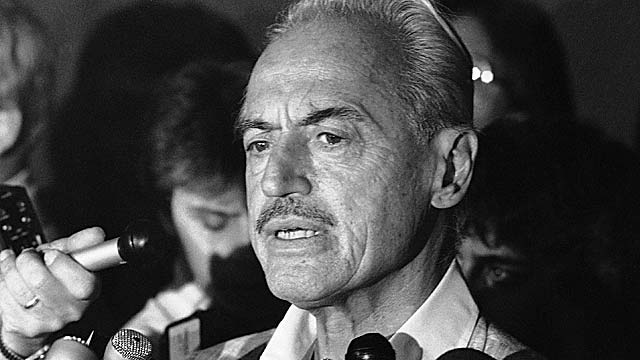
The reason players gained freedom of movement, and real negotiating power, is because men like Curt Flood and Marvin Miller worked tirelessly to make it happen. An All-Star outfielder for the St. Louis Cardinals, Flood challenged the league's reserve clause, arguing that he shouldn't be considered the exclusive property of one team and should have the right to decide where he wants to play. Miller was the founder and executive director of the Players Association who fought tirelessly to vest players like Flood with the same bargaining rights afforded to American workers in pretty much any other industry.
If you were building a baseball Mount Rushmore that properly measured four people's impact on the sport, you start with Babe Ruth, Jackie Robinson, and Marvin Miller, then pick any fourth you like. The fact Miller isn't enshrined in the Baseball Hall of Fame is a stark reminder of owners' stance toward player rights: They're granted reluctantly, and subject to being revoked whenever an opportunity might arise. This is one of those opportunities. If the union caves to anti-PED hysteria now, it risks having its members' rights trampled upon the next time both sides meet at the bargaining table.
That's why, if Verlander is mad about playing against juiced players, he should think twice before airing his grievances publicly. And if the players have any sense, they will move heaven and Earth to get a Marvin Miller-like labor lawyer working on its behalf.
Right now, they need a leader who's read the history books, understands the threat management poses every day, and has the good sense to tell angry union members that sometimes, it's better to shut up.