Report: More pace-of-play rule changes may be on the way in 2016
Some more rule changes designed to improve the pace-of-play may be coming in 2016, according to a New York Post report.

By
Mike Axisa
•
2 min read

In an effort to reduce downtime during games, MLB implemented some rule changes last season. Batters had to keep one foot in the batter's box after taking a pitch, and clocks were installed at each ballpark to ensure the inning started right after the commercial break ended.
According to Joel Sherman of the New York Post, even more pace-of-play rule changes may be coming in 2016. MLB and the MLBPA have not finalized any plans but they are working towards an agreement. Sherman says the two sides are focusing on two items in particular:
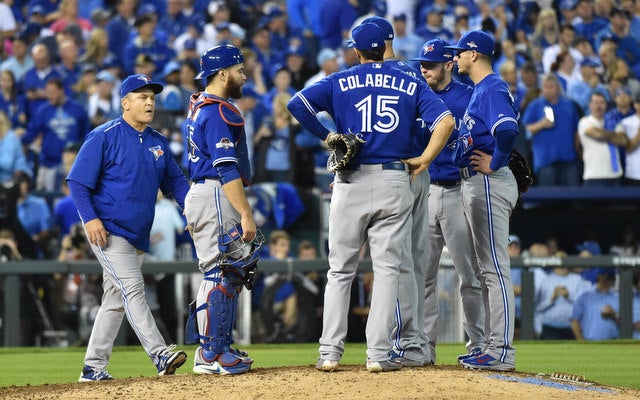
1. In an attempt to remove the slow walk to the mound or the stalling tactics once there, managers will be requested to make in-game pitching changes more quickly, with the possibility of having a time limit for making the decision to call for a reliever.
2. Twenty seconds would be sliced off the between-inning clock, first used last year, in non-nationally televised games. The commercial breaks in such games are 2:05. Last year, the clock was set at 2:25 at the end of a half-inning, with the idea the hitter would get in the box with 20 seconds remaining on the clock and the pitcher would deliver by zero.
I think it's pretty interesting MLB and the owners are willing to shave 20 seconds off the clock between half-innings. Time is money: that's 20 seconds of sellable air time for commercials. Cutting 20 seconds after each half-inning adds up to five minutes and 40 seconds saved over the course of a nine-inning game.
Cutting down on stall tactics during pitching changes is a great idea, assuming clubs don't figure out a way to game the system. Last season managers were told to signal for a replay challenge from the dugout in an effort to save time, though that only led to players standing around as the manager waiting for the thumbs up from the video folks in the clubhouse.
The average time of game dropped from 3:02 in 2014 to 2:56 in 2015 thanks to the pace-of-play measures. Again, MLB's intent is not to shorten games. They want to cut down on the downtime within games. Less standing around, basically. I don't think pace-of-play is a critical issue, but it can be improved. I'm on board.
A 20-second pitch clock was used at the Double-A and Triple-A levels last season, and the average game time was reduced 12 minutes from 2014. Pitchers have 20 seconds from the time they have possession of the ball to begin their delivery, and batters have to be ready in the box. Pitchers who violate the pitch clock are charged with a ball, batters a strike.
Many players have spoken out against pitch clocks and it doesn't seem like we'll see them in MLB anytime soon. They're being tested in the minors right now -- that also allows future big leaguers to get used to the rules -- and will remain in place for the foreseeable future. For now, MLB will try to eliminate downtime in other ways.