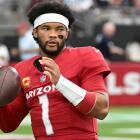

Kirk Cousins reportedly won't sign new contract before franchise tag deadline
The quarterback is letting it known that he'll be playing a game of chicken

By
Will Brinson
•
2 min read

Leverage is everything when it comes to contracts in the NFL. And for Kirk Cousins, in his negotiations with the Redskins as a top NFL free agent to be, there isn’t a better piece of leverage than the franchise tag the Redskins will be required to place on him if they want to maintain his services.
The tagging period is well underway, although no one in the league has been tagged yet. The Redskins will have until March 1 at 4 p.m. ET to place the tag on Cousins.
And according to a report from Pro Football Talk, there won’t be any signed contracts before then.
The gist of this is pretty simple.
The biggest issue is that if Cousins agrees to a contract right now -- or before March 1 -- there are various negotiable items within the deal.
If Cousins waits until after March 1 to negotiate a deal with the Redskins there is less that is negotiable, because a certain amount of guaranteed money is baked into the deal. You can say that the franchise money is included from a practical standpoint, but after the tag is applied the 20 percent raise from his salary last season is included in any negotiation from an actual standpoint.
And the second point adds to that one: If Cousins is tagged by the Redskins it will be the second time in his career he has been franchise tagged. Under the latest CBA negotiations, three is the maximum times someone can be tagged, with the union putting an emphasis on keeping the number at two.
Which means that if Cousins were to ever be tagged again, by either the Redskins or someone else, he would get a 44 percent raise from his previous year’s salary.
Locking in someone for a 44 percent raise effectively removes the ability of a team to utilize the franchise tag. Let’s say Cousins makes $24.5 million this year; the Redskins would have to pay him $35.28 million to tag him next year.
This behavior actually falls in line with Cousins’ approach this offseason. The quarterback told colleague Dave Richard at the Pro Bowl that he’s just waiting to see what Washington does.
“I’m just staying ready and looking forward to an opportunity,” Cousins said. “I’d love to build something in Washington, we’ll see if the decision-makers let that happen.”
Cousins is a rare case because of how his rookie contract played out: He sat behind Robert Griffin III for the first few years of his career before emerging as the starter.
There’s a major conundrum in D.C. as to whether the Redskins will give him long-term money north of $20 million per year. For Washington, it’s a lot to stomach for a guy who hasn’t effectively proven he can take over games and win late in big spots. But letting Cousins leave is an untenable position. Trying to reboot with a rookie or a veteran bridge quarterback wouldn’t be that much cheaper and it could set back the Redskins’ building.
Cousins knows the position he has the Redskins in, and it features lots of leverage for him.