Inside College Sports: O'Bannon seeks new appeal vs. NCAA in Ninth Circuit
CBS Sports national college football writer Jon Solomon provides his latest update on the Ed O'Bannon trial, discusses eating disorder risks for NCAA athletes and more in the latest edition of Inside College Sports.

By
Jon Solomon
•
9 min read

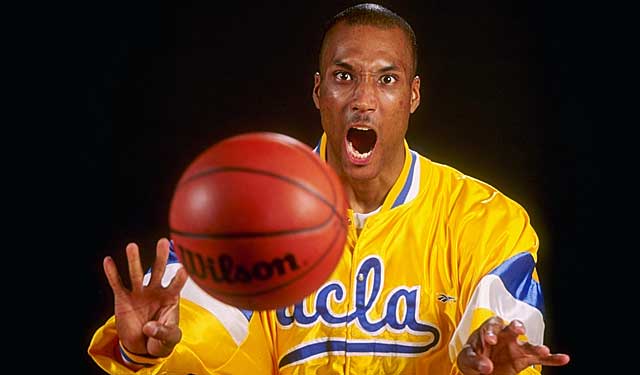
Lawyers for the Ed O’Bannon plaintiffs filed a petition on Wednesday for an appeal of the US Ninth Circuit Court of Appeals' decision that a federal judge erred by allowing college athletes to be paid. If granted what's called en banc review, a larger group of Ninth Circuit judges would hear the case as opposed to the previous three-judge panel.
Two weeks ago, a Ninth Circuit panel upheld US District Judge Claudia Wilken’s decision that NCAA rules restricting payments to college athletes violate antitrust laws, but determined that players shouldn’t be paid up to $5,000 per year in deferred compensation for use of their names, images and likenesses. One of the three judges, Chief Judge Sidney Thomas, dissented with the majority opinion by Judges Jay Bybee and Gordon Quist to roll back the $5,000 payments.
“This aspect of the majority’s decision creates a rift in this Court’s precedent, clashes with Supreme Court authority, sows confusion in antitrust jurisprudence, and involves questions of exceptional importance at the intersection of college athletics and antitrust,” the O’Bannon plaintiffs wrote in their petition Wednesday, which was the deadline for an en banc appeal by either the O’Bannon plaintiffs or the NCAA.
The NCAA said it will not be filing a petition for en banc review. "While the plaintiffs initially claimed victory, their appeal today signals a different point of view," NCAA chief legal officer Donald Remy said in a statement. "We look forward to presenting our views in the event the 9th Circuit asks us to respond to the plaintiffs' appeal."
If granted, this O'Bannon appeal would get heard before 11 of the 29 Ninth Circuit judges. Either party could still petition the US Supreme Court. Because the Supreme Court rarely intervenes on cases, en banc often becomes the last resort in the ordinary life of a case.
Yet courts rarely grant en banc review. A study by the Fordham Law Review found that 0.14 percent of the Ninth Circuit’s court docket from 2001 to 2009 consisted of en banc appeals -- a minuscule total that ranked near the top for frequency among federal circuit courts.
The O’Bannon plaintiffs cited four reasons for the case to be reheard:
* Comments by Thomas, the chief judge, in his dissenting opinion that “there was sufficient evidence in the record” and the testimony of at least four experts to support injunctive relief. Two of the three appellate judges wrote that an “offhand comment” by former CBS Sports president Neal Pilson appeared to be the only reason for Wilken’s $5,000 figure and that Pilson was not prepared to given an opinion on whether consumer demand would be impacted by payments to players.
* Thomas’ observation that the majority “improperly substituted” the NCAA’s amateurism term in place of the relevant antitrust inquiry. By eliminating or assuming away the core question of consumer demand, the majority created further conflicts with Ninth Circuit and Supreme Court decisions, the O’Bannon plaintiffs wrote.
* The majority judges, Bybee and Quist, created a “new legal standard” for the Rule of Reason analysis in antitrust cases without citation or support from any other legal opinions. By not allowing the $5,000 payments as a less-restrictive alternative to the NCAA’s rules, the majority “adopted a new standard that few antitrust plaintiffs could ever satisfy,” the O’Bannon plaintiffs wrote.
* The majority “mistakenly” brought up dicta from the NCAA v. Oklahoma Board of Regents Supreme Court case to guide its review of less restrictive alternatives to the NCAA's rules. All three appellate judges disagreed with the NCAA's interpretation of a 1984 Supreme Court decision that the association has used as a defense for decades in relation to its amateurism rules. But the majority wrote they “accept Board of Regents’ guidance as informative” regarding the pro-competitive justifications served by the NCAA’s amateurism rules. “This is an unprecedented role for the Supreme Court’s dicta, fashioned from thin air,” the O’Bannon plaintiffs. “… This is immunity in another guise for conduct that would be per se price fixing in any other industry.”
Whether the Ninth Circuit will grant the review becomes the next question. Federal appellate procedures state that en banc review “is not favored and ordinarily will not be ordered unless: 1) en banc consideration is necessary to secure or maintain uniformity of the court’s decisions; or 2) the proceeding involves a question of exceptional importance.” The Ninth Circuit’s rules seem to limit the types of cases that warrant en banc review, but grants these hearings at a “significantly higher” rate than most other circuits, according to the Fordham Law Review.
A vote on whether to grant a review of O’Bannon doesn’t have to be taken unless a judge calls for one. Within 21 days from Wednesday, any Ninth Circuit judge may ask the original three-judge appellate panel to make known its recommendation for en banc consideration. After the recommendation by the panel, any judge has 14 days to call for a vote.
Assuming all 29 Ninth Circuit active judges are eligible to vote, it would take a majority of 15 to grant the petition. If a rehearing occurs, the case would be heard by a panel of 11 judges -- Thomas as the chief judge and 10 other judges drawn randomly. Thomas wrote a dissenting opinion that said the other two judges wrongly dismissed testimony that stated paying college athletes small amounts above their cost of attendance most likely would not significantly impact consumer interest in college sports.
Eating disorder risks for NCAA athletes
Eating disorders don’t receive much attention in college sports, but they’re a significant concern to some medical officials. Studies have shown up to 7 percent of females and 1 percent of males in college have eating disorders, but NCAA consulting psychologist Ron Thompson believes those numbers are very conservative and athletes are more at risk. “You cannot name a sport in which I have not treated an eating disorder. Yes, I have treated an anorexic football player,” said Thompson, who also works with Indiana’s athletic department and the International Olympic Committee.
A 2005 NCAA study found that 18 percent of surveyed college coaches said they never had an athlete with an eating disorder. “Sorry, that’s head in the sand,” Thompson said. “It’s absolutely not possible.”
Eating disorders are emotional disorders that show themselves in a variety of ways. The difficulty is identifying people with eating disorders because some characteristics are similar to traits that are associated in sports. For instance, the public has body stereotypes for each sport that affect perceptions. Thompson said menstrual irregularity, weight loss and excessive exercising (eight to 10 hours a day) are classic eating disorder symptoms, but they’re also misperceived by athletes as desirable traits.
“I can’t tell you how many coaches, athletes, parents say, ‘What do you mean she has a serious eating disorder? Look at what she’s doing athletically,’” Thompson said. “I’ve had NCAA champions throw up what they’re eating day after day after day. How do they do that? I think they’re mentally tougher than the rest of us.”
Female athletes must deal with what Thompson calls “fat talk” among teammates that applies the greatest pressure. He said studies show about 75 percent of college females frequently have conversations about their body and feel worse after the talk. It’s even harder for males to acknowledge they have an eating disorder because society assumes they’re homosexual and/or eating disorders only occur with females, Thompson said.
One other common trait between athletes and people with eating disorders: They tend to be pleasers. “Athletes fear that treatment providers will not value sport,” Thompson said. “I can’t tell you how many athletes are referred to me with eating disorders and they say, ‘Ron, if you tell me I have to leave my sport, I’m going to leave you as fast as I left the three before you.’”
Report: UCLA coach tried to get grade changed
Chronicle of Higher Education reporter Brad Wolverton continues to expose academic misconduct at major college sports programs. The latest came with Wolverton’s Oct. 11 report alleging that current UCLA basketball assistant coach Duane Broussard requested that an academic advisor change a player’s grade so he would remain eligible. The academic advisor, Will Collier, has since left UCLA and documented issues throughout his time there.
UCLA strongly denied any wrongdoing and even sent a cease-and-desist letter to Wolverton before his investigative report was published. The story portrayed a basketball program that went to great lengths to keep its players on the court and speaks to the real pressures academic advisors face in athletic departments.
“What Will shared was really a tipping point that many academic advisers experience when they have the illusion of trying to educate these young people rather than merely keeping them eligible at any cost,” said Gerald Gurney, who used to oversee Oklahoma’s academic services for athletes. “They’re overworked, underpaid and scared to death. This is everywhere now at every big-time program. I have every reason to believe what Will is saying is dead accurate and I think that’s why UCLA is so defensive.”
Football salaries continue to rise
If you ever think there’s not any money for more benefits going to college athletes, USA Today Sports’ annual football coaching salary database should remind you otherwise. The average FBS salary now exceeds $2 million, compared to $950,000 when USA Today first started its survey in 2006.
Consider this: Tommy Tuberville makes the same amount in 2015 at Cincinnati (hardly a high-profile job) that he made at Auburn as the country's fifth highest-paid coach in 2006. Nine years ago, Oklahoma’s Bob Stoops ranked No. 1 at $3.5 million. Today, that amount would be 24th and sandwiched between Tennessee’s Butch Jones and Boise State’s Chris Petersen.
Alabama’s Nick Saban became the first $4 million-a-year coach in 2007. Today, there are 18 coaches making at least that much. Six of those 18 $4 million coaches already have at least two losses this season: Texas’ Charlie Strong, Georgia’s Mark Richt, Auburn’s Gus Malzahn, South Carolina’s Steve Spurrier (who has since resigned), Mississippi State’s Dan Mullen and Arkansas’ Bret Bielema.
Read ‘em
Each week this space will highlight some excellent recent work by college sports media on difficult topics to report.
Nathan Fenno and Lindsey Thiry of The Los Angeles Times wrote about Steve Sarkisian’s alcohol use at Washington before he came to USC. When later asked about the information in the Times story, USC AD Pat Haden said, “The university doesn’t do public records searches.”
Zak Keefer of The Indianapolis Star profiled NCAA executive Oliver Luck and asked if he’s the NCAA’s white knight to save itself.
Jon Wilner of the San Jose Mercury News reported on the possibility of moving the NCAA men’s basketball season and tournament back one month.
Quote of the Week
“I know there’s lots of people in this room and outside the room questioning my leadership. … Have we gotten everything right? Clearly not. The idea is to do it better next time.” -- USC athletic director Pat Haden on his turbulent time with the Trojans.
USC president Max Nikias gave Haden support in a public statement.
Follow and read more from Jon Solomon on Facebook and Twitter.