
Q&A with Kobe Bryant: The rest of the interview
As Kobe Bryant prepares for his 19th season with his body and the Lakers in decline, here are the questions and answers from his CBSSports.com interview that didn't make the story.

By
Ken Berger
•
7 min read
After 18 seasons and 18 months of injury woes, Kobe Bryant recently sat down with CBSSports.com to reflect on his latest comeback, his Hall of Fame career and the uncertain and potentially bleak future ahead for the Lakers.
Since we spoke Oct. 14 at the team's practice facility in El Segundo, Calif., things have become even more desperate for the Lakers, who lost backup point guard Steve Nash for the season with a chronic back injury that almost certainly will end his career at age 40. If this Lakers team is as bad as everyone expects, they face the unenviable possibility of sending their 2015 first-round pick to the Phoenix Suns as part of the 2012 trade that brought Nash to LA. (The pick is top-five protected in 2015, top-three protected in '16 and '17 and unprotected in '18).
Not all of our interview made it into Friday's long-form piece on the beginning of the end for Bryant. Here are the questions and answers that didn't make the cut:
CBSSports.com: With the Showtime film coming out in the fall, why have you become more willing to tell your story?
Bryant: I learned a lot from other people’s journeys growing up, from watching them and what they went through and what they learned. And I think there’s true power in that, in understanding other people’s journey so that you can create your own. There’s a lot of power in that. … When you’re a public figure -- right, wrong or indifferent -- your journey is public as it is. A lot of people write books. A lot of people do the autobiography thing. I’m not much of a book writer. But the video thing is something that I have the attention span to do. So instead of writing a book, I’ll do the film.
CBSSports.com: You came into the league as a teammate of Byron Scott’s, so you have a relationship with him. But isn’t the player-player relationship different than the coach-player relationship?
Bryant: No, not really. Even as player-to-player, he was more of a coach than a player. He was at the stage of his career similar to where I am now. He was more of a coach than a teammate. So he was coaching in practice and during games. Like, we would sit next to each other on the bench and he’d say, ‘OK, watch how you chase on this screen-and-roll here, watch how you chase off of this pin-down action. This particular set you should think about doing this.’ So he was really coaching me during that time, so it’s really no different.
CBSSports.com: At this stage of your career, can you be a hard ass and a teacher at the same time?
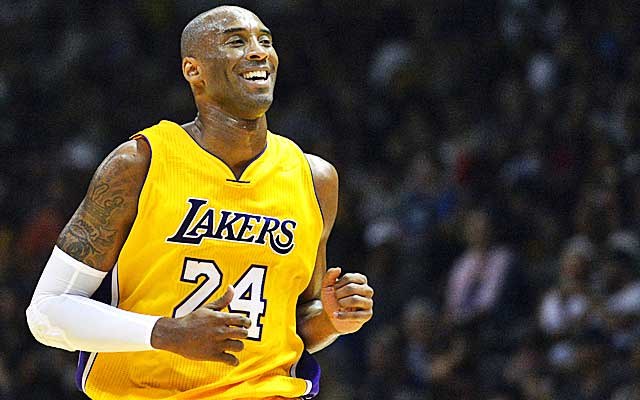
Bryant: Oh, yeah. You can ask any of my teammates and they’ll tell you I don’t have a hard time doing that. But it’s a different team. These guys are so much younger. The guys I’ve played with in the past, they were veterans who’ve kind of been around the league a little bit and understand themselves. And I knew them, because they’ve been around, so it’s kind of easy to take them to task. The younger guys, I’m still trying to learn and figure out who they are and what they can tolerate and what they can’t tolerate.
CBSSports.com: When you say you’ll be sharper, more methodical and more purposeful in your game, what does that mean?
Bryant: Efficient. You have to be efficient. Being at the top of the floor handling the ball on a lot of screen-roll actions, you won’t see that -- just because it just takes a great toll on the body, running around so much. Playing free throw line and below, coming off little short curls, in that little area, the Rip Hamilton area, you’ll see a great deal of that.
CBSSports.com: Is there anyone left out there that you have a score to settle with? Does that motivate you?
Bryant: No, man. Honestly, it really never has. It’s kind of hard to explain because people have the wrong perception of that. Michael was really driven by that sort of stuff. I’m not. It winds up being something that kind of happens in the process … trying to figure out how can you reach your maximum potential, how can I be the best version of myself. And through that process, you have little challenges along the way -- other players and things like that -- that make the process more enjoyable. But it’s really about trying to be the best version of yourself
CBSSports.com: Do you love the game or do you just love winning?
Bryant: Yeah, it’s neither. Let me rephrase that. So, the game is so beautiful. It’s so pure -- he smell of a ball, the smell of the sneakers, the squeaking of the court, the sound that the nets make when you shoot a basket and it goes through the hole. Even when you miss a shot; every little thing. I used to walk around the house dribbling a basketball and I used to try to mimic the sound that the ball would make on TV when the players would play. Those little things I absolutely loved, trying to replicate those little things. But even more than that, it’s the process. That’s really enjoyable; trying to build something.
CBSSports.com: Should you have to apologize for your contract?
Bryant: It depends what perspective you’re coming from. So, it’s kind of complex. There are so many different perspectives. There’s different scales, right? The average income in the United States of America and the average salary of an NBA basketball player. You can contrast that all the way up to the top with the salary and the revenues that these owners generate, right? So there’s all different buckets of perception. And athletes are the ones that are in the public eye the most. And so their salaries are constantly talked about so it’s very easy to look at the athlete and say, ‘You should be doing more and you should be taking less,’ when the reality is that your market value is so much higher than what people understand. ‘Yeah, yeah, yeah, but you still should be taking less to win.’ Why do we have to do that? Because the owners locked us out and imposed a hard cap where we ‘have to’ take less in order for them to generate more revenue?
But meanwhile, they go and sign a TV deal that’s a billion dollars up from the last one, but that doesn’t get talked about. Nobody complains about that. But yet here we are where LeBron [James] is getting paid substantially less than what he’s worth. KD [Kevin Durant], same thing. All these players -- you could go all the way down -- yet the owners’ revenue continues to increase. If anything, it’s just about athletes becoming more aware and becoming tougher and becoming stronger in their business sense and in their business acumen and saying, ‘No, this is not OK. It’s OK for us to stand up and to actually be business people.’ You can’t be a business person if the decisions that you make are held hostage by the perception that others have of you. You can’t be a successful businessman from my point of view and sit in a room with these owners -- who are phenomenal business people -- and have a peer-to-peer conversation if they know at the end of the day you’re going to capitulate to public perception.
CBSSports: Who can carry that torch and that message for the players?
Bryant: It’s an education process. For a lot of us, we focus so much on the game of basketball that it consumes us and so we let others handle the business portion of things. We pass the buck to them to take control as opposed to kind of learning things year after year --a little bit here, a little bit there -- and educating ourselves. Because it’s your empire; it’s your brand. You want to try to learn as much as you can about it.