Answer Man: Joe Buck talks Derek Jeter, Artie Lange and critics
The longtime play-by-play person for the World Series on Fox Sports talks baseball, his perceived biases, past failures and a new long-form talk show, 'Undeniable,' that is coming in November.
By
Dave Brown
•
13 min read

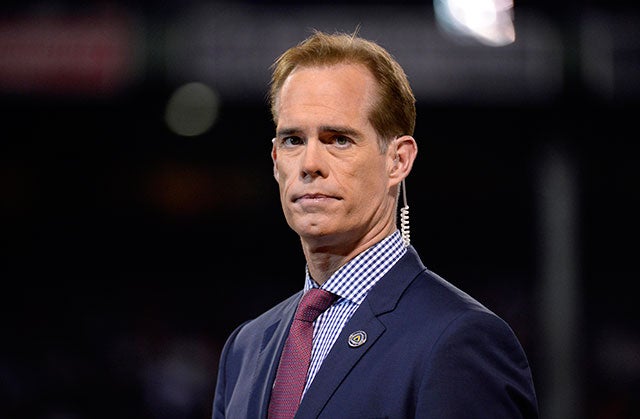
Joe Buck is covering his 18th World Series and 20th postseason for Fox TV as the lead play-by-play person on Major League Baseball. Opinion of Buck, 46, can be divisive. Many see him as an effective steward of the broadcast, along with being a comforting heir to his legendary father, Jack Buck. Others cannot hide their disdain for the native of St. Louis -- to the point of petitioning to get Buck and his "biases" replaced. Buck is quite aware of his critics. Aside from broadcasting MLB and NFL, Buck is throwing his hat into the talk-show ring again with "Undeniable," a long-form interview program in which he sits down with top sports personalities and, he says, tries to dig deeper than the sound bites we usually get. Taking a different approach after the failure of "Joe Buck Live" in 2009, "Undeniable" debuts Nov. 18 on DirecTV's Audience Network, and Buck's first guest is Yankees star Derek Jeter.
Not long before the first pitch of the World Series between the Royals and Mets, he sat down for an Answer Man session in the booth at Kauffman Stadium in Kansas City.
David Brown: Why do a talk show now? You seem like a pretty busy guy already, no?
Joe Buck: Yeah. And, believe me: God knows the world doesn't need another talk show; seems like everybody has one. I think the question was, "Why do a talk show at all?" Not just now. The answer is because I think it's a worthwhile format, and it's something that got my attention. Two years ago, Vince Vaughn and his production partner Peter Billingsley, came to me and said, "We're thinking about doing an Inside the Actor's Studio type of format but with sports, and you're our first choice."
We all get caught up in soundbites, and we think we know these guys as people; you read their page in the media guide and see their bio and think you have a handle on who these people are. The truth of it is, these people are just humans. We don't really know how they were shaped, what they were like as a kid, in their household, going though school.
The longer format has allowed us -- we've done 13 of them -- has allowed us to dig into things that these guys have never talked about. Every time I've gotten up after one of these interviews, I've been shocked at what these athletes have revealed and, more importantly, they've been a little shocked that they were that open. It feels intimate, even though it was in front of a studio audience, and I think it feels safe for them to talk about some serious things.
DB: Where does the title come from?
Joe: I didn't name it, but I think the main reason is because these people are Undeniable sports icons. It's like, nobody's ever said, "Well, Wayne Gretzky was OK, but you know, there were better." Like, if you get into an argument in a bar, these people are the best, or one of the best at what they do.
DB: Your first guest is Derek Jeter. Has he become an easier person to interview -- in terms of getting something out of him -- than he used to be when he played?
Joe: He was terrible as an interview as a player, and I think that was his approach. Jeter was no choir boy, Jeter has lived a life. But it's always stayed separate from what happened when he showed up at Yankee Stadium. And that's really to his credit. That was one of the main reasons why I wanted him. How did you maintain your life, date all these famous women, and really the media kind of laid off him. The greatest thing that happened in his life was, A-Rod showed up. Yes, Jeter was easier. At one point, he was playing a little arms-length at me with these funny questions we ask at the end. At one point, I said to him, "You're such a little bitch. Just answer the question."
DB: In those terms?
Joe: In those words. And he laughed, and the crowd laughed, and I took a minute and said, "Wow, I just called Derek Jeter a 'bitch' on TV." And he had a ball with it. In this setting (a ballpark), he probably would have punched me and walked away if I had called him that.
DB: Have any of your interview subjects been something totally unexpected?
Joe: Troy Aikman is one of my best friends. He talked about what it was like for his sister, who was an ER nurse in Oklahoma City at the time of the Oklahoma City bombing. I've never seen him overcome with emotion like that. It was good to see, because people think Troy's kind of stiff. And the guy is the opposite of that, and he's really a deep and emotional guy. And when he let that go -- I've never heard that story, first of all. And I never knew his sister's description of what it was like to be in that ER after that horrific day. He went there and helped out and was a part of it, but he was unable to speak of it. It was out of nowhere, I didn't expect it. I was proud of him for letting himself go.
DB: Having watched the trailer, the show reminds me of "Later" with Bob Costas. Was that an influence?
Joe: I grew up on that. Bob's a great friend, and his editorial consultant will be sitting in that seat when the [World Series] starts -- Steve Warren. He prepped all those interviews. He was working with me as well. I will tell you: We sat with these people for two or three hours, with a 10-minute break in between. I think the audience really got caught up in it. It was a long time to sit with somebody, and they're not used to that, and I'm not used to that. But in the course of 2 1/2 or three hours, these people are saying stuff they haven't said before. And that's really been fun. But yeah, if we even scratch the outer edges of what "Later" was, then we're doing something that's worthwhile.
DB: Is one of the reasons you wanted to do this because Joe Buck Live did not work out?
Joe: I think so. That will forever be frustrating for me. It was only three [episodes], and they were three months between each time. So you never got into any rhythm. And they were live-live. It wasn't like Jimmy Kimmel Live, which is live audience, but it's pushed back, delayed broadcast. I sat in New York on a stage and it was on your TV in Nebraska. And not a lot of people have done that. I would submit to anyone, whether it's David Letterman, or Conan O'Brien or Jimmy Fallon, three days into anything, you have no idea what the show's going to be. You don't get a chance to get a rhythm. We just never got there. The fact that it was a ratings success always kind of bothered me, too. I want to get some of that back.
And, not unlike what I'm talking about with this show with the players I'm interviewing: (The public thinks) they know me. They think they have me in a box. Everybody's got a word for me, doing all these games. But once they see me interact and have fun, and joke, and imitate, it's good for me too. It was exhilarating to get out and show that side of myself again that I never really got to show at HBO.
DB: Some might not know, but you and Artie Lange have been cool, even after what he did.
NOTE: This video is NOT SAFE FOR WORK:
Joe: I was OK with Artie that night. I get lumped in with HBO. We had booked Artie Lange of the Howard Stern Show. We're on HBO. We ended the show at 11 o'clock at night. I was the one that wanted him. Get over yourself, HBO. We now know that he was snorting Vicodin and drinking Jack Daniel's. But ... OK. Had that been run by [producer] David Hill at Fox, he would have come out like P.T. Barnum, saying, "Hey, folks! Who knows what you're going to see next time!"
DB: Knowing the whole story of how you reacted to him, it makes you look like the better man. You were understanding, sympathetic, forgiving.
Joe: I called him the next day, having gotten his number from HBO, and I called him and he called me back immediately. I said, "Hey, I'm not upset with you at all. I'm just glad you came on, because it was fun."
He said, "Look, I'm a comic and I got the first laugh, and I went way overboard. I don't ever want to stand in the way of anyone making a living, or ruin anybody. That wasn't the idea." He goes, "Whatever I can do in the future to help."
I said, "Look. All I'm asking you now is, just be on the second show." And so he was in the cold open for the second show. I had to fight HBO to get him on again, because they didn't want to have him on. I said, "Either he comes on, or I don't do it." I already have a day job. So he came on, we did a cold open when he chases me through Times Square, and it was great.
DB: This seems related. One of the Internet's first rules is, "Don't feed the trolls," which you violated by talking to the guy who started the petition to have you removed from the Royals broadcast. Why did you do that?
Joe: I got behind it. I wanted a week off. I got behind it and said, "C'mon, Kansas City, we can do this." I get it. I deal with it every year. I've been doing this a long time. This'll be my 18th World Series and it's my 20th postseason. When you do it long enough, you start realizing you're the outsider. You come in and Royals fans are used to hearing Ryan Lefebvre and they're used to having it done from the Kansas City perspective. Now we show up and I get excited for Jose Bautista to hit a home run, and that hits their ear weird. They think I'm rooting against their team and it's not the case. But it comes full circle when I go home to St. Louis after a long series and people ask me, "Why do you hate the Cardinals?"
DB: You get that?
Joe: Oh, all of the time. That, and, "Your dad's rolling over in his grave." Little comments that are made. It just proves that, no matter where you're from or what the perception is, it's the opposite on the other side. You just can't win.
DB: You were 16 years old when it happened. Were you upset at the Royals when Don Denkinger made the call in the ninth inning of Game 6 of the World Series in '85?
Joe: Haha. I was at a dance. It was called "League" in St. Louis, in this weird community I lived in. The object was, "See if you can actually touch a girl's hand and dance with a girl." And so I was there, and I remember exactly where I was standing. It's one of those moments that's emblazoned on every kid's mind of a certain age in St. Louis. I'm close with Paul Rudd. He was on the other side of it. He and I laugh about it to this day. I was on that side of it. I'll never forget it.
DB: Who wins the World Series next? Cardinals or Cubs?
Joe: I would say the way they're lined up, history would say the Cardinals. But the Cubs are in position because of their youth. This has become a young man's game. Because of all the things baseball has done, it's done a good job to get rid of amphetamines. Therefore, at this time of year, the young legs and and arms are what you want. You see it with the Mets, with what they're doing on the mound. If the Cubs add one more pitcher, they're going to be very tough.
I waded into a morass when I said that doing a Cubs' World Series in Wrigley Field would be the highlight of my career. And it would be. And it would be any television announcer's career because it's never happened on TV. I got a chance to do the Red Sox in '04, and I've got a feeling I'll get a chance to do -- if I last long enough, meaning like next year or the year after -- I'll see the Cubs there. I think they're that good, and I think things have finally turned there.
DB: Do you know what Joe Buck Yourself is? The country punk band?
Joe: I only know them from online. People will reference that and think it's a slam on me. But I was born in 1969, and that's the name of Jon Voight's character in Midnight Cowboy. And I met Jon Voight at the Emmys last year, and I'm such a huge fan now because I watch Ray Donovan. I went up to him and said, "You have no idea how long I've wanted to meet you." It was a moment. I have a picture on my phone of the two of us. It was like, "All right, the two Joe Bucks!"
DB: I was going to ask you if you've ever dressed up as Joe Buck for Halloween.
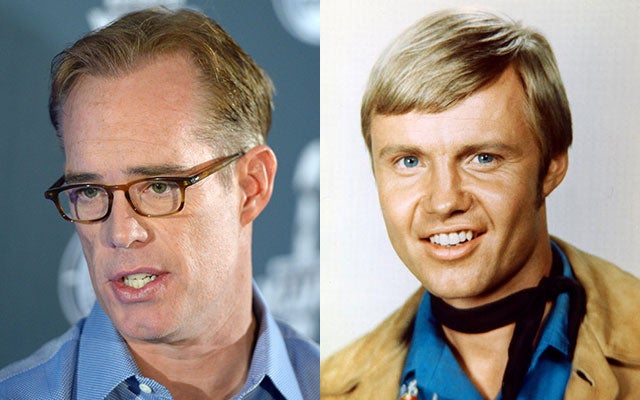
Joe: Haha, to be a male prostitute dressed as a cowboy walking the streets of New York? No, I have not done that.
DB: At the IMDB web site, they have like everyone's resume who's ever been on TV. And in the bio section, they show a personal quote. The one for you is: "In the air in left field, back at the track, at the wall, we are tied." Do you know what game that's from?
Joe: Yes. That's Jim Leyritz.
DB: Really?!
Joe: Hitting a home run against Mark Wohlers in the '96 World Series.
DB: I was kidding about you knowing what it was.
Joe: It's bland, there's nothing to it.
DB: Can you recreate it, with some energy? To help us remember.
Joe: Oh, yeah. It was Wohlers pitching. What was that? Game 3? It was 6-3, made it 6-6. Game 3 or 4. And Wohlers hung a slider and I said:
"Baaaack... At the track, at the wall... WE ARE TIED!"
And then Tim said, "You never get beat with anything but your best pitch." And he was upset because Wohlers hung a slider. So that's it.
DB: Bland when you see it in print, but less is more on TV.
Joe: Yeah! Well, that's the thing people don't get. If you're doing radio, it's like, "Wohlers comes set, he looks in, here's the pitch, and a swing and a high fly ball, this ball's carrying to left field, the left fielder's back at the track, at the wall, it's gone! It's 6-6."
But I don't have to do any of that, it's on the screen. People see it. That's the beauty of doing this tonight. If somebody hits a home run, I'll let the crowd take over. Or if it's quiet, I'll let the silence take over. In Atlanta, it was deafening how quiet it was.
DB: Would your dad like Undeniable?
Joe: Yeah, because of all the things he did, he was a great after-dinner speaker, obviously he was a great play-by-play guy, but he was the best interviewer I ever heard, because he was a listener. He always told me as a kid, when you're interviewing somebody, it's OK to have an idea of where you're going with the interview, but if you're asking somebody, "Hey, how was your day today?" And they say, "Oh, good. I ate oatmeal, then I went and worked out, and I killed six people and then I came to the ballpark." And then you go, "OK! What's it like facing Lorenzo Cain?" Then you're not doing your job. So the key is to listen, so that's what I've tried to do on the show. I think that's what makes it good, because it's a natural conversation.