
Orioles drop 15th straight game as rebuilding club clinches fifth straight losing season
The O's are on pace for one of the worst seasons in franchise history

By
Dayn Perry
•
1 min read
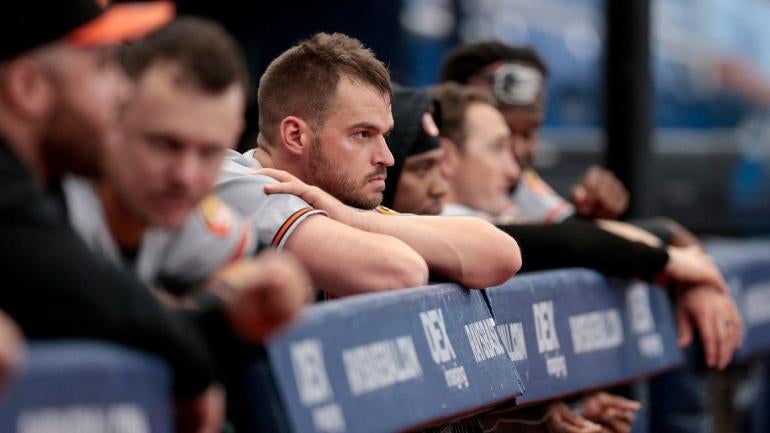
The Baltimore Orioles fell to the Tampa Bay Rays by a score of 7-2 on Thursday (box score) and in doing so lost their 15th consecutive game. That's the second-longest losing streak in franchise history.
Worse yet, every one of those 15 straight losses have been by multiple runs, which is a modern record for futility:
The Baltimore Orioles have set a Modern Era record by losing 15 consecutive games by multiple runs each.
— Jared Berson (@JaredBerson) August 19, 2021
Most consecutive losses by multiple runs in MLB history: 18, by the 1876 Cincinnati Reds.
Earlier this season, the Orioles endured a separate 14-game losing streak from May 18 through May 31. Here are the team's longest losing streaks since the St. Louis Browns moved to Baltimore and became the Orioles in 1954:
- 21 games (April 4-28, 1988)
- 15 games (Aug. 3-present)
- 14 games and counting (May 18-31, 2021)
- 14 games (Aug. 11-15, 1954)
- 13 games (Sept. 17-30, 2009)
Over this current streak, the Orioles have been outscored by the opposition by a margin of 138 runs to 42 runs, and their starting pitchers are 0-12 with 63 earned runs allowed in 61 2/3 innings. They haven't won a game since topping the Yankees by a score of 7-1 on Aug. 2. Thursday's loss dropped the Orioles to 1-15 against the first-place Rays in 2021.
That loss was the Orioles' 82nd of the season, which means they clinched a losing season on Aug. 19 with 42 games left on their schedule. This marks the Orioles fifth straight losing season.
Overall, the Orioles in 2021 are winning at a .317 clip and are now on pace for 111 losses. Incredibly, those figures would not even be Baltimore's worst in recent history. In 2018, the team finished with a record of 47-115 and a win percentage of .290. On the other hand, recent trends suggest that Orioles can challenge that mark down the stretch. In addition to their recent run of incompetence, the Orioles also play MLB's fourth toughest schedule the rest of the way.
Right now, the Orioles are lugging around an MLB-worst run differential of minus-227. The team ERA of 5.85 is the worst in baseball by a significant margin. On the other hand, the O's are in line to claim the top overall pick in the MLB draft for the second time in the last four years.