World Series: How the strike zone hurt Anibal Sanchez, Kurt Suzuki and the Nationals in Game 3 vs. the Astros
Gary Cederstrom was not calling many low strikes on Friday night

•
2 min read
Washington -- The Houston Astros defeated the Washington Nationals, 4-1, on Friday night in Game 3 of the 2019 World Series. The best-of-seven series now stands at 2-1 in Washington's favor. The two sides will meet again on Saturday night at Nationals Park in Washington, D.C.
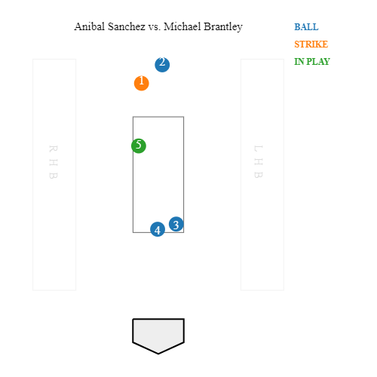
One of the memorable moments in Game 3 occurred in the fifth inning. Anibal Sanchez -- who, to be clear, wasn't as sharp as the Nationals desired -- had a pair of calls go against him in an at-bat against Michael Brantley. The score was 2-1 Astros at that point, but was soon made 3-1 as Brantley took advantage of his extra chances to plate Houston's third run on the evening.
That Sanchez didn't get the calls in question perhaps shouldn't have been a surprise. But before we get to that, let's recap the entire sequence:
- 0-0: 88 mph fastball up and away that was fouled off;
- 0-1: 88 mph fastball well above the zone that was taken for a ball;
- 1-1: 91 mph fastball that was seemingly within the zone but called low;
- 2-1: 76 mph changeup in essentially the same spot, also called low;
- 3-1: 86 mph splitter that hung up and away and was hit into right for an RBI single.
Here's that same information in a nifty strike-zone plot:
So, why should the Nationals have expected those close calls to go against them? It starts with home-plate umpire Gary Cederstrom, whose strike zone tends to skew on the high side. Here's what Mark Simon wrote at the Athletic before the game:
Cederstrom's strike zone appears to have widened the past two years, as he has called more pitches at or near the outside corner strikes than his colleagues. He has been a little tougher than other umps on low pitches, particularly when a right-handed batter is at the plate.
There was another factor in addition to Cederstrom working against the Nationals: catcher Kurt Suzuki. For all his positives as a player, Suzuki grades as a below-average framer. He was three runs below average in that regard during the regular season, per Statcast, and converted just 45.3 percent of the low pitches he saw into strikes. For comparison, Tom Murphy of the Seattle Mariners led baseball in that category by converting nearly 65 percent of the low pitches he saw into strikes.
Sanchez couldn't overcome that combination no more than the Nationals could overcome leaving 12 runners on base in what was a tight game throughout.
To be clear: Neither Cederstrom nor Suzuki is the top reason why the Nationals lost -- you have to score to win, and the zone was called both ways. The Brantley sequence, then, is just a reminder of how deep and complex the game within the game can be on any given night -- and how it sometimes manifests itself in the form of an inopportune pairing of catcher and umpire.