Jason Kidd's lasting legacy is a constantly evolving greatness
Jason Kidd constantly made his game different and better as he adapted to age, his abilities and what his team needed.

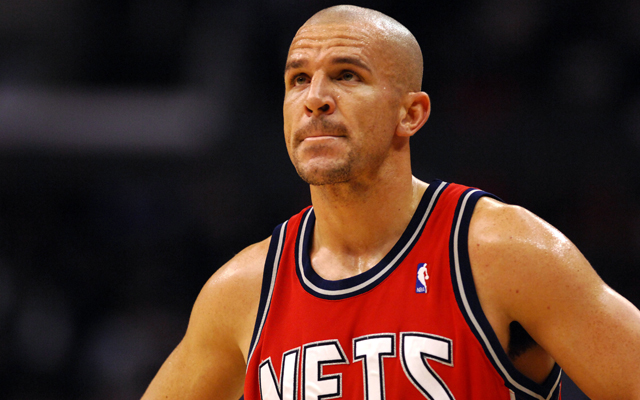
Most NBA players who play over 10 seasons improve, often in dramatic, noticeable ways. They add a post game to create their own shot. They expand their range. They become better rebounders, defenders, etc. But few, only the truly great, really evolve as time goes on.
Jason Kidd may have evolved more than any player in NBA history through his 19 seasons in the league. Kidd retired Monday at the age of 40.
Kidd entered the league as a firebug, the deft-passing, showy point guard who made passes that wound up on highlight shows. When I was an adolescent my friends and I would try the next day to mimick passes Kidd made. They were so articulate, like calligraphy, it felt like they almost had to be scripted.
In New Jersey, Kidd evolved to what would be the apex of his career, an MVP-caliber player. In 2002-03, he averaged out 18.7 points, 8.9 assists and 6.3 rebounds per game with a PER of 22.2. He was startlingly, shockingly good.
His evolution from Phoenix (and Dallas) to New Jersey was one from a pure point to a playmaker scoring point guard. It was the nexus of his career, and it pushed the Nets to the NBA Finals. Not being able to tackle Kobe and Shaq's Lakers shouldn't diminish what Kidd was then, which was incredible. He controlled the game the way few point guards have ever. His numbers don't leap off the page, but do not get confused. For several years in the early 2000s, Kidd was among the top three players in basketball.
But as is always the case, players get older, legs lose their burst, and a player's skills erode. The Kidd who landed in Dallas was remarkably different. But it was not a shell of Kidd, just a different version. Kidd morphed once again, becoming the floor general and game manager the Mavericks needed. There were problems early on with the spacing, but once Kidd had a full season with the Mavericks, he fit in well. Then, with the addition of the veteran pieces that made up the 2010-11 team, Kidd finally earned his championship. He was not a bit player on that team, even if he wasn't the star.
He had morphed into a player who could spread the floor, becoming the best spot-up shooter he had been in his career for a team that needed to knock down 3s. He was still a defensive presence, getting up under players and attacking them high and low. He was savvy and smart, the veteran who could make the right plays.
For New York, in his last season, he was an auxilliary component, the guy (often the only one) who would make the extra pass. He was smart and tough, even if time had taken away everything else.
Comparing players across eras is different. But Kidd is a whole other problem. You can't compare Jason Kidd's career to anyone else's because Kidd was a different player from team to team, year to year, evolution to evolution. The only thing consistent with this hardwood maestro was that he won. Over and over again.
Kidd is reportedly interested in coaching. In the Darwinian NBA model, Jason Kidd is immortal. He's always evolving ahead of the pack.