
Q&A: Hawks' Kyle Korver on shooting, his high school sports column, more
Atlanta swingman Kyle Korver discussed the art of shooting and what he used to write about for the school paper with CBSSports.com.

•
8 min read

TORONTO -- Kyle Korver changes games. If you take your eyes off of a contest featuring the Atlanta Hawks, you might even miss him doing it. A couple of small mistakes giving him a sliver of space can make a lead balloon or disappear. Every coach and player in the league knows not to leave him open, and he and the Hawks work cleverly to exploit that.
Is there a better, more dangerous shooter on this planet? Toronto Raptors head coach Dwane Casey doesn't think so.
“I’ll tell you what, that guy, as soon as it leaves his hand it looks like it’s going in," Casey said. "He’s constant motion. And from his experience of being around [Allen] Iverson, over the years I’ve noticed how tough he is. Everybody looks at him not being a tough kid -- he’s a tough kid, and I think Iverson wore off on him in his days at Philly.”
Before and after he started the season by dropping a cool 20 points on the Raptors while making six of his seven 3-point attempts, Korver spoke with CBSSports.com about shooting, his brand of toughness and his high school sports column. A lightly edited transcript of the conversation follows:
Do you keep track of makes and misses when you’re shooting around?
No, I’m more locked into getting my mechanics right for the day. I don’t like it when shots are going in but it doesn’t feel good. I’d rather have them be feeling good but maybe it’s a little short and I can work with that. I don’t like it when they’re going in and I don’t know why they’re going in. You know what I mean? I don’t know if that makes any sense. Shootaround is all about just getting everything working, getting my body going, finding mechanics and then I’ll do it again before the game.
If you take a couple days off and go back in the gym, can you feel a difference in your shot?
Sometimes, it helps to take a couple days off, as weird as that sounds. Every once in a while I could just shoot so many shots, you can get so, like, intense with it all. It’s like in life, right? We’re all created for a sabbath day or for a day of rest. You sometimes need that in shooting, too. But usually, it takes a little bit of time to just kind of get that rhythm, get everything working, get all the different aspects of your technique clicking.
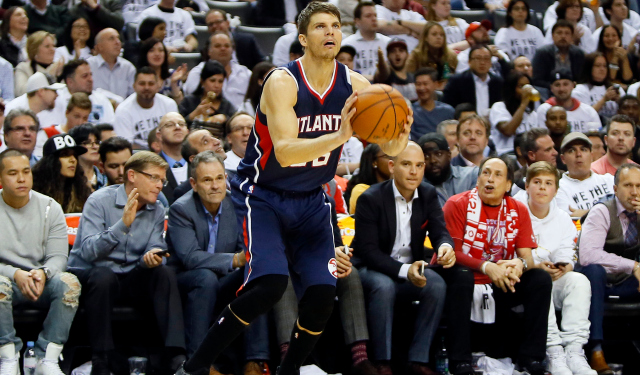
You wrote a piece last year about your 3-point streak — do you have a writing background?
I had a column in high school for our school newspaper. I enjoy writing. If you were to grade my paper, I think all of my punctuation marks and the grammatical errors would be pretty high. I don’t think my grade would be very good. But I do enjoy the writing process. Sometimes for me, if I’m just talking, I’m not getting my words out right, so it helps me sometimes to actually put it down on paper so I actually know what I think. [Laughs]
So, you do that throughout the season?
Every once in a while. You know what I mean, there’s a lot of life going on. We just had a second baby. It feels like writing — maybe you don’t get to write quite as much as you would like, but when it does happen I enjoy doing it.
You remember the columns you wrote?
Yeah, I remember a few of them. I remember one time I went through every team in our conference and said why they can’t beat us. And another time I wrote about how, during the NBA lockout, how NBA players were spoiled and shouldn’t complain about how much money they’re making. And I wrote about our school sports. It was called “Kyle’s Komment,” I think.
“Kyle’s Komment,” with a K?
With a K. And I had the wings — someone drew a picture of me with like the Jordan “WINGS” poster, but I had biceps that were just like crazy.
The lockout thing, I imagine your perspective has changed?
It’s changed dramatically, now that you know a little bit more information about what’s going on.
You wrote in that story that the more you heard about the streak, the harder it was for you to talk about it. Is that kind of true on a smaller level just day-to-day, with you trying to focus on little things in your mechanics and people like me asking you questions?
I do better in life when my world seems a little smaller. So there’s a lot of things that happen with basketball. Interviews or questions or a lot of things going on, or people saying things. But I think it’s become very important for me to have that time when my world gets smaller again. That’s when I can lock in to my mechanics and get my head right for the game and not think about a streak or not think about a question that someone asked me. Just having that time and having that routine has helped me out a lot because this is just the reality. If you do anything, you get asked about it, people want to hear about it. It’s just life, and it’s good. Does that answer the question?
I think so. Do you think people underestimate how difficult it is to get through 82 games with travel and media and all of that extra stuff, on top of just keeping your body in shape?
Obviously, people are more talented, but that’s the biggest adjustment coming to the NBA. It’s how many games you play and just mentally being able to prepare yourself every day for the work to be consistent. As a shooter, that’s what I care about. It’s not just about having hot days when you couldn’t miss. It’s, ‘How do you be consistent through an 82-game season?’ And that’s hard. And that takes a lot of work and a lot of mental preparation. As a young guy coming in, that’s a thing to work through.
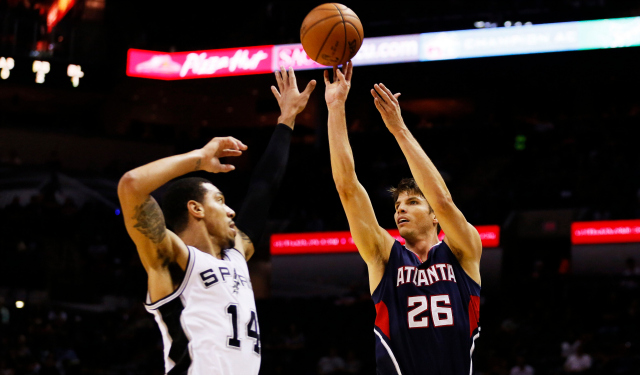
You come from a basketball-playing family and some people say shooters are born, not made. Obviously you’ve put in a ton of time, but do you think there’s any credence in that?
I think I was given some God-given gifts, as far as muscle memory, hand-eye coordination and things like that. But it is really, it’s a lot of practice. It seems like the more I shoot, the more serious I get about it, the more I see, the more there is to shooting. I don’t want to be a guy who just makes his shots because he’s in rhythm. It’s like, ‘Why did you get into rhythm?’ You can really break that down.
So there’s like, I don’t know, I probably need to write more about this, my words aren’t very good right now. You know, it’s a daily thing of just getting everything working. All the parts of your body go into your shot. It’s not just about shooting it at the basket. It’s a full-body thing. There’s a lot to that.
Is that something you figured out when you were young or was that later?
Actually, I started doing it more when I was dealing with injury. I had a bad left knee for a bunch of years and I had some right elbow and wrist problems. I couldn’t go out there and just shoot because my body was hurting, so I had to get more serious about my actual mechanics. If my elbow wasn’t straight, if I wasn’t using my legs properly, I was getting pain. But if I was doing it correctly, I wasn’t feeling the pain. And then also when I was doing it correctly, my shot was going in more. So it’s one of those things where, like in life and in basketball, sometimes through adversity that’s when good things happen. It’s the same thing with my shot. I feel like I’ve been better the last five years after dealing with some injuries and having to work with them and get more serious about my craft.
Dwane Casey said people underestimate your toughness and he thought, coming into the league in Philly, some of Iverson’s toughness rubbed off on you.
I think just being in Philly in general probably toughened me up a little bit. I don’t know, though. I think I’ve never been the most athletic guy. I’ve always had to kind of grind it out a little bit. People see toughness as different things. I’m not physically going to pound on you, I’m not that kind of tough but I do feel like I keep going and just keep on working. So if that’s tough, then that’s what I try to be.
Lasting memories of playing in Philly with AI?
The NBA was brand new for me then and I was learning a lot. And AI was great for me. He really encouraged me. AI didn’t pass to anybody unless he thought they were going to make it. So, you know, he would look for me and he really instilled a lot of confidence in me.