Identifying the best single season team in every NFL franchise's history
The 1972 Dolphins. The 1978 Steelers. The 2000 Ravens. The 1942 Bears. Wait, what? Not the 85 Bears? Here is the best team in each NFL franchise's history.
By
Brad Gagnon
•
13 min read

Longtime fans of certain teams undoubtedly already have a particular season in mind. That year in which everything clicked and your team was at its absolute best.
For some of the more spoiled fan bases, it was a season that stood out from other championship campaigns. For others, it might just be a year in which a prototypical loser broke from mediocrity.
Here's a look at the greatest versions of all 32 active NFL franchises:
 1925 Chicago Cardinals
1925 Chicago CardinalsThis is a little sad, but we're talking about a franchise that hasn't won a championship since 1947. The 1975 St. Louis Cardinals went 11-3 thanks to Pro Bowl quarterback Jim Hart as well as All-Pros Dan Dierdorf, Terry Metcalf, Mel Gray and Roger Wehrli, but they and the Super Bowl finalist 2008 Arizona Cardinals don't hold a candle to the 1925 Chicago-based squad. That team outscored the competition 230-65 as part of an 11-2-1 season in which they were named NFL champs.
 1998 Atlanta Falcons
1998 Atlanta FalconsAtlanta's only Super Bowl appearance came in the only year in which the franchise ever lost fewer than three games. Jamal Anderson may have been their only first-team All-Pro, but the Falcons still went 14-2 while ranking fourth in football in terms of both points for and allowed. In second place is the 2012 Falcons team that went 13-3 and lost the NFC title game to the 49ers by a narrow margin.
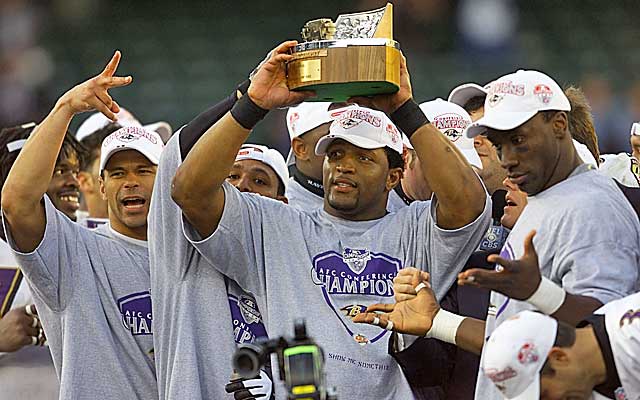
 2000 Baltimore Ravens
2000 Baltimore RavensThis 12-4 Super Bowl team towers over the 2012 champs, as well as a 13-win squad that lost in the divisional playoffs in 2006. Led by Ray Lewis, Sam Adams and Rod Woodson, Baltimore's defense surrendered just 165 points in 2000, which remains the lowest 16-game total in NFL history.
 1990 Buffalo Bills
1990 Buffalo BillsBoth this team and the 1991 squad won 13 games and lost the Super Bowl, but Buffalo's defense was considerably worse in that '91 season. Plus, the Bills came a hell of a lot closer to winning the whole thing in that first of four straight Super Bowl appearances. The '90 team also had more Pro Bowlers (10 to eight). But we should also mention the Jack Kemp-led 1964 Bills, who won the AFL championship after going 12-2 and ranking first on both sides of the ball.
 1996 Carolina Panthers
1996 Carolina PanthersSeems crazy that the second year in this franchise's history is its best, but that 12-4 '96 team had twice as many Pro Bowlers as the 2003 team that lost to the Patriots in the Super Bowl. They ran into the eventual Super Bowl champion Packers in the NFC title game that year, they again made the conference title game in 2005 and again won 12 games in 2008, but their point differential total was much stronger and they had more stars in '96.
 1942 Chicago Bears
1942 Chicago BearsThe Bears have won a Super Bowl and eight NFL championships, but their best team actually lost the championship despite an 11-0 regular season in '42. Cold, Hard Football Facts called this edition of the Bears "the single most dominant team in the history of the NFL," which might not be far-fetched. This is a team that outscored its opponents by an average margin of 34-8 but was suddenly crushed by the Redskins in the championship game. You wonder if that would have happened had head coach George Halas not gone off to fight in World War II only weeks before the title game. Nobody will forget the 1985 Bears and that killer defense, but with 10 Pro Bowlers the Sid Luckman-led '42 Bears were actually better.
 1988 Cincinnati Bengals
1988 Cincinnati BengalsBoth the '88 team and the 1981 team won 12 games and lost the Super Bowl to San Francisco by a one-score margin, but the '88 Bengals have a 4-2 first-team All-Pro edge, a 9-5 Pro Bowler edge and a tiny advantage when it comes to point differential.
 1964 Cleveland Browns
1964 Cleveland BrownsSo many teams to pick from here. With guys like Otto Graham, Lou Groza, Marion Motley, Jim Brown, Gene Hickerson, Bill Willis, Mac Speedie, Paul Warfield and Len Ford, the Browns were dominant for much of the 1950s and 1960s. And while Frank Ryan was no Graham at quarterback, we couldn't deny the '64 team, which included Ryan, Brown and Warfield. The last Cleveland team ever to win a championship ranked in the top five on both sides of the ball. They edge out some ridiculously good teams from 1950-1955.
 1995 Dallas Cowboys
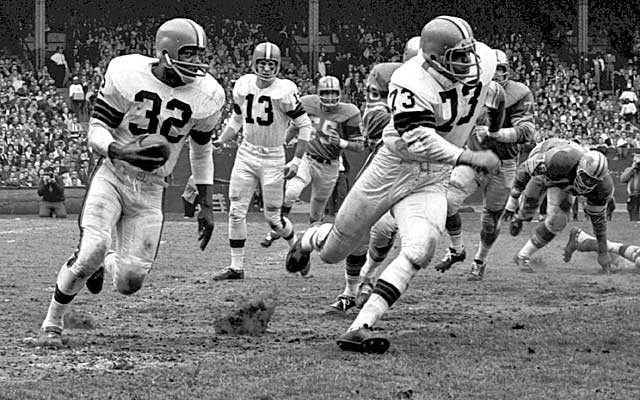
1995 Dallas CowboysSo many options. The 1977 Super Bowl team went 12-2 in the regular season, the 1993 Super Bowl team produced a team-high 11 Pro Bowlers, the 1971 Super Bowl team outscored its opponents by a ridiculous 13.1 points per game and the 1992 Super Bowl team sparked a dynasty with a 13-3 regular season. But there was something about the '95 Super Bowl team, which ranked second on both sides of the ball, produced 10 Pro Bowlers and had six players named to either the AP or Sporting News All-Pro team. They also ranked third in football on both sides of the ball and won 12 games.
 1998 Denver Broncos
1998 Denver BroncosThe 1997 Super Bowl team actually had more All-Pros than the '98 version, but two extra regular-season wins (14 to 12) and a slightly stronger point differential total make the difference. The '98 Broncos also had twice as many Pro Bowlers (10 to 5). The 2012 team, which had three first-team All-Pros and ranked in the top four on both sides of the ball as part of a 13-3 season, might have taken the crown here had it won the Super Bowl.
 1952 Detroit Lions
1952 Detroit LionsThe 9-3 NFL champions ranked second in scoring and first in points allowed, which gives them a small edge over the '53 team that went 10-2 but scored six fewer points per game en route to another championship.
 1962 Green Bay Packers
1962 Green Bay PackersA 13-1 record, a No. 1 ranking on both sides of the ball and an easy title for Vince Lombardi and Bart Starr. The Packers outscored their opponents by an average tally of 30-11 that season. They also won the championship with a 12-0-1 record in 1929, surrendering only 22 points all season, and they put up massive numbers as a 13-3 Super Bowl winner in 1996, but nothing quite compares to that '62 campaign.
 2012 Houston Texans
2012 Houston TexansThe Texans went 12-4 while ranking in the top 10 on both sides of the ball this season, which makes this easy because they haven't won more than 10 games in any other campaign.
 1958 Baltimore Colts
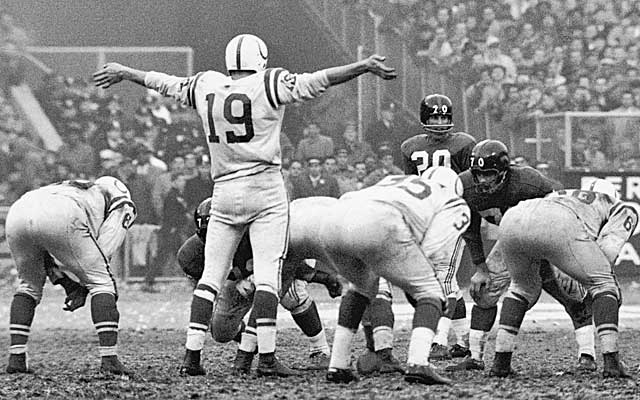
1958 Baltimore Colts The 13-1 1968 team outscored its opponents by 18 points per game (compared to "only" 15 for this 9-3 '58 team) but failed to win a championship. The '58 team, which featured Johnny Unitas, Raymond Berry, Lenny Moore, Jim Parker and Alan Ameche, won "The Greatest Game Ever Played," and ranked first or second in the NFL in every major category.
 1999 Jacksonville Jaguars
1999 Jacksonville JaguarsUnder Tom Coughlin, the '99 Jags won a team-record 14 games and fell just a game short of the Super Bowl. They also outscored their opponents by an average of 11 points per game. No other team is close.
 1969 Kansas City Chiefs
1969 Kansas City ChiefsTechnically part of the AFL, but we're counting the Chiefs because they won the Super Bowl and joined the merged NFL the next year anyway. The '68 Chiefs actually scored more points and surrendered fewer while winning one more game, but the 11-3 '69 team was able to win when it mattered most, beating the Vikings in Super Bowl IV.
 1972 Miami Dolphins
1972 Miami DolphinsThe only undefeated team in modern NFL history possessed seven eventual Hall of Famers. They also got to the Super Bowl with double-digit-win seasons in 1971, 1973 and 1984, and the 513 points they scored in '84 was at the time the second-highest total in NFL history, but '72 is wrapped in lore for a reason.
 1998 Minnesota Vikings
1998 Minnesota VikingsMinnesota has been to four Super Bowls, but that 15-1 '98 team that fell just short of making the big game was actually better than any of the four that won NFC championships. Led by Randall Cunningham, Robert Smith and Randy Moss, the offense averaged a silly 34.8 points per game, while the D ranked sixth in terms of points allowed. That gave them the second-highest point differential in modern NFL history. No wonder this team had 10 Pro Bowlers and four first-team All-Pros.
 2007 New England Patriots
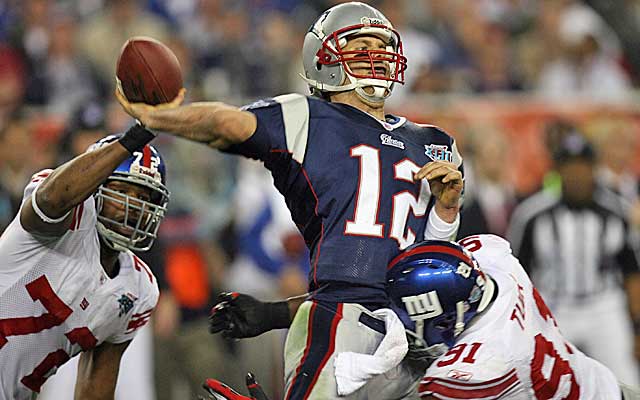
2007 New England PatriotsThe Pats have won four Super Bowls, but the '07 team that went 16-0 in the regular season and lost the big game in devastating fashion was actually much stronger than any other squad in franchise history. This New England team outscored its opponents by 19.7 points per game, which remains the highest total in modern NFL history. The 2001, 2003, 2004 and 2014 Super Bowl teams all lost at least a couple games and had per-game point differential totals in the single digits. With nine first- or second-team All-Pros, this might have been the most talented roster in NFL history.
 2009 New Orleans Saints
2009 New Orleans SaintsThe 2011 team actually put up better offensive numbers, but that wouldn't have been the case had the '09 Super Bowl team not phoned in its last few regular-season games after an unforgettable 13-0 start. Throw in that the '11 team didn't even make the conference title game and it's clear no other season even touches the Saints' sole Super Bowl campaign.
 1927 New York Giants
1927 New York GiantsIf you want a contemporary winner, the 1986 Giants -- a 14-2 Super Bowl winner with Lawrence Taylor in his prime -- appear to have a strong edge over great teams from 1990, 2000, 2007, 2008 and 2011. But '27 wasn't just a special year in New York for the Yankees. The three-year-old Giants went 11-1-1 that season, outscoring their opponents by an average margin of 15-2 (yes, the game has changed a lot in 90 years). That team featured four eventual Hall of Famers.
 1968 New York Jets
1968 New York JetsAlso technically an AFL team but if you can beat the best the NFL has to offer in the Super Bowl, you're good enough to qualify. This historic Jets team went 11-3 while outscoring their opponents by an average of 9.9 points per game. And of course, Joe Namath and Co. upset the Colts 16-7 in Super Bowl III. If you prefer a full NFL victor, take the 1998 team that went 12-4 and ranked in the top five in terms of points for and against. Bill Parcells, Mo Lewis, Vinny Testaverde, Curtis Martin and Keyshawn Johnson. The closest thing to the good old days.
 1976 Oakland Raiders
1976 Oakland RaidersThis franchise was a perennial powerhouse in the AFL in the late-1960s, but they couldn't finish. That finally changed with a 13-1 Super Bowl season as part of the NFL in '76. That year, the John Madden-coached Raiders -- sporting seven Pro Bowlers -- won their last two playoff games by a combined margin of 56-21, including a 32-14 blowout of the Vikings in Super Bowl XI.
 1948 Philadelphia Eagles
1948 Philadelphia EaglesThe Eagles last won a championship in 1960, but you have to go back another decade before finding their best set of teams. They won titles in both 1948 and 1949, losing only three games over that two-year span with rosters that featured four eventual Hall of Famers. But the '48 squad gets an edge because their 11-1 record and their per-game point differential of 19.2 still stand as all-time team records.
 1978 Pittsburgh Steelers
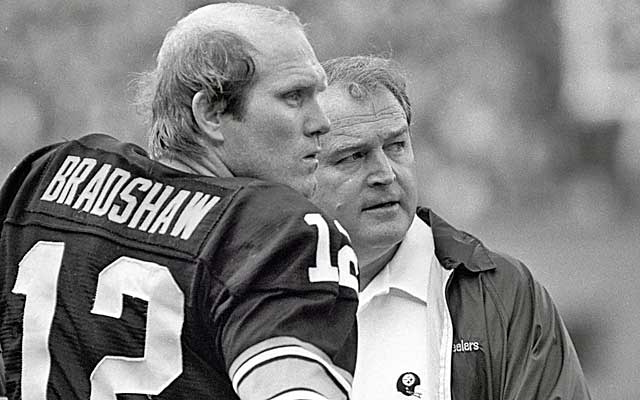
1978 Pittsburgh Steelers It's extremely tough to pick a winner among those Steel Curtain-era teams. Things were still developing when they first won the Super Bowl in 1974. The 1976 Steelers had the best defense on paper but didn't win a Super Bowl. The offense really took off when they won the Super Bowl in 1979, but the defense was starting to lose its luster. Since 1977 was an off year, that leaves 1975 and '78. In '75, they surrendered only 11.6 points per game while also scoring a then team-record 26.6. But in '78 they won two extra games (14-2 to 12-2) and had twice as many first-team All-Pros (4 to 2). Basically a toss-up, but '78 has a small edge.
 2006 San Diego Chargers
2006 San Diego ChargersI went into this thinking this'd be the 1994 Super Bowl team, but that squad was only 11-5, had just four Pro Bowlers and one All-Pro (not including kicker John Carney) and was crushed by the 49ers in the Super Bowl. The '06 Bolts were one and done in the playoffs, but they had the league's best regular-season record (14-2) and they scored a team-record 492 points. LaDainian Tomlinson was MVP, but they also had Philip Rivers, Antonio Gates and Shawne Merriman among 11 Pro Bowlers.
 1984 San Francisco 49ers
1984 San Francisco 49ersThey were of course great when they won Super Bowls in 1981, 1988, 1989 and 1994, but that 15-1 '84 Super Bowl campaign was truly the most remarkable in 49ers history. They ranked second in points scored, first in points allowed and they beat their opponents by an average of 15.5 points per game. In 19 games that year, only one team came within two points of beating them, and that was the only team that did defeat them (Pittsburgh by a field goal). It's no surprise they sent 10 guys to the Pro Bowl.
 2013 Seattle Seahawks
2013 Seattle SeahawksAn argument could be made that if the 2005 Seahawks had beaten Pittsburgh in the Super Bowl, they'd be right there with the '13 Super Bowl winner. That team -- which also went 13-3 in the regular season -- had league MVP Shaun Alexander, it scored more points and had nearly an identical point differential total. It also had four first-team All-Pros, whereas the '13 team had just two. But the difference is how it ended, and the '13 Seattle defense did admittedly have a special feel to it.
 1999 St. Louis Rams
1999 St. Louis RamsThe 2001 team won an extra game (14 to 13) but lost the Super Bowl to New England. The Rams beat their opponents in '99 by an average of 17.8 points per game, which is now second in modern NFL history to the '07 Patriots. Not only that but they also ranked fourth defensively. This is a no-brainer.
 2002 Tampa Bay Buccaneers
2002 Tampa Bay BuccaneersSpeaking of no-brainers, this is the only year Tampa has ever reached the Super Bowl, let alone won it. They scored 346 points, which is the fourth-highest total in team history, while allowing a team-record 12.3 points per game. With Hall of Famers Warren Sapp and Derrick Brooks as well as All-Pros Simeon Rice, Ronde Barber and John Lynch, this was clearly the greatest team in Bucs history.
 2000 Tennessee Titans
2000 Tennessee TitansThe Titans went 13-3 three times in a 10-year span between 1999 and 2008, but that 13-3 2000 team was clearly the best of the batch during the hottest run in franchise history. Sure, they made the Super Bowl in '99, but that team only outscored its opponents by 4.3 points per game. With a large target on their back the next season, they increased that number to 9.7 while allowing just 11.9 points per game. They also upped their first-team All-Pro total from two to four and their Pro Bowl representation from four to nine.
 1991 Washington Redskins
1991 Washington RedskinsIn fact, using DVOA ratings going back to 1950, Football Outsiders deemed the 'Skins to be the best team of all time, period. "Washington may have been the most well-rounded team in NFL history," wrote Aaron Schatz in 2010. The Super Bowl XXVI winner went 17-2, demolishing all three of its playoff opponents and losing those two games by a combined total of just five points. The Redskins, who ranked first on offense, second on defense and had eight Pro Bowlers, outscored their opponents by a total of 332 points, which including the playoffs is the third-highest total of all time.
Stats to consider:
Most teams by decade: 1990s (9), 2000s (6), 1960s (4), 1970s (3)
Fewest teams by decade: 1930s (0), 1920s, 1940s, 1950s, 1980s, 2010s (2 each)
Teams from before the Super Bowl era: 8 out of 32
Teams that didn't win the championship: 11 out of 32
Brad Gagnon has covered the NFL since 2007. You can also read his work at Bleacher Report, Awful Announcing and This Given Sunday. In order to sound more professional, he wrote this blurb in the third person. Follow him on Twitter. Or don’t. It’s entirely your choice.