Breanna Stewart says WNBA, WNBPA won't reach a CBA deal by Friday deadline, will enter 'status quo' period
The WNBA and WNBPA remain at a stalemate as another CBA deadline approaches

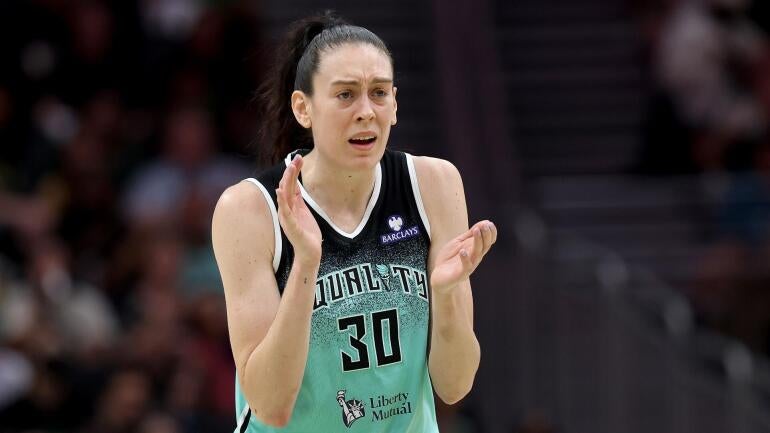
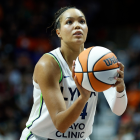
The WNBA's current collective bargaining agreement will expire Friday at 11:59 p.m. ET, and the deadline is expected to pass without a new deal or another extension, according to Annie Costabile of Front Office Sports, confirming what WNBPA vice president Breanna Stewart told reporters Thursday after Unrivaled practice in Miami.
"We're not coming to an agreement by tomorrow, I can tell you that," Stewart said. "We're just going to continue to negotiate in good faith."
It's important to note that the CBA's expiration will not mean an automatic work stoppage. Instead, the two sides will enter what is called a "status quo" period.
The key difference between status quo and an extension is that either side could announce a work stoppage at any point during status quo, while an extension would lock in the current CBA until a set date (or until a new CBA is agreed upon). But based on Stewart's quote, it does not appear that either side is eager to enact a work stoppage, even though the union has authorized the WNBPA executive committee to take that step if necessary.
"Obviously, we'd hoped that we would be a lot farther along than we are, because it's been about [15] months at this point, but at the same time, we have to stay strong in what our values are and what we're standing for," WNBPA vice president Napheesa Collier told ESPN on Thursday. "The players feel really united right now. We're waiting for the league to come back, and we're not going to accept a bad deal. We're waiting for the league to come back and respond to our thoughtful and reasonable proposals."
Why can't the WNBA and WNBPA reach an agreement?
There are all manner of things at stake in the new CBA, from codifying charter travel to prioritization and more. However, as is always the case in a labor dispute, the biggest hurdle is money. There is currently a wide gulf in the proposals from each side regarding salary cap figures and how much of the league's revenue will go to the players.
The WNBA's proposal in early December would raise the cap to $5 million and the max salary to about $1.3 million in the first year of the deal. A source close to the situation told CBS Sports that over the course of the proposed deal, the max salary would raise to almost $2 million and that multiple players on each team would be eligible for the max salary. The minimum salary in this deal would start at $230,000 and the average salary would start at $530,000.
All of the above salary figures include a base salary plus a revenue-sharing component that includes both team and league revenue, something players have been asking for. The source estimates this deal would result in players getting about 70% of net revenue -- that is, the revenue remaining when league-specified operating expenses are removed from the pot.
For comparison, in 2025 the WNBA's salary cap was about $1.5 million, the minimum salary was around $66,000 and its supermax was about $250,000.
The WNBPA, however, has reportedly countered with a proposal for the players to get 30% of gross revenue, moving the salary cap in 2026 to around $10.5 million with a max salary around $2.5 million. Sources tell CBS Sports that the WNBA has not yet submitted a formal counter to the WNBPA's latest offer, which was submitted a couple of weeks ago.
"Well, we can't really talk about the numbers that we're asking for, but in terms of just like we're looking for: something that we think accurately depicts our value, and especially when it comes to net versus gross revenue," Collier said. "We're just looking for a new salary system, something that's going to be a big win for us, that represents our value, and we think that that is represented through gross and not net."
Has there been any progress?
Yes, Collier said that there has been progress on some key items including maternity leave, child care and charter travel. However, Collier said that while there are some "areas of agreement" between the two sides, the list is "not very long."
"There has been some small progress that has been made, but on all the things that the players have been really vocal about, especially from the very beginning, there's not been progress made. Those are the big issues that we said from the beginning are our biggest priorities. And with those, we're at a standstill," Collier said.
"We really wish that there were more areas of agreement. There are certainly some areas of agreement -- that is a fact. But right now, if we had had fewer areas of disagreement, especially about the things that the players hold as the top priority, we probably would not be nearing the end of another extension. Unfortunately, this is where we are, and this is the nature of negotiations at times, but we are standing firm on getting a good deal done," Collier continued.
How long do to the two sides have to get a deal done?
Both sides want to avoid missing games, which has never happened in WNBA history. We are still four months away from the traditional opening of training camp in late April, so there is still time to get a deal done that would allow to the 2026 season to start on time.
However, the offseason has already been impacted. Last offseason, the Golden State Valkyries held their expansion draft on Dec. 6 and teams were allowed to make qualifying offers and "Core player" designations starting on Jan. 11. Teams were then allowed to start negotiating with free agents on Jan. 21 and signing players on Feb. 1.
We're days away from the traditional start of free agency and the Toronto Tempo and Portland Fire -- the two new expansion teams set to join the league in 2026 -- are still waiting to hear how their double expansion draft will work and when it will take place. While both teams have a general idea of how the process will work, expansion draft details have to be collectively bargained, so they won't know anything for sure until a new CBA is in place.
The Tempo and Fire's expansion draft will have to take place before free agency can begin. And this is set to be the busiest free agency period ever because every veteran aside from Kalani Brown and Lexie Brown set up their contracts to become free agents this winter in anticipation of a major pay raise under the new CBA.
Unrivaled plays into the first week of March and if an agreement hasn't been reached by the time that season ends, there would be real concerns about whether the WNBA season can start in late May as per usual.
Even if there's no panic from either side right now, each missed deadline brings the looming specter of a work stoppage into play. Neither side wants that, but they are both keenly aware of the importance of this CBA negotiation in laying the framework for how the league will operate going forward.
Players feel they've never had more power or leverage, but the league wants to make it clear that they are in charge. The result is a standoff that is about to blow through its third deadline this offseason with no obvious end in sight.