Andre Ward content with villain perception ahead of rematch with Sergey Kovalev
While Ward is frustrated with his media portrayal, he has used the criticism to fuel him

•
8 min read

If there's a correlation between the promotion of boxing and it's more flamboyant combat cousin -- the scripted world of pro wrestling -- it's centered upon the idea that a fight sells better when there's a clear delineation between good and evil on the marquee.
The basic strategy of presenting hero versus villain is as old as storytelling itself and boxing has seen many characters thrive financially by playing the bad guy, whether naturally through their own destructive actions (think a post-prison Mike Tyson) or by willingly playing a character (Floyd "Money" Mayweather).
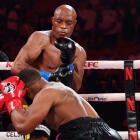
Unified light heavyweight titleholder Andre Ward, who enters Saturday's rematch in Las Vegas against former champion Sergey Kovalev (HBO PPV, 9 p.m. ET), just might be a special case unto himself.
In pro wrestling terms, Ward, 33, has all the qualities of a babyface (or good guy). The last American male to win an Olympic gold medal in boxing, Ward (31-0, 15 KOs) holds an endorsement deal with Nike's Jordan Brand. The Oakland native is also a dedicated family man who stays out of trouble and is openly committed to his faith. He's also in possession of an inspiring backstory by overcoming a harsh childhood with two drug-addicted parents.
Yet despite his credentials, in a post-Mayweather boxing era void of crossover American stars, Ward is largely perceived on social media as a villain (or heel). It's an equation that doesn't seem to make sense.
While Ward's dilemma is interesting, it's not unprecedented. Look no further than pro wrestling and the launch of the anti-hero in the 1990s's "Attitude Era," where good was suddenly boring and bad guys were celebrated for doing bad. To borrow an Eddie Vedder lyric, Ward essentially changed by not changing at all.
"I feel like over the years, some of the knock on me is because I'm not who the collective media wants me to be," Ward said. "Sometimes they paint you as a villain when you don't act the way they want you to act and you don't talk the way they want you to talk. When you don't respond the way they want you to respond, they try to create their own narrative instead of responding to your own."
While Ward admits to being frustrated by his media portrayal, he's "two and three years" removed from when it last affected him. Half the battle, he said, is understanding "how the game is ran" and tailoring his reactions accordingly.
That's why Ward spent the buildup to his first meeting with Kovalev last November foreshadowing how the reaction to the fight would play out. It turned out, he was exactly right.
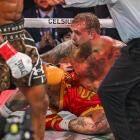
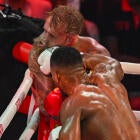
Ward got up from an early knockdown to win a contentious unanimous decision (114-113 on all three scorecards) in a tactical and close fight. The resulting cries of robbery -- from fans, media and Kovalev himself -- only seemed to further villainize Ward.
"I told you guys before the fight, I have to win because I don't have a soft cushion to fall on," Ward said. "I won't get the benefit of the doubt. I'm not complaining but I'm being honest with you. I said, 'If he does, they'll justify it and he'll get the benefit of the doubt.' You've seen that.
"I feel like certain fighters would have got, 'Oh! That was the greatest comeback in boxing history. I don't always get that kind of response and I think what some may think is hurting me, those types of responses have really helped me. I haven't had a chance to rest upon my laurels."
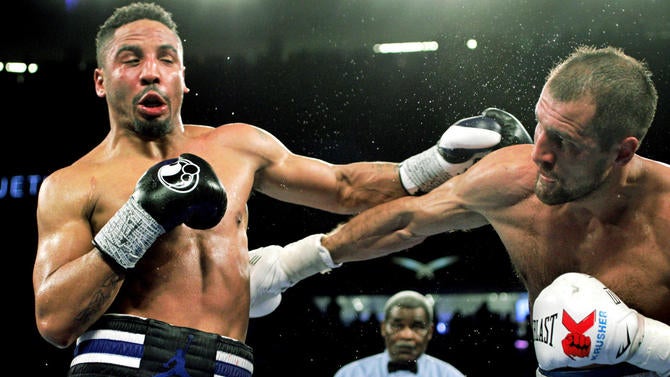
Whether Ward's treatment is driven by race is a "tricky subject" he isn't wiling to push. Having grown up in a family with a white father and black mother, Ward said he has faced rejection from both sides, which forces himself to remain neutral.
But does he see things that force him to scratch his head?
"Absolutely," Ward said. "I've got two eyes, two ears and I've watched the history of the sport. But where I have to stop myself is I can't judge another man or woman's intentions and that's where it's tricky. I could be dead wrong. If you're going to go down that road, you've got to have tangible proof. It can't just be your opinion."
What Ward does acknowledge is what he believes to be a series of media-driven misconceptions regarding his value.
Tell him he can't draw a crowd outside of Oakland and he'll mention the nearly 80 percent of fans in Las Vegas who chanted his name against Kovalev (something Ward felt wasn't mentioned enough on the HBO PPV broadcast). Tell him he's not a star and he'll share the details of having consistently been ranked among the highest-paid (non-PPV) fighters in the sport for many years, with annual endorsements "in the high six figures" for just as long.
So what's the reason for the disconnect between Ward and casual sports fans outside of boxing? His critics will point to his defensive style and guarded persona as to why he has yet to become a household name. But the perception that he's not well-liked by media and hardcore fans seems to have more to do with a holier-than-thou arrogance and unwillingness to bend to the designs of others than anything else.
The fact that Ward spent the majority of his prime sitting idle while repeatedly battling his former promoter in court seemed to stunt the forward momentum of his mainstream growth. Facing a stream of soft opponents for big money upon his return didn't help matters either.
From Ward's perspective, his crossover limitations have more to do with the trouble all American fighters not named Mayweather have had in becoming worldwide stars because of the competition of professional sports teams in each major city around them.
"You have guys like [Manny] Pacquiao, Canelo [Alvarez], [Miguel] Cotto -- those guys have countries behind them. They are rabid fans," Ward said. "But name an American not named Floyd Mayweather who has that kind of star power? We've had a lot of false starts and predictions but the reality is, who has actually done it?"

Mayweather had long desired a larger platform and payday than his critical respect had gotten him and adopted a flashy exterior -- helped by the launch of HBO's "24/7" documentary show -- to build his trash-talking character. Soon, just as many fans paid hoping to see him lose than to see him flash his virtuoso skill set.
But while Mayweather willingly played the puppet, he knew full well he was the one pulling the strings on the cash register. It's a role the more wholesome Ward has never desired to play.
"I'm boring because I don't want to act a certain way on '24/7?'" Ward said. "Why is that not promoted? I talk a lot and I walk it also with trying to be an ambassador for the sport. So if you're not doing everything that Floyd does, I'm just not willing to go there.
"If that means less fanbase, if that means less money, I'm cool with that. I don't want be the guy who is acting a certain way and everybody is sitting there watching my show for 15 minutes and they are laughing at me and then they turn it off and say to their kids, 'Don't be like that.' All for more PPV sales? I'm just not willing to do that. I just want to fight and then Monday morning go drop my kids off at school and look their teachers in the eye and know that they respect me."
Ward referenced how many have tried to copy Mayweather's success yet have proven unable to move the needle.
"It's overrated. That worked for him. That's his business and I don't have an opinion on it," Ward said. "If that works for Floyd than God bless him. But that's going to be a hard act to follow and people may not sell those kind of pay-per-view numbers for many, many years. But it wasn't just how Floyd acted outside the ring -- he had a lot of things fall in place at the right time. The [Oscar] De La Hoyas of the world, the [Ricky] Hattons of the world. He had a lot of rivalries and opponents. I look back and say, 'I didn't have these rivalries but what did I do with the ones that I had?'"
While Ward may be unable to accurately explain why his confidence and clean-cut image have conspired against his approval rating, he's thankful for the reality of his perception. He believes the constant criticism has fueled him and his understated nature has allowed opponents, namely Mikkel Kessler and Carl Froch, to overlook him.
Talking to Ward, one gets the feeling he believes Kovalev did the same last November and just might do it again on Saturday.
"You just keep working and hopefully you have amassed a career and legacy that you're proud of," Ward said. "And then you look at your bank account and say that hopefully I have something tangible to show for all the punches I took and all the punches I dished out and all the time that I was away from my family.
"I feel like I have enough and am trying to manage what I have. It's a lot of responsibility. I'm understated and I kind of like it. It has always been my lane, even as an amateur. I've learned to be comfortable in that lane."