
NBA Draft '15: Ranking the Kentucky prospects
Sam Vecenie takes a look at Kentucky's stacked roster, one that will be a major topic of discussion among NBA Draft scouts and front offices.

By
Sam Vecenie
•
10 min read
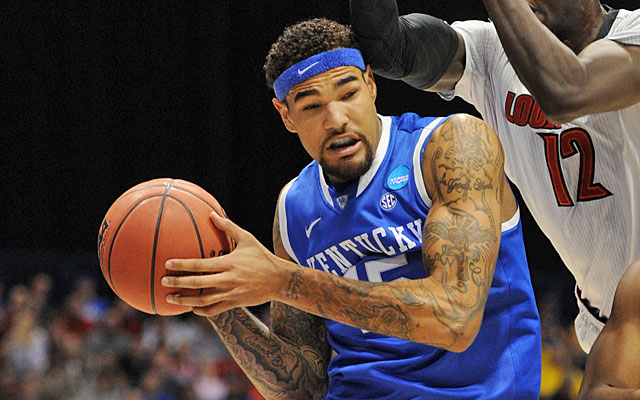
The Kentucky Wildcats were always going to be the center of the 2015 NBA Draft universe. With nine former composite five-star recruits and one four-star prospect, the roster is a who's who of players that have been on the NBA's radar for a long time. As far as pure NBA draft prospects are concerned, this could be the deepest college basketball team of all time.
No one understands this better than head coach John Calipari. In order to take advantage of the unique situation that he's in, Calipari decided to put his cavalcade of professional talent on display last Friday. The result was a pro day -- featuring no fewer than 90 NBA scouts in attendance -- where the players rolled through a set of workouts designed to allow them to succeed.
Beyond the obvious recruiting benefits that Calipari will reap from being able to say he's the only coach to do this, it's a brilliant idea that simply will keep his players in the news even in the doldrums of the pre-preseason. As every other coach will be jockeying to find new ways to discuss how their potential draft prospects have developed in the offseason, Calipari decided to show his guys off. And because of how many players there are with professional potential, NBA scouts showed up in droves.
That depth is rather remarkable, and it will be the subject of scrutiny throughout the season. Many also probably have questions about the way that depth shakes out from an NBA perspective. Which guys have the best chance to succeed on the next level? Which ones are most likely to fail?
I'm here to answer those questions. By my count, Kentucky has 10 legitimate prospects that could eventually make the NBA. Here is a quick breakdown of all of them, in order of the way they're rated on my big board. Some quick notes before I get started.
- Just because I have a player near the bottom of this list doesn't mean that I hate them. I think every player here has a good chance to play in the NBA.
- I've given extra value to those who will be ready to play in the NBA earlier. For instance, I think Andrew Harrison and Tyler Ulis are probably pretty equal value as prospects. But because Harrison is more likely to be ready for the 2015 draft, I have placed him higher.
- All heights and wingspans come directly from the workout, courtesy of DraftExpress.
- Finally, this is a preseason board that will likely change as the season goes on and guys get better and fit into their roles.
With that, let's get to it:
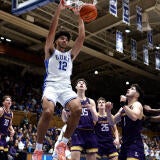
1. Karl-Anthony Towns, 6-foot-11, 7-3 wingspan, Power Forward/Center: Towns is one of three players in the top tier of my draft board, along with Duke's Jahlil Okafor and former SMU prospect Emmanuel Mudiay, now playing in China. Towns is a skilled, fluid athlete for his size that can both attack from the midrange and step out and hit a collegiate three-pointer. He's the ideal modern NBA big man. Not only can he step out and space the floor so attacking guards don't have to go up against the trees in the paint, but he can also protect the rim on the other end of the floor and make it difficult to finish over him. He's not an Anthony Davis-level athlete (who is?), but at 250 pounds he's much better equipped to play the center position in the NBA. It wouldn't surprise me if Towns is the runaway number one pick by the end of the season. His potential is that vast. But for now, he settles in as the number two overall prospect behind Okafor.
2. Willie Cauley-Stein, 7-foot-0, 7-2 wingspan, Center: Cauley-Stein is a top prospect mostly because of his physical profile at this stage. While he has vastly improved as a finisher and roll-man in the pick-and-roll, Cauley-Stein is still a project offensively. He doesn't shoot particularly well outside of seven feet or so at this stage, and isn't much of a post-up threat. However, because of his incredible athleticism as a seven-footer, his defensive potential is nearly limitless. Already a shot-blocking terror around the rim, Cauley-Stein also moves well on the perimeter for a center and should be able to defend pick-and-rolls well. The most apt comparison stylistically is probably a Tyson Chandler-like player. But to reach his full potential on offense, it would be best to pair him with a good point guard that can play in the pick-and-roll and let him simply catch easy finishes on dives to the basket.
3. Aaron Harrison, 6-foot-6, 6-8 wingspan, Shooting Guard: I like Aaron much more than his brother Andrew from an NBA perspective because I think Aaron will have a much easier time fitting into a role. Simply put, it's much easier for a shooting guard that can slash and shoot from the perimeter to fit into a role than it is for any point guard. Also, Aaron is a better athlete than Andrew, which always helps when going up against better athletes. The biggest question mark for Aaron is ironing out his jump shot. He finished the season shooting 48 percent from three in the SEC and NCAA tournaments after only shooting 31 percent during the regular season. While the sample size in the tournament part of the season was small, his jump shot did look much more fluid and confident than it had throughout the season. Becoming a knockdown shooter is the best thing he can do for his chances in the NBA, so I'd look simply for more consistency there this season.

5. Trey Lyles, 6-foot-10, 7-4 wingspan, Power Forward: This is where it gets tricky. Lyles was one of the best players at the FIBA U19 World Championships in Prague in 2013, showing off excellent touch both around the basket and from the perimeter, even showing the ability to step out to the international three-point line. He finished third in both scoring and rebounding for the competition as an underaged player of only 17. I think he's probably more of a 2016 propsect than a 2015 one, but the length is something few players his size can match, and his high release point will make it difficult to block him even if he ends up being slightly undersized from time-to-time. The key to his NBA stock will be on the defensive end. Unfortunately at this point, he neither protects the rim well nor defends well on the perimeter. Making himself viable at one of those two things will be essential to him going from possible first-rounder to possible lottery pick.
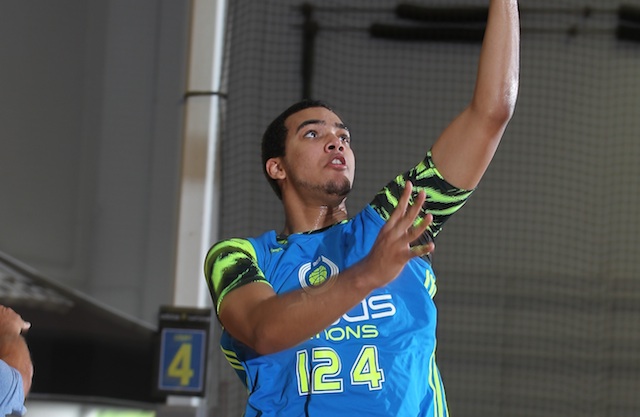
6. Marcus Lee, 6-foot-9, 7-3 wingspan, Power Forward: Lee is something of an enigma right now, but I'd rather take the devil I know less about than the two devils I know more of (coming next). In the limited minutes he played last season, Lee showed off tremendous athleticism and motor for a player his size, gobbling up offensive rebounds impressively and blocking shots. He also moves well on the perimeter and a plus player in the NBA there. The problem is that he did all of this in a sample size of just 156 minutes last season, which means we need to see him play more before getting a completely accurate depiction of what his ceiling is, especially on the offensive end. Lee had very few plays run for him -- if any -- last season, and got most of his baskets off quick cuts to the rim or rebounds. However, the athleticism and motor show potential for him to be a first-round pick in the coming years.
7. Dakari Johnson, 7-foot-0, 7-0 wingspan, Center: Johnson is a pure post center at this point without any range. The problem with that is that he doesn't particularly finish well either, as he only made about 62 percent of his attempts within five feet of the basket. That's a very average number for a guy with his size that took about 83 percent of his shot attempts within that area. As a largely below-the-rim player, I worry that it might continue to be difficult for him to finish once he starts going up against consistently bigger, longer athletes in the NBA. But his bigger problem is his lateral movement, as he doesn't particularly move well in the pick-and-roll offensively or defensively. That will limit him to being an interior player, and I'm just not sure how valuable that is in today's NBA. However, because of his size and simply his intangible movement -- sinking off into the soft spot of the defense for either a rebound or an easy dish -- I have him just on the outside of my top 30 right now.
8. Andrew Harrison, 6-foot-6, 6-8 wingspan, Point Guard: I have quite a few worries about Andrew, and think he will struggle to make the transition to the NBA. First and foremost, I think he struggles to get into the middle of the floor in order to break down the defense. He typically gets there through his size and strength as opposed to his quickness, and that style of play is much less conducive to success in the NBA. Not only is it less effective, but it also wastes valuable seconds off of the shorter shot clock which leads to a reduced chance to find an efficient shot. He'll continue to have a size advantage over most NBA point guards, but they tend to be smarter about annoying ball-handlers, which is another problem Harrison struggles with. It's not uncommon to see him force the action a bit too much, which leads to him often picking up his dribble and/or turning the ball over. Then to top it off, he's a fairly inconsistent shooter mechanically with less confidence than his brother. There is clear potential here for an NBA point guard -- he moves well in the pick-and-roll, sees well over the defense, and knows how to pressure the defense. But I think we're pretty far away from seeing everything put together.
9. Tyler Ulis, 5-foot-9, 6-1 wingspan, Point Guard: All of the reasons mentioned above are why I think Ulis -- a steadier, smarter point guard that is excellent defensively -- could start to steal minutes from Harrison before the end of the year. Ulis moves really well in the pick-and-roll, and seems to have already built a strong rapport with Towns if their play in the Bahamas is any indication. The size will always be a pretty major hindrance to Ulis' professional potential, but if he proves that he can run the show for this Kentucky team, that could go a long way towards his being drafted. My guess is that he's still more of a 2016-17 guy, but there is a lot to like from the diminutive freshman.
10. Devin Booker, 6-foot-6, 6-6 wingspan, Shooting Guard: Booker brings up the rear on this list, but he's another guy that could potentially see minutes early in his career despite all of the talent ahead of him. If Poythress or the Harrison twins come out of the gates shooting poorly, this sharpshooter from Mississippi could step in, making sure the floor is well-spaced to take advantage of the interior dominance Kentucky should have over all of its opponents. He's not the best athlete in the world, but Booker is tremendously skilled and smart, which should allow him to make the transition to the college game quite easily early on. He's another prospect that is likely more of a 2016-17 guy.