
Documents show NCAA official called former USC coach 'morally bankrupt'
The long-awaited documents that the NCAA fought bitterly to suppress revealed an email from an NCAA official calling former USC assistant a "criminal".

By
Dennis Dodd
•
1 min read
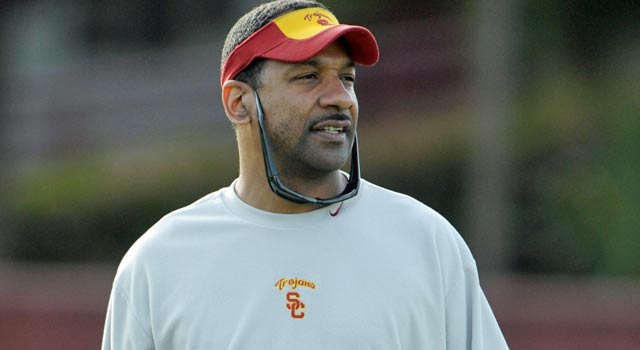
Revealing documents in former USC assistant coach Todd McNair’s lawsuit against the NCAA released Wednesday show in full what the coach's attorneys contend is a flawed investigation regarding their client.
An appellate brief the public was able to see for the first time reveals what McNair’s camp feels is damning evidence in McNair’s ongoing defamation suit. The documents show what McNair's attorneys believe is improper influence in deciding penalties against USC in 2010.
A judge had previously referred to an e-mail from NCAA infractions committee aid Shep Cooper in which McNair was called a “morally bankrupt criminal.” Cooper is not a voting member of the infractions committee that eventually, in 2010, stripped USC of 30 scholarships and handed it a two-year bowl ban.
The NCAA had fought stridently to keep the email out of the court record. It was finally included an appellate brief filed by McNair’s attorneys. The brief -- more than 200 pages -- raises questions about the quality of the controversial Reggie Bush investigation. In a 2012 deposition given by Cooper, a McNair attorney asks about how at least two infractions committee members questioned the integrity of the investigation.
In one instance, the NCAA had the year wrong of a key phone call involving McNair. One infractions committee member went as far to call the interview “botched.”
In February 2010, Cooper wrote to another non-voting member of the committee: “individuals like McNair shouldn't be coaching, at ANY level. And to think to think he is at one of the premier college athletics programs in the country is outrageous.
“He's a lying, morally bankrupt criminal, in my view and a hypocrite of the highest order.”
Rodney Uphoff, a Missouri law professor, then responded that he feared the infractions committee would be too “lenient” on USC.
McNair was eventually hit with a show-cause order by the NCAA, essentially leaving him unemployable. He has not worked as a coach since leaving USC in 2010.
The NCAA contended an initial wave of documents released in the McNair case caused infractions committee members to receive "violent threats."