2022 Fantasy Baseball Draft Prep: Randy Arozarena, Dylan Cease, Nolan Arenado highlight Busts 2.0
These players are higher risk to under perform their ADP

By
Chris Towers
•
1 min read
When it comes time to talk about bust candidates for Fantasy Baseball, I always want to be wrong. A player busting means something went wrong for them – injury, underperformance, whatever – and it means that those of us who pinned our hopes to them are disappointed. Nobody wants that.
But it happens. Every year. It happens with first-round picks, it happens with established stars, it happens with our hoped-for breakout candidates … it happens a lot. Baseball is an incredibly difficult sport to predict over a full season, and anyone who has played this game long enough knows it.
But, that also means we're often wrong about our bust picks, too. You can focus on the downside and miss the potential for a player to surprise you. Which is to say, while I may be down on the players in this column, it doesn't mean you shouldn't draft them if you like them. I'm just presenting the reasons why I think they aren't worth the risk.
And, believe me, I'm hoping I'm wrong, too.
Busts 2.0
Projections powered by
Sportsline
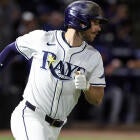
In theory, Randy Arozarena has a very enticing profile for Fantasy, and in 2021, it was just that in practice. But when you check under the hood at the underlying numbers, things start to look pretty grim. Arozarena has a reputation as an elite athlete who makes up for whatever deficiencies exist in his approach with massive tools, but while he hits the ball relatively hard, we're not talking about a Giancarlo Stanton-esque profile here. Arozarena ranked in the 64th percentile in average exit velocity and 59th percentile in hard-hit rate – 86th in max exit velo, which does suggest very good raw power, though. Those are good numbers, but between his strikeout numbers and his poor batted ball profile – too many ground balls, too many infield fly balls, not enough line drives – they suggest a player who was lucky to hit .274/.356/.459 last season. His expected average was .222, while his expected slugging percentage was just .369. The tools are there for Arozarena to sustain or even exceed his 2021 numbers, but he'll have to improve. And there's also the potential for the bottom to fall out, and when you play for the Rays, that means playing time could be a concern.
| ||||||||||||||||||||||
Walsh is another one of those players whose surface numbers hide some pretty ugly underlying numbers. But the bigger issue here is pretty straightforward: It's not entirely clear he can hit lefties. He hit .170/.208/.357 against them in 2021, with the only saving grace being that he hit 10 home runs in 192 plate appearances. However, he had a 54-to-9 strikeout to walk ratio and his .141 expected isolated slugging percentage compared to his actual .187 mark (SLG% minus BA) suggests that there was some luck involved, too. Walsh does hit righties quite well, so I don't think there's much potential for the bottom to fall out for him the way there might be with some of the other names on this list, but if you're going to spend one of your first 10 picks on a first baseman, that player probably needs to be a different maker. Walsh (and Ryan Mountcastle, who you could certainly make a case for belonging here) just doesn't profile as one.
| ||||||||||||||||||||||
Chisholm might have even more impressive raw tools than Arozarena. He also may have an even more volatile profile. If Chisholm clicks, we could be looking at a potential top-15 hitter in Fantasy thanks to his power-speed combination. He's incredibly athletic and when he gets into one, he lets it rip – remember when he took a letter-high, 100-mph fastball from Jacob deGrom and put it into the second deck in right field last season? He's being drafted where he is for the upside. The problem is, he has pretty massive holes in his swing at present, with a below average swing rate and contact rate on pitches in the zone. He's not doing damage on the pitches he's supposed to, and he also struggled with non-fastballs to boot. He's still young enough to figure those things out, but if he doesn't, his approach is going to continue to hold him back. Chisholm might go for 20 homers and 25 steals anyway, but there's also considerable risk that the bottom falls out here as well.
| ||||||||||||||||||||||
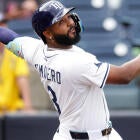
Arenado hit 38 homers last season while having the 16th-lowest average home run distance among 132 qualifiers, per StatCast. That's not necessarily a terrible thing – Jose Ramirez ranked one spot ahead of him – but it highlights why I'm worried about Arenado. His quality-of-contact metrics were below average in both 2020 and 2021, but he's still a pretty decent bet for power because he's such a fly-ball and pull-heavy hitter. The problem is, home runs and RBI might be all he gives you at this point because of that approach, and if there's any dip in those quality-of-contact metrics, some of those short homers out to left field might die on the warning track. That would probably knock his batting average further into harmful territory, and his low OBP makes him a bad bet for runs, as well. Arenado feels like a guy teetering on a knife's edge right now, and it wouldn't take much for him to fall off.
| ||||||||||||||||||||||
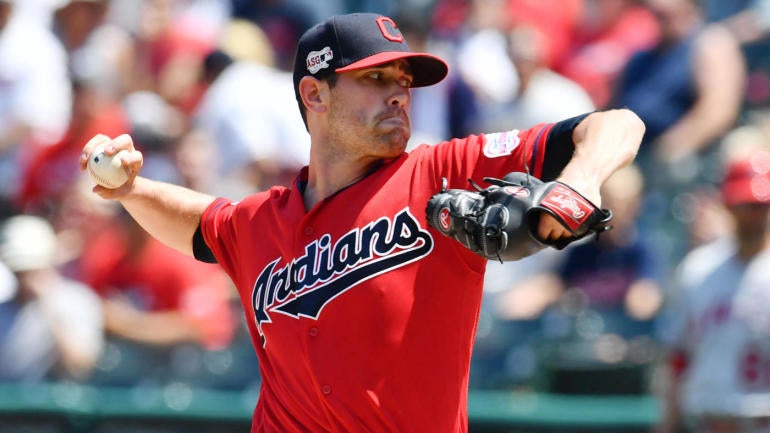
The excellent Eno Sarris at The Athletic includes a "projected IL days" metric from the equally excellent Jeff Zimmerman in his pitcher rankings, and Shane Bieber was one that immediately jumped out to me: He's projected for 51 IL days, one of the highest numbers for any top-200 pitcher. Coming off a shoulder injury that cost him most of the season and left his fastball velocity down 2 mph in the brief appearances we saw in September, that shouldn't come as much of a surprise. Bieber carries significant risk based on that, but his performance profile also carries some risk. Bieber gets hit really hard; even in his incredible 2020, he sported a .391 expected wOBA on contact, compared to a league average of .369. He really needs to be an elite strikeout pitcher to avoid that issue, and if the velocity is down, that becomes harder to pull off. Bieber could be one of the best pitchers in baseball, but these are pretty glaring warning signs from someone who is still being drafted as a top-10 pitcher.
| ||||||||||||||||||||||
Historically, the first three rounds are where you get your best return on investment at starting pitcher. From 2016 through 2021, around 40% of starters drafted between the fourth and sixth rounds finished as top-100 players that season. My theory for why that tends to be the case is because that's where the one-year-wonders and hoped-for-bouncebacks tend to get pushed up. The guys with superstar potential, perhaps, but also risk factors. And that's where Peralta is being drafted right now. It doesn't mean he's going to bust, obviously, but we are talking about one of 2021's great one-year-wonders. Peralta transitioned from an interesting swingman to one of the best starters in baseball, with a lot of help from a new slider and changeup that took him from a two-pitch pitcher to one with a four-pitch mix. And I always wonder whether those kinds of changes are sustainable when the league gets a chance to adjust. Peralta's 4.71 ERA in August and September suggests the league may have caught on at least a little bit. I think Peralta will likely be quite good again this season, however the risk combined with the likelihood that he'll still not throw a ton of innings makes him not worth his cost for me.
| ||||||||||||||||||||||
Webb is a tough nut to crack. He missed six weeks with a shoulder injury in the middle of the season and then posted a 2.63 ERA with a 26.7% strikeout rate over his final 17 starts upon his return. And then he was dominant in the postseason across two starts. Can the shoulder really be much of a concern after that? Of course it can! Shoulder injuries should always be a pretty significant red flag, especially when we're talking about a guy being drafted as a top-20 pitcher based on 19 starts. Webb is talented, but he had a 4.85 ERA over 143 innings prior to his most recent 19 starts. I can see the appeal of Webb, but there's way too much certainty built into his price that just isn't earned.
| ||||||||||||||||||||||
I'll often joke that you might be a better Fantasy player if you just never watch the games, but Cease might be the real-life example of that for me. It feels like every time I watch him, he's laboring through every single inning – and he led the majors in pitches per inning, so that wasn't just my brain tricking me. But every time I watch him, I just can't shake the feeling that he's still a long way from figuring out the difference between pitching and throwing. Cease often struggles with his command, especially in the early innings, which helps explain why he averaged just 5.2 innings per start last season. Of course, he racked up an AL-best 12.3 K/9, so it's not hard to see the upside. He has great stuff, and if he figures out how to consistently command it, he's going to be an excellent pitcher. I'm just not sure I want to be the one to bet that this is going to be the year it happens when he's going as a borderline SP2.
| ||||||||||||||||||||||
When McClanahan was coming up as a prospect, the word on him was always that it seemed like the bullpen was his most likely eventual home. And then he came up the majors armed with a legitimate four-pitch mix, all of which he can use as a putaway pitch, and it was pretty hard to understand where that idea came from. However, there were some pretty concerning stats underneath his very impressive rookie season, notably with what happened when opposing hitters put the ball in play. He allowed a 91.7 mph average exit velocity and 45.7% hard-hit rate, helping lead to a .424 expected wOBA on contact. His xERA was 4.60 as a result, a much uglier number than that he actually posted. The thing about quality of contact metrics for pitchers is that it takes a long time to figure out how much control any individual pitcher has over them, so there could be some small-sample size noise there. However, the results were so extreme that we can probably assume he'll give up more hard contact than your typical pitcher. If it's as bad as it was in 2021, things could go very poorly for McClanahan.
| ||||||||||||||||||||||